



Forensic & Criminological Matrix
| Parameter | Forensic Detail |
|---|---|
| Historical Identity | Alice Arden (née Alice Mirfyn; c. 1516 – March 14, 1551) |
| Fatal Victim | Thomas Arden (56 years old, wealthy feudal landowner and former mayor of Faversham) |
| Date of Incident | Sunday, February 15, 1551 |
| Crime Scene | Manor house of the dissolved Faversham Abbey, Kent, England |
| Legal Classification | Petty Treason (premeditated spousal murder under Tudor common law) |
| Co-Conspirators | Richard Mosbie (paramour), Richard Green, household servants, and mercenary "Black Will" |
| Modus Operandi | Stoppage by towel strangulation, crushing cranial trauma with tailor's pressing iron, and 7 stab wounds |
| Cultural Significance | Inspired the landmark Elizabethan domestic tragedy Arden of Faversham (1592), attributed to William Shakespeare |
| Judicial Execution | Condemned for petty treason and burned at the stake in Canterbury on March 14, 1551 |
1. Domestic Discord and Feudal Greed
Alice Mirfyn was the stepdaughter of Sir Edward North, Chancellor of the Court of Augmentations under King Henry VIII. Around 1538, she entered an arranged marriage with Thomas Arden, a ruthless customs surveyor who amassed an enormous private estate by acquiring secularized properties of the dissolved Abbey of Faversham.
Though Arden served as Mayor of Faversham in 1548, he was despised locally for aggressive enclosures and tenant evictions. Estranged from her husband, Alice entered into an overt adulterous passion with Richard Mosbie, a former London tailor in her stepfather's employment. Driven by infatuation and an insatiable desire to secure Arden's vast estates for themselves, the lovers plotted his death.
2. The Parlour Ambush of February 15, 1551
Following several botched poisoning attempts and failed highway ambushes, Alice and Mosbie enlisted household servants Michael Saunderson and Elizabeth Stafford, alongside a notorious soldier-for-hire named "Black Will":
- On the evening of Sunday, February 15, 1551, Thomas Arden returned home.
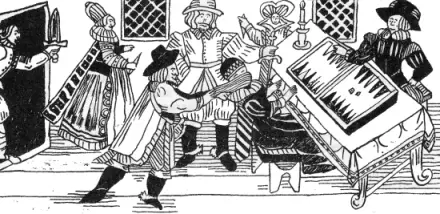
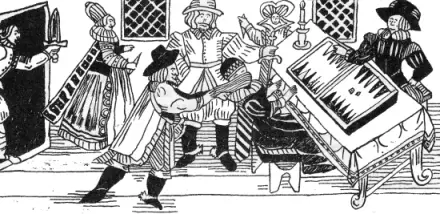
- Mosbie invited Arden to a friendly game of backgammon (tables) in the parlour.
- At the agreed signal ("Now may I take you, sir, if please you"), Black Will emerged from behind a screen and pulled a long towel around Arden's neck, choking him backwards into his seat.
- Mosbie struck Arden's skull with a 14-pound tailor's pressing iron.
- As Arden struggled on the floor, Alice seized a kitchen carving knife and stabbed him repeatedly in the chest and neck, inflicting seven deep lethal wounds.
3. Forensic Footprints in the Snow
The murderers wrapped the corpse in a cloth and carried it through the garden into an adjacent snowy meadow named Ambry Croft:
- Alice scrubbed blood spatters from the wooden flooring and scattered fresh green rushes across the room.
- She then hosted local guests for supper, dancing, and music, feigning distress at her husband's delayed return.
- Unbeknownst to the killers, snow fell through the evening.
- Early the following morning, searchers spotted Arden's body. The Mayor of Faversham initiated an immediate inquiry.
- Forensic clues unraveled the plot: floor rushes were wedged in Arden's indoor slippers, and a clear, unbroken trail of footprints ran directly through the virgin snow from the corpse to the garden gate of the Arden residence.
4. Confession, Petty Treason, and Canterbury Stake
Entering the manor, searchers found blood drops along the wall baseboards, the bloodstained knife, and the soaked wiping cloths. Confronted with the evidence, Alice wept and confessed: "The blood of God help me, for this blood have I shed", naming Mosbie and the conspirators.
Under Tudor law, a woman killing her husband committed Petty Treason, an assault on the social hierarchy punishable by the most severe sanction in the realm:
- Alice Arden was condemned to death and burned alive at the stake in Canterbury on March 14, 1551.
- Richard Mosbie and his sister were hanged at Smithfield in London. Michael Saunderson was hanged in chains at Faversham, and the servant maid was burned. Black Will fled abroad but was eventually arrested and burnt on a scaffold in Flushing, Zeeland.
- In 1592, the sensational case became the subject of the anonymous Elizabethan play Arden of Faversham, recognized as a foundational work of English domestic crime theater and widely attributed by modern stylometry to William Shakespeare and Thomas Kyd.