




Anna Margaretha Zwanziger: The Bavarian Poisoner and the Records of Anselm von Feuerbach
Executive Summary
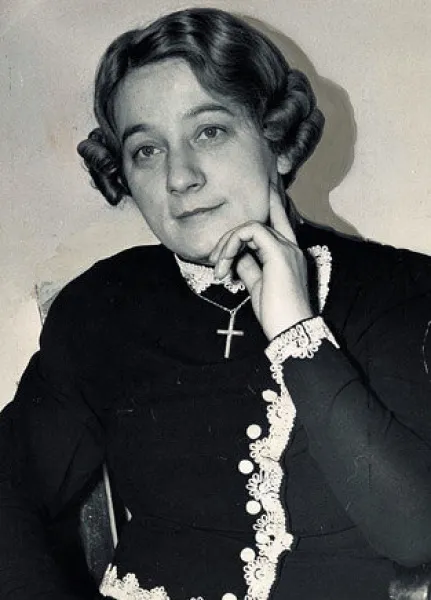
Anna Margaretha Zwanziger (née Steinacker, also known by the alias Nannette Schönleben; 1760 – 1811) was a Bavarian housekeeper and serial poisoner who, during the early nineteenth century, systematically poisoned aristocratic and judicial households where she was employed using arsenic trioxide and tartar emetic.
Employed successively in the estates of three district judges—Judge Wolfgang Glaser in Kasendorf, Justice of the Peace Grohmann in Sanspareil, and Magistrate Wilhelm Gebhard in Pegnitz—Zwanziger employed poison not merely as an instrument to eliminate her employers' wives in delusions of marrying them, but as a sadistic mechanism of domestic domination, petty spite, and psychological control, dosing servants, guests, and nursing infants with sublethal quantities. She caused the confirmed deaths of at least three individuals and inflicted chronic, agonizing poisonings with permanent organ impairment upon ten others.
Her criminal prosecution, conducted by distinguished jurist and father of modern European criminal jurisprudence Anselm Ritter von Feuerbach, was immortalized in his landmark legal treatise «Aktenmäßige Darstellung merkwürdiger Verbrechen» (Remarkable Criminal Trials). Arrested in October 1809 carrying packets of arsenic sewn into her petticoat linings—a substance she passionately referred to as her «most faithful friend»—Zwanziger was executed by decapitation with a broadsword in Kulmbach on September 17, 1811.
Forensic & Criminological Matrix
| Parameter | Forensic Detail |
|---|---|
| Legal Identity | Anna Margaretha Steinacker (Zwanziger following marriage) |
| Known Aliases | Nannette Schönleben / "The Bavarian Poisoner" |
| Date of Birth | August 7, 1760 (Nuremberg, Bavaria) |
| Date of Death | September 17, 1811 (Aged 51; executed by decapitation in Kulmbach) |
| Criminological Classification | Domestic Serial Killer / Psychopathic Poisoner / Covert Sadist |
| Confirmed Fatalities | 3 victims (Mrs. Glaser, Judge Grohmann, Mrs. Gebhard) |
| Surviving Poisoning Victims | At least 10 (including Judge Glaser, Magistrate Gebhard, maids, and infants) |
| Toxic Agents Used | Arsenic trioxide («fly-powder») and tartar emetic (potassium antimony tartrate) |
| Active Crime Span | March 1808 – October 1809 |
| Geographic Locations | Kasendorf, Sanspareil, and Pegnitz (Upper Franconia, Kingdom of Bavaria) |
| Lead Examining Magistrate | Anselm Ritter von Feuerbach (President of the Court of Appeal in Bamberg) |
| Judicial Disposition | Sentenced to death by beheading with a sword (Enthauptung durch das Schwert) |
Early Life and Marriage to Notary Zwanziger
The daughter of a Nuremberg innkeeper who died in her infancy, Anna grew up in poverty. At 19, she entered into an arranged marriage with a court notary named Zwanziger, an alcoholic who squandered their estate and subjected her to domestic violence for twenty years.
Following her husband's death in 1796 and the departure of her adult children, Anna fell into destitution, working as an embroiderer. At the turn of the century, adopting the alias Nannette Schönleben, she offered services as a trusted housekeeper and cook for wealthy widowers and regional jurists, adopting an outward mask of humble piety, extreme modesty, and devoted subservience.
Chronology of Poisonings in Upper Franconia (1808–1809)
1. Judge Wolfgang Glaser (Kasendorf, March – July 1808)
In March 1808, she entered the household of Judge Wolfgang Glaser, then separated from his wife. Zwanziger harbored fantasies of becoming Glaser's new wife. When Glaser reconciled with his wife in May, Anna viewed her presence as an intolerable obstacle:
- She slipped arsenic fly-powder into Mrs. Glaser's tea and cakes.
- The woman suffered agonizing abdominal pain, burning fevers, and violent dehydration, dying on August 26, 1808.
- Realizing Glaser showed no romantic interest in her, Anna resigned her position.
2. Judge Grohmann (Sanspareil, September 1808 – May 1809)
In autumn 1808, district judge Grohmann in Sanspareil, a 38-year-old bachelor with chronic gout, hired her. When Grohmann announced his engagement to a local noblewoman, Zwanziger resolved that «if he could not be hers, he would be no one's»:
- She laced his noodle soup and beer with arsenic; Grohmann died in agony on May 8, 1809.
- During his illness, Anna also poisoned two suspicious household servants.
3. Magistrate Wilhelm Gebhard (Pegnitz, May – September 1809)
Days after Grohmann's funeral, Anna joined Magistrate Gebhard's household in Pegnitz. Shortly after Mrs. Gebhard gave birth, Anna poisoned her beer to retaliate for a domestic reprimand; Mrs. Gebhard died on May 13, 1809.
- To cement her indispensability, Anna administered low doses of arsenic to five servants, Magistrate Gebhard, and even the newborn infant's milk porridge, reveling in their complete dependence on her nursing care.
Investigation by Anselm von Feuerbach and Confession
In September 1809, Magistrate Gebhard, suspicious after multiple guests and servants fell violently ill after consuming salt or beer, submitted saltcellar residues to a Bayreuth apothecary. Chemical testing confirmed massive arsenic trioxide contamination.
Learning she was suspected, Anna fled to Nuremberg and Mainleus, sending letters professing innocence. On October 18, 1809, she was arrested:
- In her dress seams and pockets, guards discovered packets of pure arsenic and tartar emetic.
- Courts ordered the exhumation of Mrs. Glaser, Judge Grohmann, and Mrs. Gebhard. Forensic examinations revealed the bodies were remarkably preserved and mummified by arsenic, with lethal concentrations in their digestive tracts.
The Psychology of the «Faithful Friend»
Interrogated extensively by celebrated jurist Anselm Ritter von Feuerbach, Zwanziger confessed with clinical detachment:
"Poison was my faithful friend; whenever I felt grief, wrath, or rejection, I turned to it. It delighted me to hold people in my power, to watch pain break them down, and to know that I held the power of life and death over them."
Sentence and Beheading
On July 7, 1811, the Bavarian Court of Appeal presided over by Feuerbach sentenced her to death by decapitation with a sword.
On the morning of September 17, 1811, Anna Margaretha Zwanziger climbed the scaffold in Kulmbach before a large crowd. She listened calmly to the reading of the sentence, bowed respectfully to the judges and executioner, and laid her head upon the block. Her trial established landmark principles of European forensic toxicology and criminal psychology.