



Forensic & Criminological Matrix
| Parameter | Forensic Detail |
|---|---|
| Full Legal Name | Aníbal González Igonet |
| Media & Criminological Moniker | The Hammer Madman (El loco del martillo) |
| Nationality | Argentine |
| Estimated Birth Window | c. 1938, Buenos Aires, Argentina |
| Penal Status | Sentenced in 1967 to life imprisonment with indefinite preventive detention; paroled in March 2006 after 43 years of continuous incarceration |
| Confirmed Murder Victims | 3 young women (María Rosa Rivas, 15; Virginia Noriega, 23; Raquel Gómez, 28) |
| Non-Fatal Wounded Victims | At least 3 surviving women left with catastrophic depressed cranial vault fractures |
| Active Serial Span | January – March 1963 (Summer of 1963) |
| Geographic Theater | Lomas de Zamora, Lanús, Banfield, southern Greater Buenos Aires |
| Weapon Utilized | Heavy carpenter/masonry claw hammer with wooden handle, wrapped in cloth/canvas |
| Mechanism of Death | Destructive open craniocerebral blunt force trauma focused on the occipitoparietal bone |
| Sociocultural Legacy | Ignited an unprecedented mass panic across Buenos Aires; stimulated municipal curfews for women and record sales of reinforced protective headwear |
The Mass Panic of Summer 1963
During the hot austral summer of early 1963, a succession of blunt force ambush assaults shook the southern suburbs of Greater Buenos Aires. In an era where serial predatory violence was virtually undocumented in Argentina, an unseen assailant began ambushing young women walking home from commuter rail stations and night classes.
Sensationalist tabloids designated the predator El loco del martillo (The Hammer Madman). The municipal psychosis escalated dramatically:
- Unaccompanied women refused to walk after dusk.
- K-9 police units saturated railway corridors and suburban streets.
- Commercial milliners in downtown Buenos Aires capitalized on public hysteria, manufacturing female hats and headscarves lined with inner sheet-metal plating designed to deflect hammer blows.
Modus Operandi and Forensic Signature
The attacks conformed to a mechanical, predatory sequence:
- María Rosa Rivas (15, January 14, 1963): Ambushed from behind along a tree-lined street in Lomas de Zamora. The assailant delivered a crushing hammer blow to her occipital vault, fracturing her skull before snatching her purse containing pocket coins. She succumbed in the hospital hours later.
- Virginia Noriega (23, February 1963): Bludgeoned silently from behind at a dark street corner in Lanús, her handbag stolen as she collapsed.
- Raquel Gómez (28, March 1963): Struck down and killed with a massive hammer impact along a sidewalk in Banfield.
- Surviving Victims: Three other women were similarly assaulted, surviving only through emergency neurosurgical intervention to elevate shattered skull fragments.
Forensic pathology revealed that the perpetrator wrapped the steel hammerhead in rags or plastic sacking: this counter-forensic technique deadened the acoustic impact on quiet streets and prevented victim arterial spatter from contaminating his clothing.
Apprehension and Confession
The Buenos Aires Provincial Police deployed plainclothes detectives across commercial pawnshops. On March 23, 1963, an undercover investigator noticed a 25-year-old man attempting to pawn a distinctive women's wristwatch matching property stolen from one of the murder victims in Lomas de Zamora.
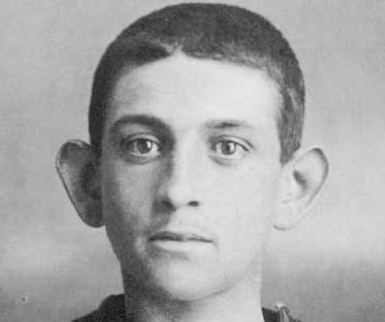
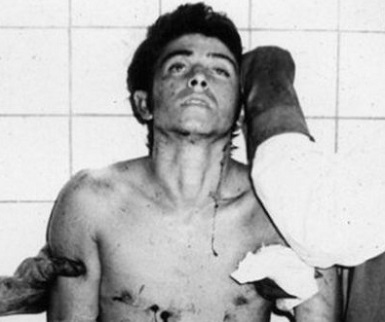
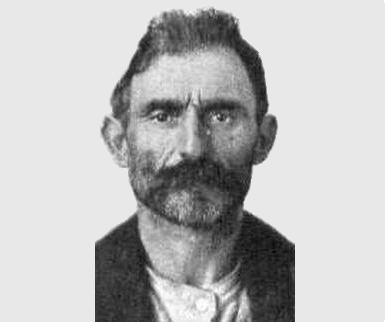
Detained on the spot, the man was identified as Aníbal González Igonet.
A search of his residence yielded indisputable physical evidence:
- The heavy claw hammer, concealed beneath his mattress, bearing microscopic blood residues.
- Purses, personal compacts, identification cards, and watches belonging to all three deceased victims and the wounded survivors.
Under questioning, González Igonet confessed to the attacks. While claiming robbery as his motive, state psychiatric evaluations diagnosed deep-seated misogynistic psychopathy, finding that the physical act of shattering women's skulls served an intense sadistic need for domination and omnipotence.
Sentencing and 43 Years in Prison
In 1967, the Criminal Court of La Plata handed down the maximum penalty available under the Argentine Penal Code: life imprisonment with indefinite preventive detention (reclusión perpetua más la accesoria de reclusión por tiempo indeterminado).
Transferred to Sierra Chica Maximum Security Prison (Unit 2), González Igonet spent over forty years in disciplined labor, working inside the prison cobbler and carpentry workshops.
By the early 2000s, public defenders argued that four continuous decades of penal confinement exceeded constitutional limits on life sentences.
In March 2006, the La Plata Court of Appeals granted González Igonet conditional parole. At age sixty-eight, Aníbal González Igonet walked out of Sierra Chica Prison after completing 43 uninterrupted years behind bars, remaining one of the longest-incarcerated inmates in the judicial history of the Argentine Republic.