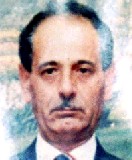


Forensic & Criminological Matrix
| Parameter | Forensic Detail |
|---|---|
| Forensic Heading / Aliases | The Empire State Building Shooter |
| Legal Identity | Ali Hassan Abu Kamal |
| Confirmed Victims | 1 deceased, 6 wounded |
| Active Timeline | February 23, 1997 |
| Jurisdiction / Area of Operations | New York City, United States |
| Criminological Classification | Mass Murderer / Politically and personally motivated assailant |
| Forensic Modus Operandi | Accessing public observation deck as a tourist with concealed firearm, executing sudden mass shooting, followed by suicide |
| Weapon / Mechanism of Death | .380-caliber Beretta handgun and self-inflicted gunshot wound |
| Motive / Behavioral Dynamics | Geopolitical grievances against Western powers and Israel, compounded by severe financial ruin |
| Judicial Outcome | Perpetrator suicide at the crime scene; case closed without criminal trial |
1. Background and Profile
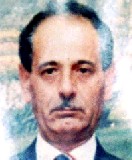
Ali Hassan Abu Kamal was born on September 19, 1927, in Jaffa under the British Mandate of Palestine. His family fled during the 1948 Arab-Israeli War, relocating to the Gaza Strip. He built a respected career as an English teacher, translator, and tutor, achieving financial stability and raising six children. In late 1996, after decades in education, he immigrated to the United States with his family, entering New York on a legal nonimmigrant visa in December 1996.
2. Crime Spree and Modus Operandi
On February 23, 1997, Abu Kamal visited the 86th-floor observation deck of New York's iconic Empire State Building. Shortly after 5:00 p.m., he drew a .380-caliber Beretta handgun—purchased in Florida weeks prior—and began firing indiscriminately at tourists. He killed 27-year-old Danish musician Christoffer Burmeister and wounded six other individuals before turning the weapon on himself. He was transported to a hospital where he died from his self-inflicted gunshot wound.
3. Police Investigation and Forensic Hunt
Law Enforcement recovered letters written in both English and Arabic on the gunman's body, expressing intense hostility toward the United States, Britain, and France over their support for Israel. Initially, family members claimed the attack was purely the result of depression following a $300,000 financial loss in a business venture. However, ten years later, his daughter revealed that the financial cover story had been orchestrated by Palestinian authorities to shield peace negotiations, confirming the shooting was a planned political statement.
4. Legal Proceedings and Outcome
Due to the suicide of Abu Kamal at the crime scene, no criminal trial took place. Forensic investigators closed the case after establishing the premeditated nature of the assault and corroborating the ideological and personal motivations behind the tragedy.
5. Psychiatric Evaluation and Conclusion
Forensic analysis indicated that Abu Kamal acted under a combination of acute psychological distress from financial devastation and entrenched political radicalization, resulting in a calculated act of lethal violence designed to maximize public exposure and deliver a political message.