


Forensic & Criminological Matrix
| Parameter | Forensic Detail |
|---|---|
| Forensic Heading / Aliases | The White House Hijacker |
| Legal Identity | Samuel Joseph Byck |
| Confirmed Victims | 2 (Airport police officer and copilot) |
| Attributed / Indicted Victims | 2 |
| Active Timeline | February 22, 1974 |
| Jurisdiction / Area of Operations | Baltimore/Washington International Airport (Maryland, USA) |
| Criminological Classification | Suicidal terrorist / Politically motivated rampage killer |
| Forensic Modus Operandi | Clandestine boarding of a commercial aircraft carrying a firearm and improvised incendiary device, crew coercion, and attempted forced deviation of flight path |
| Weapon / Mechanism of Death | .38 caliber revolver and gasoline-based incendiary explosive device |
| Motive / Behavioral Dynamics | Severe mental disorder with persecutory delusions, extreme sociopolitical grievances, and obsessive fixation on President Richard Nixon |
| Judicial Outcome | Extinction of criminal liability due to the perpetrator's death (consummated suicide following police intervention) |
1. Background and Profile
Samuel Joseph Byck was born in 1930 to an impoverished family in Philadelphia. His adult life was characterized by employment instability, numerous business failures, and a progressive deterioration of his mental health. Byck developed a paranoid behavioral pattern, harboring deep grievances against government authorities, the tax system, and large corporations. His growing social isolation and personal frustration channeled his grievances into an obsessive fixation on the early 1970s U.S. political landscape, specifically targeting President Richard Nixon's administration and the Watergate scandal.
2. Crime Spree and Modus Operandi
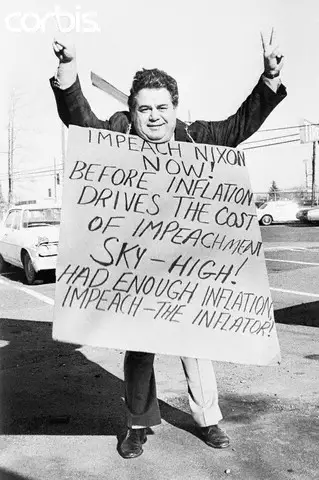
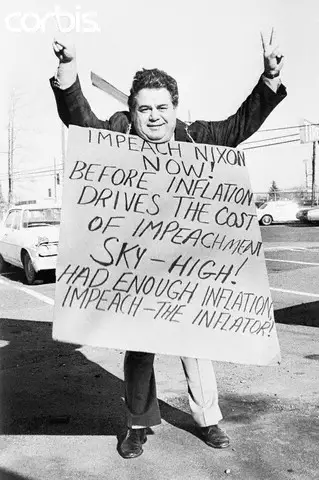
On February 22, 1974, after publicly airing his grievances through solo protests dressed as Santa Claus or carrying picket signs, Byck executed a plan meticulously documented on audio tapes that he had previously mailed to public figures and journalists, including Jack Anderson. He traveled to Baltimore/Washington International Airport, concealing a .38 caliber revolver and a crude incendiary device composed of gasoline cans and a rudimentary electrical detonator.
Byck bypassed the era's lax security checkpoints, boarding Delta Air Lines Flight 523 bound for Atlanta before departure. Once onboard, he breached the cockpit, shooting and critically wounding the pilot and copilot (the latter subsequently dying from his injuries). During his approach to the aircraft, he also shot and killed an airport police officer who attempted to intercept him. His stated objective was to force the crew to take off and pilot the aircraft toward Washington, D.C., to deliberately crash it into the White House and assassinate President Nixon.
3. Investigation and Arrest
Law enforcement response at the airfield was immediate. While Byck held the aircraft and demanded takeoff, local and state police surrounded the plane. An officer managed to fire through the cockpit door, striking Byck in the arm and side. Realizing he was cornered and unable to consummate his kamikaze attack, Byck shot himself in the head, dying instantly before tactical units could fully storm the aircraft.
4. Legal Proceedings and Outcome
Because the perpetrator died at the scene from self-inflicted wounds sustained during the police intervention, criminal proceedings were formally dismissed due to the death of the defendant. However, federal and FBI forensic investigators extensively analyzed the audio tapes mailed by Byck to media outlets. These recordings provided detailed documentation of his planning, psychological deterioration, and delusional ideological motivation, serving as a benchmark in the criminological study of psychiatric-driven terrorism.
5. Psychiatric Evaluation and Aftermath
Post-incident forensic evaluations concluded that Samuel Byck suffered from a severe psychiatric disorder, consistent with paranoid schizophrenia or untreated chronic delusional disorder. His detachment from reality, combined with access to firearms, catalyzed an extreme episode of suicidal and homicidal violence. The case prompted a comprehensive overhaul of security protocols across U.S. commercial airports, accelerating the implementation of mandatory metal detectors and baggage screening to prevent weapon infiltration.