Forensic & Criminological Matrix
| Parameter | Forensic Detail |
|---|---|
| Forensic Heading / Aliases | The Butcher of Wenzhou, The Butcher |
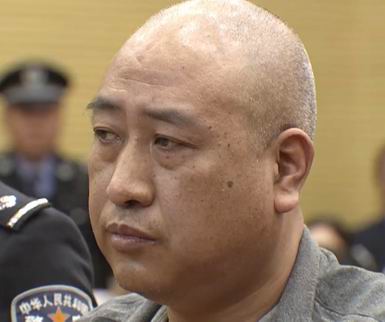
| Legal Identity | Chen Yongfeng (陈勇锋) |
| Confirmed Victims | 10 |
| Attributed / Indicted Victims | 10 |
| Active Timeline | February 28, 2003 – May 24, 2003 |
| Jurisdiction / Area of Operations | Wenzhou, Zhejiang Province, People's Republic of China |
| Criminological Classification | Profit-driven serial killer, dismemberer |
| Forensic Modus Operandi | False business lures, bludgeoning/stabbing at rented quarters, post-mortem dismemberment, river/landfill disposal |
| Weapon / Mechanism of Death | Blunt force trauma and sharp cutting instruments |
| Motive / Behavioral Dynamics | Financial gain, pathological envy, robbery of cash reserves |
| Judicial Outcome | Sentenced to death on December 5, 2003; executed in 2004 |
1. Background and Profile
Chen Yongfeng was born in 1983 in Qingtian County, Zhejiang Province, China. Raised in economically depressed conditions, he dropped out of school upon completing elementary education. During his adolescence and early adulthood, he engaged in unskilled manual labor, including four years spent fluffing cotton for textile processing.
In early 2003, Chen relocated to the industrial hub of Wenzhou to work as a freelance scrap metal scavenger. Within this informal economy of migrant workers, laborers routinely carried all their cash savings on their persons to prevent theft from shared rental rooms. Noticing this vulnerability, Chen formulated a lethal plan to rob his peers. His motive was further ignited by resentment when a competing collector purchased a lucrative consignment of scrap materials that Chen lacked the capital to secure.
2. Crime Spree and Modus Operandi
Over an 85-day period between February 28 and May 24, 2003, Chen systematically targeted fellow scrap collectors working in Wenzhou. He approached victims at public garbage and recycling collection points, luring them to his rented residence under the pretense of selling bulk recyclable metals at discounted rates.
Once inside his home, Chen ambushed the victims, using blunt and sharp tools to inflict fatal wounds. He searched the bodies to steal their cash, netting a total of 10,032 yuan (approximately $1,200 USD) across all ten crimes. Following the murders, he dragged the bodies to his sanitation area and systematically dismembered them into small fragments. The body parts were packed into heavy-duty plastic trash bags and discarded in local rivers and four separate garbage dumps around Wenzhou.
3. Police Investigation and Forensic Evidence
The sequential disappearance of ten scrap merchants aroused panic among Wenzhou's migrant labor community. Simultaneously, municipal sanitation crews and river maintenance workers discovered plastic bags containing human remains scattered in waste systems and waterways.
Forensic pathologists examined the recovered packages, identifying precise anatomical cuts designed to facilitate transportation and disposal. Investigators ultimately recovered 229 human body parts stored across 29 plastic bags, belonging to nine prior male victims. Public security officers traced the last known movements of the missing workers, establishing a common link to scrap trade offers made by Chen.
4. Legal Proceedings and Trial
On May 24, 2003, law enforcement officers raided Chen Yongfeng's residence while investigating a report of a missing scavenger. Officers caught Chen in the act of committing his tenth murder, interrupting him as he prepared to dismember the corpse.
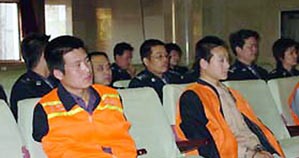
Chen's trial began on November 17, 2003, at the Wenzhou Intermediate People's Court. While Chen denied criminal guilt during testimony, he conceded the authenticity of the physical and forensic evidence presented by the prosecution. In a parallel civil ruling, he was ordered to pay approximately 90,000 yuan in restitution for funeral costs to the victims' families. On December 5, 2003, the court found him guilty on all counts and sentenced him to death.
5. Psychiatric Evaluation and Execution
Defense counsel argued for diminished capacity, asserting that the horrific dismemberment of ten victims—described as 'more gruesome than a horror movie'—pointed to severe mental illness. However, state psychiatric evaluators declared Chen sane, noting his deliberate planning, clear financial motive, and adeptness at dodging prosecutors' questioning.
Following the rejection of his appeal by the Higher People's Court of Zhejiang Province, the death sentence was upheld. Chen Yongfeng was executed by firing squad in early 2004.