



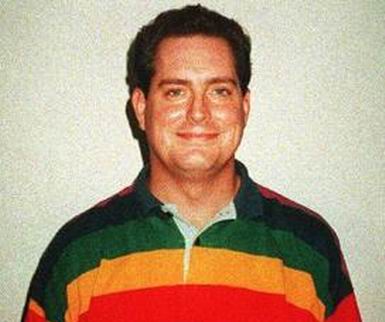
Forensic & Criminological Matrix
| Parameter | Forensic Detail |
|---|---|
| Forensic Heading / Aliases | Loy Yeung, Wong Gay, Lim Onn |
| Legal Identity | Leung Ying |
| Confirmed Victims | 11 |
| Attributed / Indicted Victims | 11 (plus 3 claimed in previous tong wars) |
| Active Timeline | August 22, 1928 |
| Jurisdiction / Area of Operations | Fairfield, Solano County, California (United States) |
| Criminological Classification | Mass Murderer / Revenge-driven Killer |
| Forensic Modus Operandi | Nocturnal rampage using a rifle and hatchet while under the influence of cocaine |
| Weapon / Mechanism of Death | Rifle gunshot wounds and hatchet blunt force trauma / decapitation |
| Motive / Behavioral Dynamics | Workplace revenge, romantic rejection, and persecutory delusions of food poisoning |
| Judicial Outcome | Sentenced to death on August 31, 1928; committed suicide by hanging in San Quentin State Prison on October 22, 1928 |
1. Background and Profile
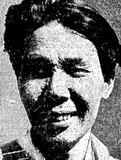
Leung Ying, also documented in law enforcement records under the aliases Loy Yeung, Wong Gay, and Lim Onn, was born in China in 1899 and later immigrated to the United States. In 1924, he was apprehended by the San Francisco Police Department as a gunman and narcotics dealer associated with criminal tong syndicates. During police interrogations, Ying boasted of having killed three individuals during inter-tong warfare, gaining a reputation among local law enforcement and peers as a violent and unpredictable criminal.
After living in San Jose and working in a fruit packing facility, Ying became affiliated with the Hop Sing Tong. However, he was formally expelled from the organization due to excessive drug abuse and cocaine dependency. Roughly three months prior to the mass homicide, Ying obtained employment as a cook and fruit picker at the Bryan ranch, located five miles outside Fairfield in Solano County, California. The agricultural property was leased by Wong Gee. Ying was eventually discharged from his position after either sexually assaulting or inappropriately pursuing Wong Gee's 15-year-old daughter, Nellie Wong. This termination engendered intense personal resentment and paranoid fixations directed at the entire Wong family.
2. Crime Spree and Modus Operandi
In the early morning hours of August 22, 1928, while heavily intoxicated on cocaine, Leung Ying returned to the Bryan ranch equipped with a repeating rifle and a hatchet. His assault on the property was executed with extreme brutality. He initially entered an underground dugout used as a gambling and sleeping area for ranch hands. Ying shot Wong Gee directly through the heart, killing him instantly, and shot worker Cheung Yueng dead in his bed. A third laborer, Wa Wey, was shot in the back as he attempted to flee into the open yard.
Proceeding across the compound, Ying attacked the residence of Wong Hueng, 56, the brother of Wong Gee. Although Wong Hueng locked his door and sought cover under a bed, Ying fired a rifle round through the window, striking him in the abdomen. The killer then breached the cabin of Low Shek, 61, the ranch cook, shooting him in the stomach; Low Shek died hours later at Fairfield Hospital. Crossing a pear orchard toward the primary residence, Ying shot laborer Yeung Soon dead. At the front door of the main house, Ying shot Wong Gee's wife between the eyes and used his hatchet to decapitate the two-week-old infant she carried in her arms. Ying entered the children's bedroom, shooting 4-year-old Johnnie Wong in the head at close range and crushing the skull of 3-year-old Willie Wong with the hatchet as the child lay in bed. 15-year-old Nellie Wong jumped through a window to escape but was shot in the back as she fled through the orchard; she succumbed to her wounds at Vallejo Hospital on August 27, becoming the eleventh fatal victim. Two younger daughters, Ruth and Helen Wong, escaped injury by hiding beneath a bed. Within twenty minutes, Ying killed or fatally wounded eleven individuals and injured four others before fleeing in Wong Gee's automobile.
3. Police Investigation and Manhunt
When Solano County law enforcement officers arrived at the crime scene, they encountered the deadliest mass murder in Californian history up to that era. Forensic examination confirmed that all homicides were carried out with a high-powered rifle and a heavy hatchet, combined with severe post-mortem mutilation performed under the influence of narcotics.
A statewide manhunt was immediately initiated. After abandoning both the stolen automobile and his rifle near a mine shaft to avoid police checkpoints, Ying fled on foot toward northern California. On the afternoon of August 23, 1928, law enforcement officers discovered the fugitive sleeping inside a water tank house near the Empire mine in Grass Valley. He was arrested without armed resistance and placed in custody at Nevada City prior to his extradition to Solano County authorities.
4. Legal Proceedings and Conviction
During police questioning, Leung Ying fully admitted to committing the eleven murders. He noted that during his escape he had observed police officers trailing him, but abstained from opening fire because he believed that killing a white man would guarantee his execution by hanging. When questioned regarding his motive, he initially offered a narrative of unrequited romantic interest, but later articulated paranoid delusions claiming that the Wong family had attempted to murder him with poisoned food.
He also expressed admiration for notorious contemporary criminals Joe Tanko and Floyd Hall. The night following his capture, Ying attempted suicide in his holding cell by hanging himself with a blanket. After guards thwarted the attempt, he spent the remainder of the night banging his head against the concrete walls and floor while suffering severe cocaine withdrawal symptoms.
On August 24, 1928, Ying was arraigned at the Superior Court in Suisun City. He entered a plea of guilty to first-degree murder charges and publicly stated to the court that he regretted not having had the opportunity to kill half a dozen more people. On August 31, 1928, the presiding judge sentenced Leung Ying to death by hanging, with an execution date scheduled for November 9, 1928.
5. Psychiatric Assessment and Aftermath
Psychiatric evaluations of Leung Ying revealed a deeply antisocial personality matrix characterized by emotional detachment, violent impulsivity, and chronic substance addiction. His cognitive processes were dominated by persecutory ideas regarding his former employers.
Following his conviction, Ying was transferred to the condemned row at San Quentin State Prison. However, the judicial execution was never carried out. Between 9:00 p.m. and 11:00 p.m. on October 22, 1928, approximately two weeks prior to his scheduled execution date, Ying committed suicide in his cell by hanging himself with a bath towel attached to the cell bars. Coroner officials confirmed the death, officially closing the criminal file.