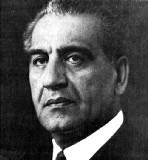




Forensic & Criminological Matrix
| Parameter | Forensic Detail |
|---|---|
| Forensic Heading / Aliases | Gourgen Yanikian |
| Legal Identity | Gourgen Mkrtich (Megerdich) Yanikian |
| Confirmed Victims | 2 |
| Attributed / Indicted Victims | 2 |
| Active Timeline | January 27, 1973 |
| Jurisdiction / Area of Operations | Santa Barbara, California (United States) |
| Criminological Classification | Politically Motivated Assassin / Retributive Vigilante |
| Forensic Modus Operandi | Premeditated trickery involving fake art donations to lure foreign diplomats, utilizing a handgun concealed inside a hollowed-out book |
| Weapon / Mechanism of Death | 9mm Luger pistol and revolver |
| Motive / Behavioral Dynamics | Severe transgenerational trauma and ideologically motivated revenge for the 1915 Armenian Genocide |
| Judicial Outcome | Convicted of two counts of first-degree murder (July 1973); sentenced to life imprisonment; paroled in January 1984 due to terminal illness; died two months later |
1. Background and Profile
Gourgen Mkrtich Yanikian was born on December 24, 1895, in Erzerum, Ottoman Armenia. During the height of the Armenian Genocide in 1915, the young Yanikian witnessed the systematic slaughter of 26 members of his family by Ottoman forces and irregular bands. Most traumatizing was watching while hiding as his elder brother's throat was slashed before his eyes.
Following the collapse of the Ottoman Empire, Yanikian studied engineering at the University of Moscow and eventually emigrated to the United States. Reestablishing himself as an educated professional, he published several novels in English, including The Triumph of Judas Iscariot (1950), Harem Cross (1953), and The Voice of an American (1960). Beneath his outward appearance as an accomplished immigrant writer, Yanikian harbored a deep-seated grievance concerning the lack of historical accountability for the massacres of his youth.
2. Criminal Career and Modus Operandi
In early 1973, at the age of 78, Yanikian engineered a plan to target diplomatic representatives of the Republic of Turkey. He contacted the Turkish Consulate General in Los Angeles, asserting that he possessed a rare oil portrait from the Sultan's palace and a historical Ottoman bank note, both of which he wished to gift to the Turkish state. Enticed by the offer, Consul General Mehmet Baydar and Vice-Consul Bahadır Demir agreed to meet Yanikian in person at the Biltmore Hotel in Santa Barbara, California.
On January 27, 1973, the two diplomats entered Yanikian's suite. While they were seated awaiting the presentation of the artifacts, Yanikian retrieved a 9mm Luger handgun hidden inside a hollowed-out book. Without warning, he fired multiple rounds point-blank into both diplomats. As they fell to the floor, Yanikian approached and fired additional shots into their heads and torsos to ensure death.
3. Police Investigation and Forensic Hunt
Following the execution, Yanikian made no attempt to flee. He picked up the hotel room phone, contacted the front desk, and calmly reported that he had killed "two evils." He then walked down to the hotel's patio area, sat down, and waited quietly for law enforcement to arrive.
Santa Barbara Police officers arrived on scene shortly thereafter, discovering the bullet-riddled bodies of Baydar and Demir alongside spent 9mm shell casings and the hollowed-out book. Yanikian surrendered without resistance. Forensic autopsies confirmed that both victims died almost instantly from multiple gunshot wounds at close range.
4. Trial and Legal Proceedings
Yanikian’s trial convened in the Santa Barbara County Superior Court in mid-1973. Supported by Armenian-American sympathizers, Yanikian took the stand alongside his interpreter, Aram Saroyan (uncle of author William Saroyan). Yanikian sought to transform the court proceedings into a tribunal on the Armenian Genocide, detailing the slaughter of his family and stating: "I'm not Gourgen M. Yanikian but unacknowledged history coming back for the 1,500,000 Armenians whose bones desecrate my invisible existence..."
However, District Attorney David D. Minner successfully argued that historical grievances could not serve as a legal defense for premeditated homicide. In July 1973, Yanikian was found guilty of two counts of first-degree murder and sentenced to life imprisonment.
5. Psychiatric Evaluation and Aftermath
Psychiatric assessments found Yanikian legally sane, operating without psychotic delusions but driven by severe, unaddressed post-traumatic stress disorder and a calcified desire for ideological retribution.
After serving over ten years in prison, Yanikian was granted parole on medical grounds in January 1984 by California authorities over strong protests from the Turkish government. He died of natural causes two months later on March 27, 1984, at the age of 88.
In later years, District Attorney Minner expressed regret over excluding historical testimony regarding the genocide from the trial. Yanikian’s actions resonated deeply within militant Armenian circles, leading the Armenian Secret Army for the Liberation of Armenia (ASALA) to adopt his name for their initial operational cell.