




Forensic & Criminological Matrix
| Parameter | Forensic Detail |
|---|---|
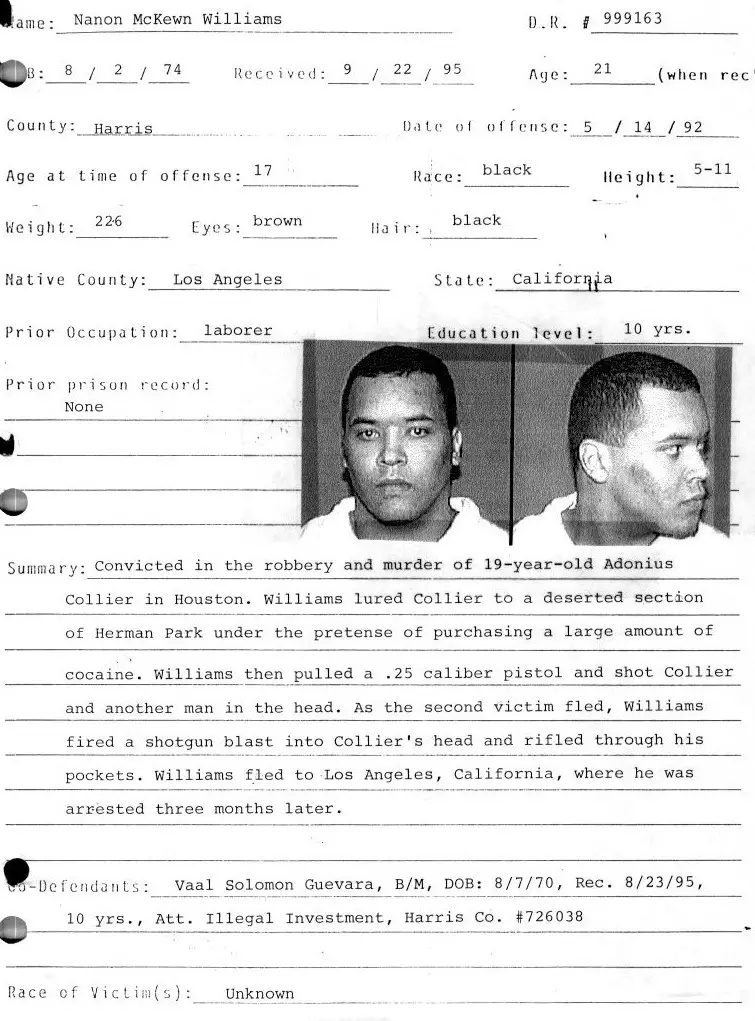
| Forensic Heading / Aliases | Nanon Williams |
| Legal Identity | Nanon McKewn Williams |
| Confirmed Victims | 1 |
| Attributed / Indicted Victims | 1 |
| Active Timeline | 1992 |
| Jurisdiction / Area of Operations | Houston, Texas, USA |
| Criminological Classification | Juvenile Homicide / Drug-related crime |
| Forensic Modus Operandi | Firearm usage during robbery and drug transaction |
| Weapon / Mechanism of Death | .25 caliber pistol and shotgun |
| Motive / Behavioral Dynamics | Robbery and drug territory control |
| Judicial Outcome | Death sentence (1995), commuted to life imprisonment (2005) |
1. Background and Profile
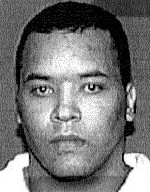
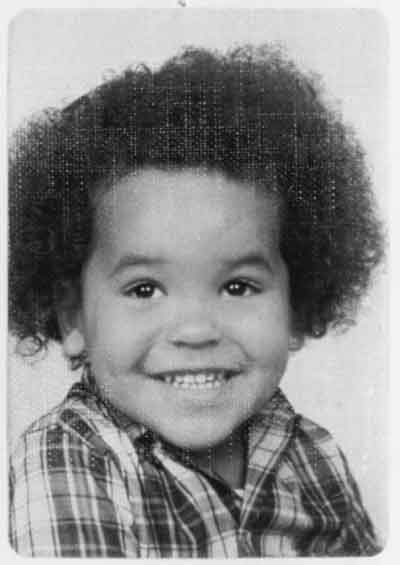
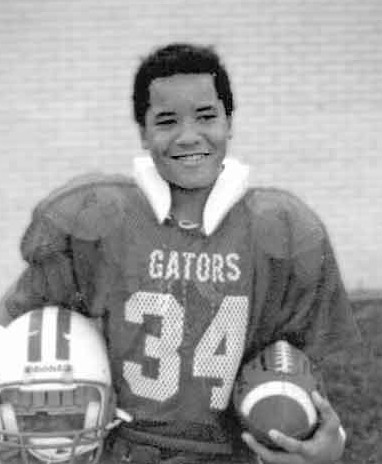
Nanon McKewn Williams was born on August 2, 1974. His upbringing was defined by extreme instability, as his parents were involved in drug manufacturing and trafficking. Williams experienced significant trauma, including witnessing his uncle's murder at age seven and his father's death at age twelve. These events, coupled with frequent displacement, shaped a life characterized by early exposure to the juvenile justice system.
2. Crime Spree
On the night of May 14, 1992, in Hermann Park, Houston, a drug deal involving Nanon Williams, Vaal Guevara, and Adonius Collier turned lethal. Collier was shot and killed. The prosecution alleged Williams was the sole shooter, using both a pistol and a shotgun. Subsequent forensic reviews have challenged this, indicating that the initial fatal shot was fired by Vaal Guevara, who received a plea deal in exchange for his testimony.
3. Investigation and Forensic Hunt
The investigation was marred by significant failures at the Houston Police Department crime laboratory. Ballistics evidence presented at trial was later proven to be inaccurate. The defense's failure to secure independent forensic experts allowed the prosecution to build a case on unreliable accomplice testimony, a fact that has since been acknowledged by various legal observers and post-conviction judges.
4. Legal Proceedings and Outcome
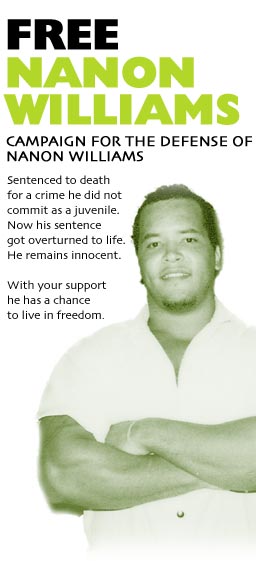
Williams was sentenced to death in 1995. His case gained international attention due to his age at the time of the crime (17). Following extensive appeals and the exposure of systemic mismanagement within the HPD crime lab, his death sentence was commuted to life in prison in 2005. He remains incarcerated, having become an advocate for juvenile justice reform.