Forensic & Criminological Matrix
| Parameter | Forensic Detail |
|---|---|
| Forensic Heading / Aliases | N/A |
| Legal Identity | Carl Otto Wanderer |
| Confirmed Victims | 2 |
| Attributed / Indicted Victims | 2 |
| Active Timeline | June 21, 1920 |
| Jurisdiction / Area of Operations | Chicago, Illinois, USA |
| Criminological Classification | Murderer, Parricide |
| Forensic Modus Operandi | Staged robbery using firearms |
| Weapon / Mechanism of Death | Colt M1911 pistols |
| Motive / Behavioral Dynamics | Spousal murder for convenience and concealment of sexual orientation |
| Judicial Outcome | Death sentence by hanging |
1. Background and Profile
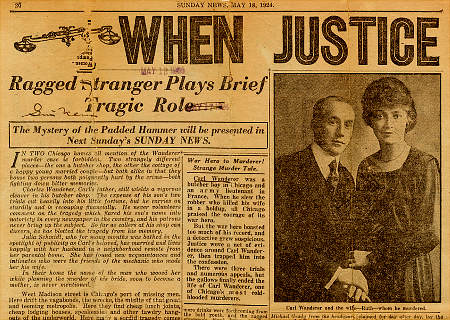
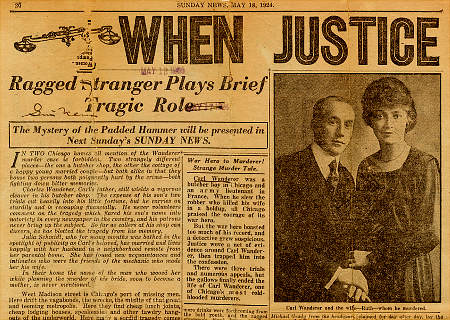
Born in 1887 to German immigrants in Chicago, Carl Otto Wanderer was a decorated World War I veteran. Despite his status as a war hero, his personal life was marked by deep deception. In 1919, he married Ruth Johnson. When she became pregnant, Wanderer's behavior shifted toward cold detachment.
2. Crime Spree
On June 21, 1920, Wanderer staged a robbery in his apartment building's vestibule. He hired a drifter, Al Watson, to participate in a fake confrontation. Instead, Wanderer shot both Watson and his wife, Ruth, with two Colt M1911 pistols, attempting to frame the drifter for the murder of his wife.
3. Investigation and Arrest
Reporters Ben Hecht and Charles MacArthur uncovered the plot by identifying the origin of the weapons and discovering love letters Wanderer had written to a man named 'James'. Confronted with this evidence, Wanderer confessed to the double murder.
4. Legal Proceedings and Outcome
Following two sensational trials, Wanderer was sentenced to death. He was executed by hanging on September 30, 1921. His final moments, spent singing on the gallows, became a notorious footnote in American criminal history.