


Forensic & Criminological Matrix
| Parameter | Forensic Detail |
|---|---|
| Forensic Heading / Aliases | Eddie, Frank Harris, Frank Johnson |
| Legal Identity | Edward Walton |
| Confirmed Victims | 1 |
| Attributed / Indicted Victims | 5 |
| Active Timeline | 1896 - 1908 |
| Jurisdiction / Area of Operations | Alabama, Illinois, Pennsylvania, Ohio, West Virginia |
| Criminological Classification | Itinerant Serial Killer |
| Forensic Modus Operandi | Use of firearms against randomly selected victims |
| Weapon / Mechanism of Death | Firearm (shooting) |
| Motive / Behavioral Dynamics | None cited / Unknown |
| Judicial Outcome | Executed by hanging |
1. Background and Profile
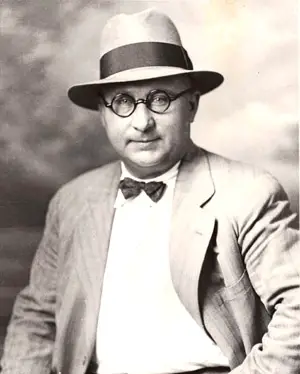
Edward Walton was a Georgia native who spent the majority of his life as a drifter, moving across the eastern United States. He frequently utilized aliases such as Frank Harris and Frank Johnson to evade detection. His life was defined by constant movement, which served as a primary mechanism for avoiding law enforcement scrutiny during an era of significant social instability.
2. Criminal Career and Modus Operandi
Walton's criminal activity spanned over a decade. His first victim was an unidentified man in Blossburg, Alabama (1896). In 1904, he murdered his common-law wife, Edith Hannah, in Chicago. In 1906, he killed a man named Blue in Shippensville, Pennsylvania. On November 16, 1907, he claimed to have murdered a woman in Steubenville, Ohio, though no body was recovered. His final victim was Beulah Martin, killed in 1908 near Clarksburg, West Virginia.
3. Investigation and Arrest
Because his crimes were scattered across multiple jurisdictions, they remained unlinked for years. It was only during the final hours before his scheduled execution that Walton provided a written confession, finally connecting the disparate murders to his own identity.
4. Legal Proceedings and Outcome
Following the murder of Beulah Martin, Walton was apprehended in West Virginia. He was tried, convicted, and sentenced to death. He was executed by hanging on July 17, 1908, shortly after documenting his previous crimes in a final confession.
5. Forensic Conclusion
Walton's case remains a significant example of early 20th-century itinerant serial homicide. His lack of a clear motive and his ability to operate under multiple identities highlight the challenges faced by law enforcement in the pre-digital era.