



Forensic & Criminological Matrix
| Parameter | Forensic Detail |
|---|---|
| Forensic Heading / Aliases | None |
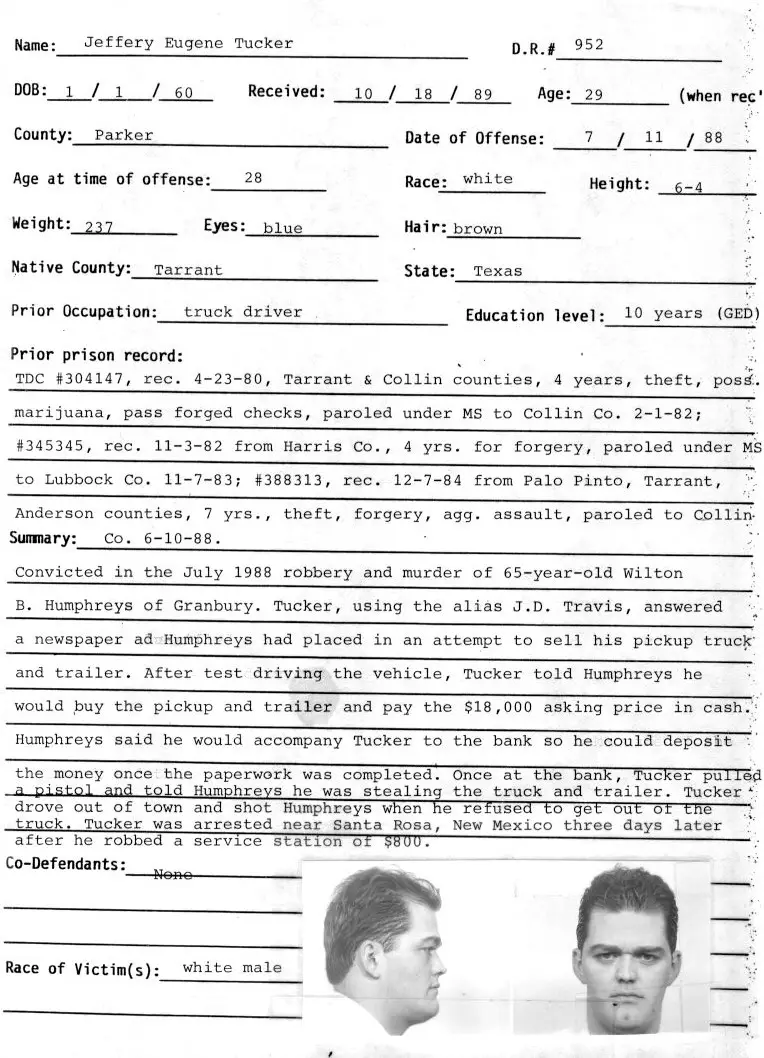
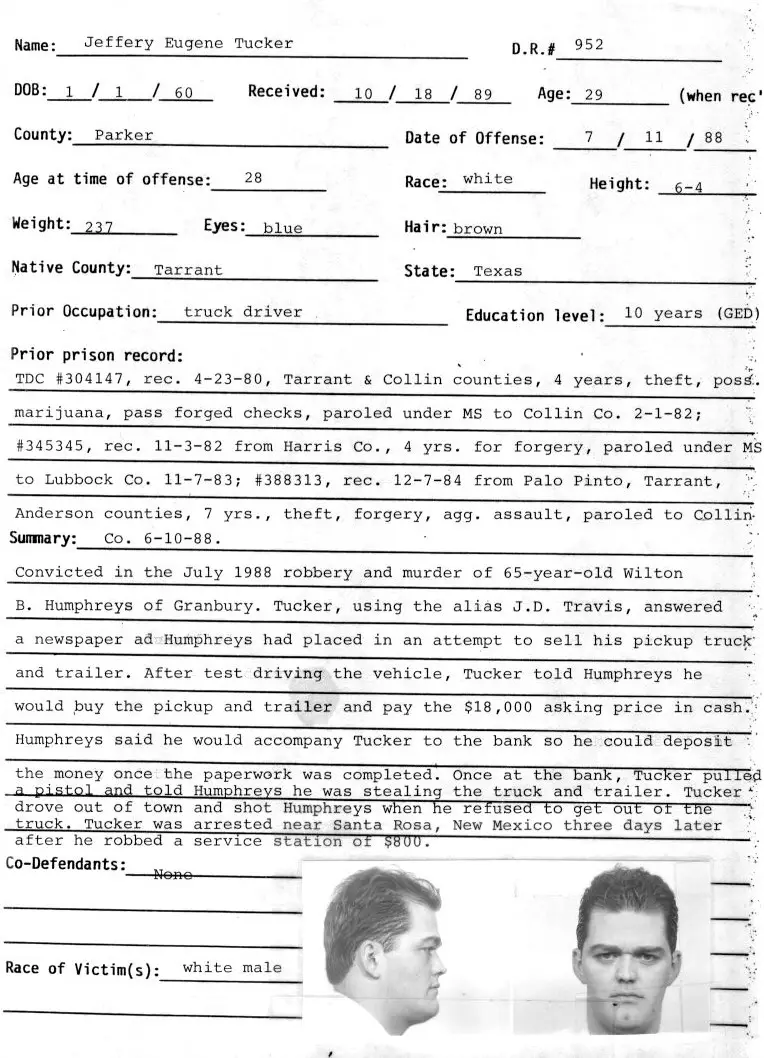
| Legal Identity | Jeffery Eugene Tucker |
| Confirmed Victims | 1 |
| Attributed / Indicted Victims | 1 |
| Active Timeline | July 1988 |
| Jurisdiction / Area of Operations | Texas and New Mexico, USA |
| Criminological Classification | Predatory Murderer / Violent Robber |
| Forensic Modus Operandi | Luring via classified ads, armed robbery, and summary execution |
| Weapon / Mechanism of Death | Handgun and vehicular run-over |
| Motive / Behavioral Dynamics | Financial / Substance abuse |
| Judicial Outcome | Executed by lethal injection |
1. Background and Profile
Born in 1960, Jeffery Eugene Tucker had a long history of criminal activity, including nine felony convictions and three prison terms. His prison record was marked by extreme violence, including a 1984 incident where he stabbed his cellmate in the head with a homemade weapon, resulting in an additional sentence for aggravated assault.
2. Crime Spree
In July 1988, shortly after his parole, Tucker sought a vehicle to facilitate a cross-country robbery spree. He targeted Wilton B. Humphreys, who had advertised a pickup truck and trailer for sale. After a test drive, Tucker forced Humphreys to drive to a remote location, where he shot him three times and ran over his body with the truck while fleeing the scene.
3. Investigation and Arrest
Following the discovery of the victim's body, investigators traced the sale to Tucker. He was apprehended three days later in New Mexico after a high-speed chase following an armed robbery at a gas station. Tucker provided a full confession to the murder and subsequent robberies.
4. Legal Proceedings and Outcome
Tucker was sentenced to death in Texas. Despite extensive appeals, his conviction was upheld. His execution, originally scheduled for September 11, 2001, was delayed by Governor Rick Perry due to the national emergency. He was ultimately executed on November 14, 2001, at the Huntsville Unit.
5. Psychiatric Evaluation and Final Statement
Defense counsel highlighted Tucker's history of organic brain impairment and childhood trauma, arguing these factors were not adequately considered during sentencing. In his final statement, Tucker expressed remorse and accepted his punishment, hoping his death would provide solace to the Humphreys family.