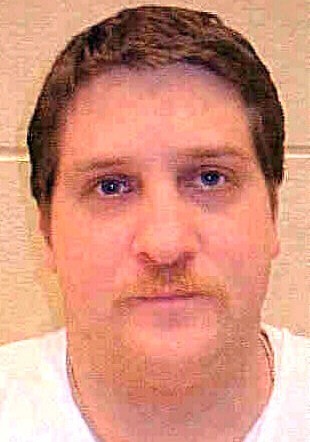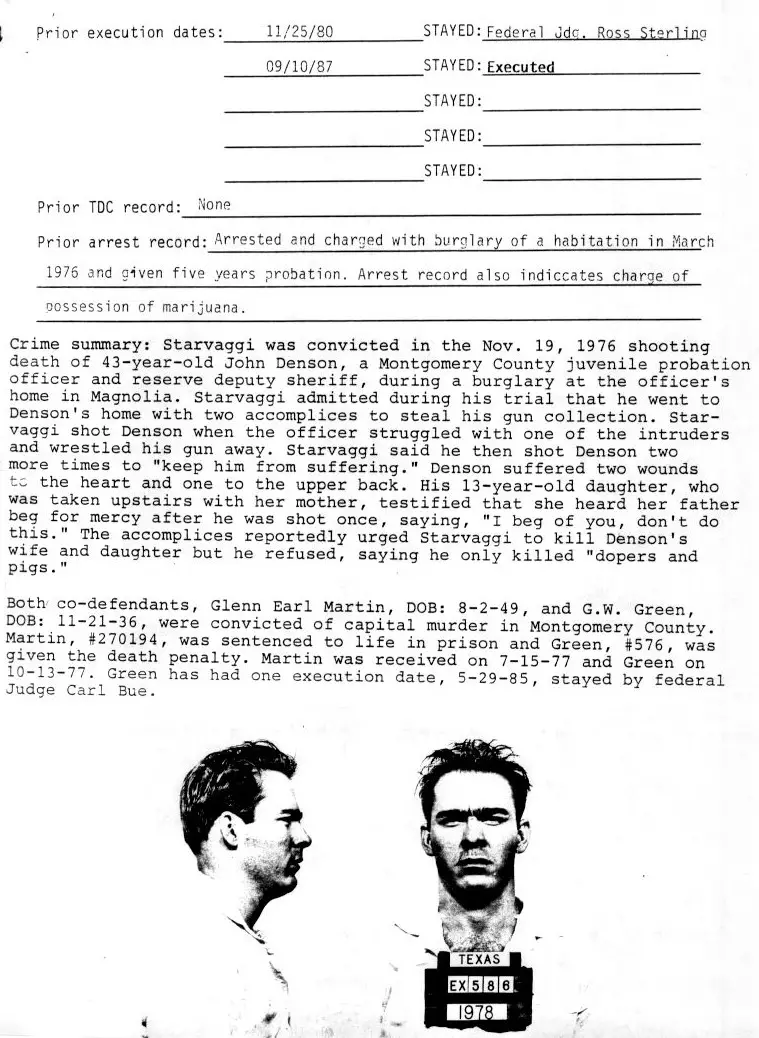
Forensic & Criminological Matrix
| Parameter | Forensic Detail |
|---|---|
| Forensic Heading / Aliases | N/A |
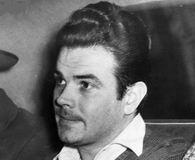
| Legal Identity | Joseph Blaine Starvaggi |
| Confirmed Victims | 1 |
| Attributed / Indicted Victims | 1 |
| Active Timeline | 1976 |
| Jurisdiction / Area of Operations | Magnolia, Texas |
| Criminological Classification | Felony Murderer |
| Forensic Modus Operandi | Home invasion, victim restraint, and summary execution |
| Weapon / Mechanism of Death | Firearm |
| Motive / Behavioral Dynamics | Theft of firearm collection |
| Judicial Outcome | Death penalty via lethal injection |
1. Background and Profile
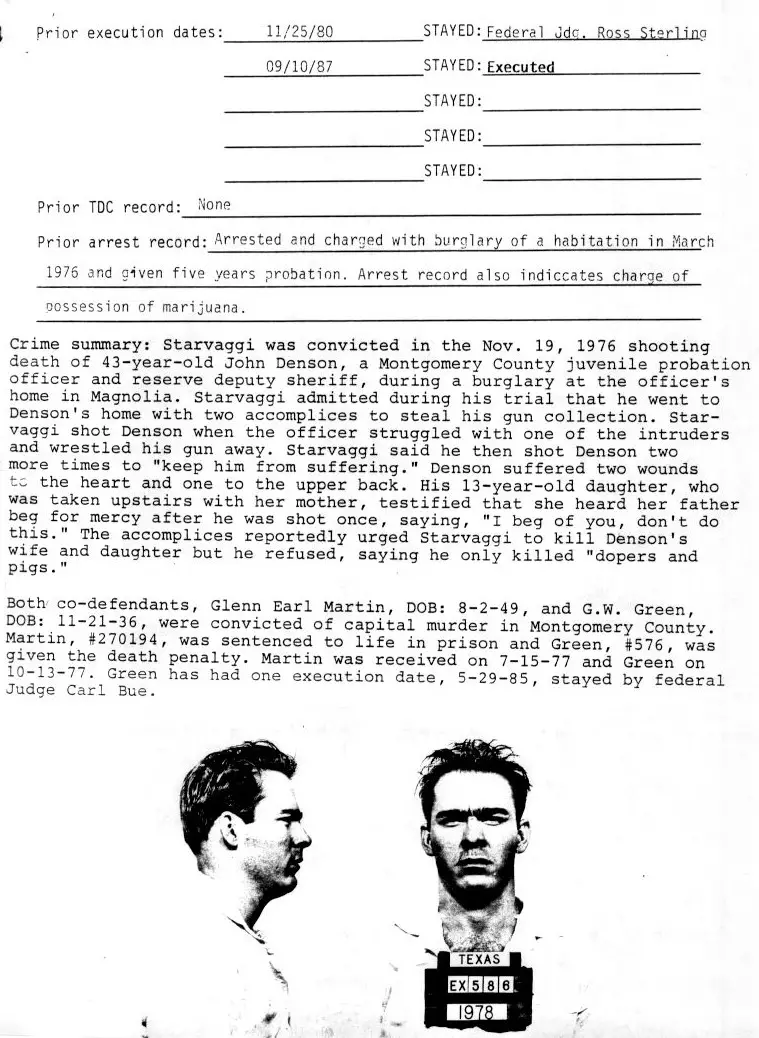
Joseph Blaine Starvaggi was a 34-year-old cement finisher originally from Champaign, Illinois. He had a documented history of property-related crimes and had received a bad conduct discharge from the military. At the time of the murder, he was on probation for burglary.
2. Crime Spree
On November 19, 1976, Starvaggi and two accomplices, G.W. Green and Glen Earl Martin, broke into the home of John Denson in Magnolia, Texas, to steal a $6,000 gun collection. During the robbery, Denson's wife and 13-year-old daughter were tied up and covered with a blanket. Starvaggi shot Denson three times, killing him. Notably, Starvaggi refused to kill the wife and daughter, stating he only killed "dopers and pigs."
3. Investigation and Arrest
Law enforcement relied heavily on the testimony of Grace and Susan Denson. Susan Denson, despite being hidden, witnessed the murder through a hole in the blanket and identified the perpetrators by their voices. The investigation led to the swift arrest of all three participants.
4. Legal Proceedings and Outcome
Starvaggi was sentenced to death. His appeals, which argued improper jury selection and temporary insanity due to substance abuse, were rejected by the U.S. District Court, the Fifth Circuit Court of Appeals, and the Supreme Court. He was executed by lethal injection on September 10, 1987.