



Forensic & Criminological Matrix
| Parameter | Forensic Detail |
|---|---|
| Forensic Heading / Aliases | None |
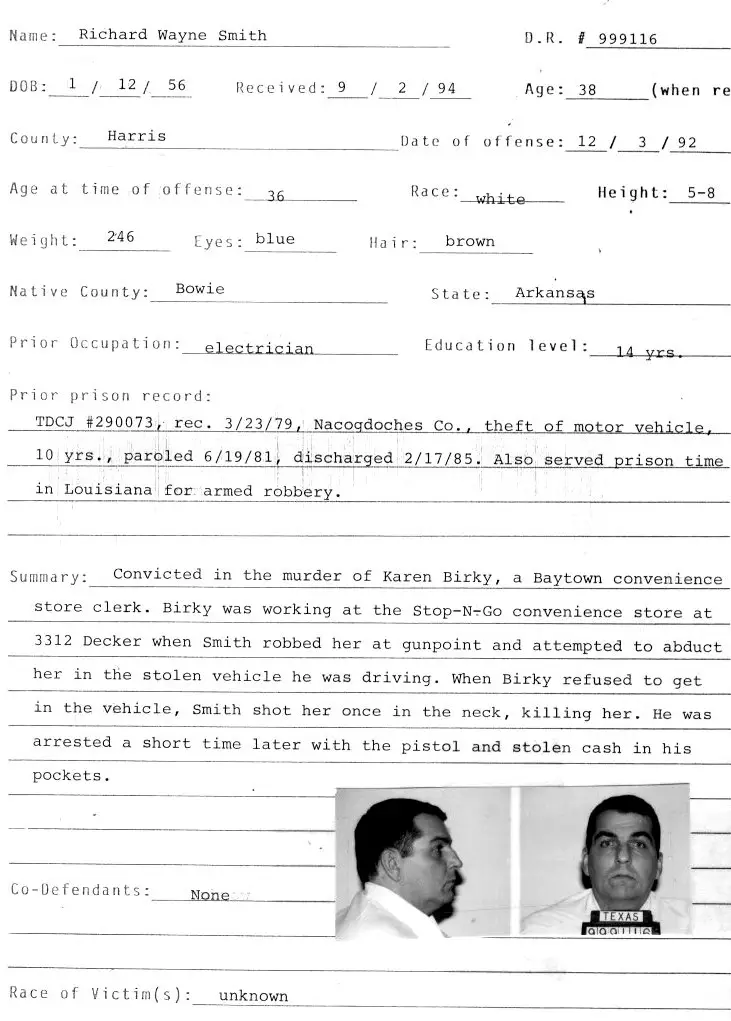
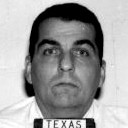
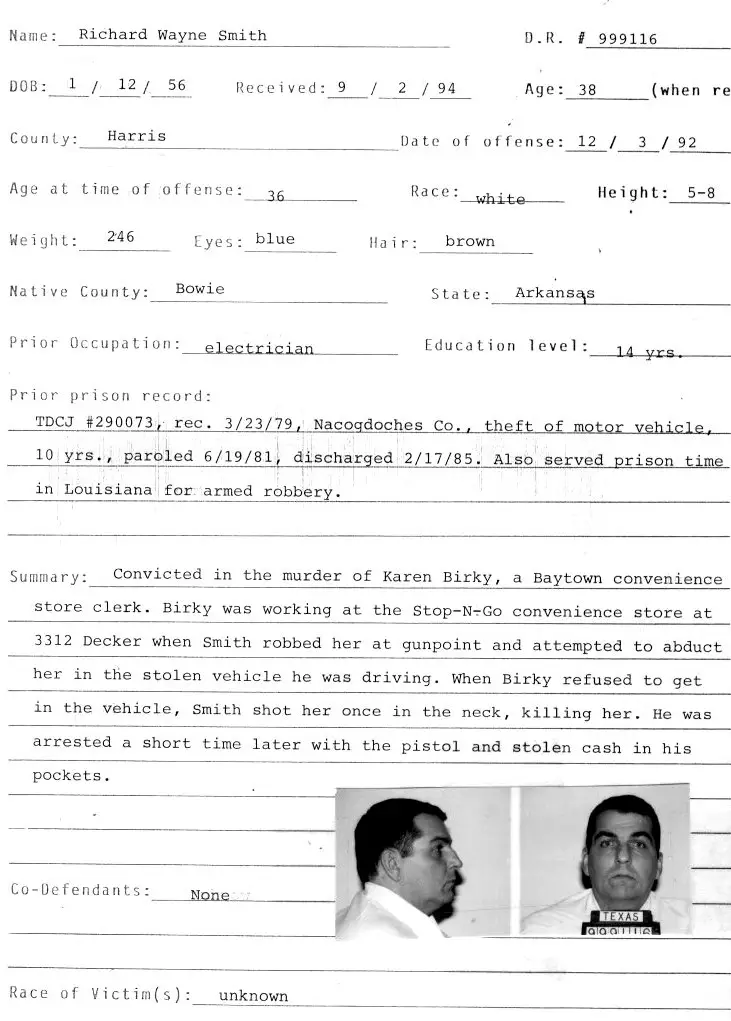
| Legal Identity | Richard Wayne Smith |
| Confirmed Victims | 1 |
| Attributed / Indicted Victims | 1 |
| Active Timeline | 1992 |
| Jurisdiction / Area of Operations | Baytown, Texas, USA |
| Criminological Classification | Predatory Murderer / Career Criminal |
| Forensic Modus Operandi | Armed robbery followed by summary execution |
| Weapon / Mechanism of Death | .32-caliber pistol |
| Motive / Behavioral Dynamics | Robbery and extreme violence |
| Judicial Outcome | Executed by lethal injection |
1. Background and Profile
Richard Wayne Smith (1956–1999) was a career criminal with a long history of offenses dating back to the 1970s. His criminal profile was defined by chronic substance abuse, including alcohol and heroin, which contributed to his volatile and violent nature. Throughout his life, he accumulated over 40 arrests and five prison sentences for crimes including armed robbery, forgery, and auto theft across Louisiana, California, and Texas.
2. Crime Spree
On December 2, 1992, Smith robbed a 'Stop N Go' convenience store in Baytown, Texas. The clerk, Karen Birky, a 38-year-old special education teacher, was working a second job to purchase supplies for her students. After complying with Smith's demands for cash, she was led into the parking lot, where Smith shot her in the neck. She later died at Hermann Hospital in Houston. The robbery netted less than $100.
3. Investigation and Arrest
Police were alerted by witnesses who heard the gunshot and observed a Jeep Cherokee fleeing the scene. Officer Russell Krutsinger, responding to the alarm, noted a partial license plate. The vehicle was later discovered at the apartment complex of Smith's ex-wife. Smith was apprehended while sleeping in a nearby car, in possession of the .32-caliber murder weapon and marked bills from the store.
4. Legal Proceedings and Outcome
During his trial, Smith claimed memory loss due to intoxication. Despite overwhelming evidence, including surveillance footage, he was convicted of capital murder in 1994. While on death row, Smith contracted hepatitis C, which led to severe liver failure.
5. Psychiatric Assessment and Execution
Smith eventually dropped all legal appeals, choosing to be executed rather than suffer the terminal progression of his liver disease. He was executed by lethal injection on September 21, 1999, in Texas. He declined to provide a final statement.