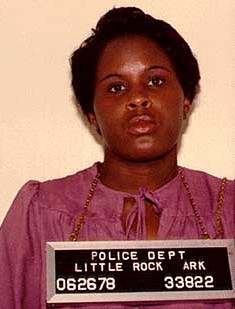



Forensic & Criminological Matrix
| Parameter | Forensic Detail |
|---|---|
| Forensic Heading / Aliases | Tia Skinner |
| Legal Identity | Tia Mariemitchell Skinner |
| Confirmed Victims | 1 deceased (Paul Skinner), 1 severely wounded (Mara Skinner) |
| Active Timeline | November 2010 |
| Jurisdiction / Area of Operations | Yale, St. Clair County, Michigan, United States |
| Criminological Classification | Contract parricide / Juvenile conspiracy murder |
| Forensic Modus Operandi | Premeditated blueprint creation, provision of household maps, staging a forced entry (ladder and unlocked window), and selecting weapons for co-conspirators |
| Weapon / Mechanism of Death | Large knives / Hemorrhagic shock and asphyxia from multiple stab wounds |
| Motive / Behavioral Dynamics | Parental control dispute, resentment over relationship restrictions, severe adolescent malice |
| Judicial Outcome | Life imprisonment without parole (re-sentenced and upheld following U.S. Supreme Court juvenile sentencing rulings) |
1. Background and Profile
Tia Mariemitchell Skinner was born in late 1993 and adopted by Paul and Mara Skinner. Raised in rural Yale, Michigan, she maintained an unblemished academic record as an honors student at high school, actively participating in church and band activities with no prior history of delinquency or severe psychological disorders. By November 2010, she was 17 years old, just weeks away from adulthood, and on track to attend Western Michigan University. Her behavioral trajectory shifted dramatically when her adoptive parents strictly forbade her romantic relationship with 18-year-old Jonathan Kurtz and confiscated her mobile phone as a disciplinary measure.
2. Crime Spree and Modus Operandi
Motivated by intense anger over parental restrictions, Skinner orchestrated a calculated murder plot against her adoptive parents, recruiting her boyfriend Jonathan Kurtz and his associate James Preston, both 18. Her forensic modus operandi involved drawing a detailed map of the neighborhood and home layout, instructing the killers on optimal timing ("the later, the better"), leaving a ladder outside alongside an unlocked window, and choosing the knives utilized in the attack. On the night of the assault, while Skinner remained inside the house, Kurtz and Preston breached the master bedroom, stabbing Paul Skinner to death and inflicting over 25 stab wounds on Mara Skinner, who miraculously survived.
3. Investigation and Arrest
St. Clair County Sheriff's deputies and forensic investigators quickly dismantled the narrative of a botched home invasion. Digital forensics revealed extensive text messaging between Skinner and the male co-defendants, establishing her role as the intellectual mastermind of the conspiracy. Evidence recovered from the crime scene, paired with communications detailing instructions and promised financial compensation of $500 per assailant, conclusively established her active participation and premeditation.
4. Legal Proceedings and Outcome
In August 2011, a St. Clair County Circuit Court jury convicted Skinner of first-degree murder, attempted murder, and conspiracy to commit murder. She received a mandatory sentence of life imprisonment without parole. Following the landmark 2012 U.S. Supreme Court ruling (Miller v. Alabama) barring mandatory life-without-parole sentences for juveniles, Skinner's case was remanded for resentencing in 2013. Judge Daniel Kelly reaffirmed her life sentence without parole, noting her deliberate calculation and lack of mitigating vulnerabilities. She was incarcerated at the Women's Huron Valley Correctional Facility in Ypsilanti.
5. Psychiatric Assessment and Aftermath
Forensic psychiatric evaluations indicated no underlying psychotic disorders or diminished capacity; evaluators emphasized that Skinner was not acting merely under peer pressure, but as the primary planner and instigator of the crime. In subsequent prison interviews, Skinner expressed regret, attributing her actions to a severe temper and poor decision-making. The case remains a significant precedent regarding juvenile culpability and parricide within American criminological jurisprudence.