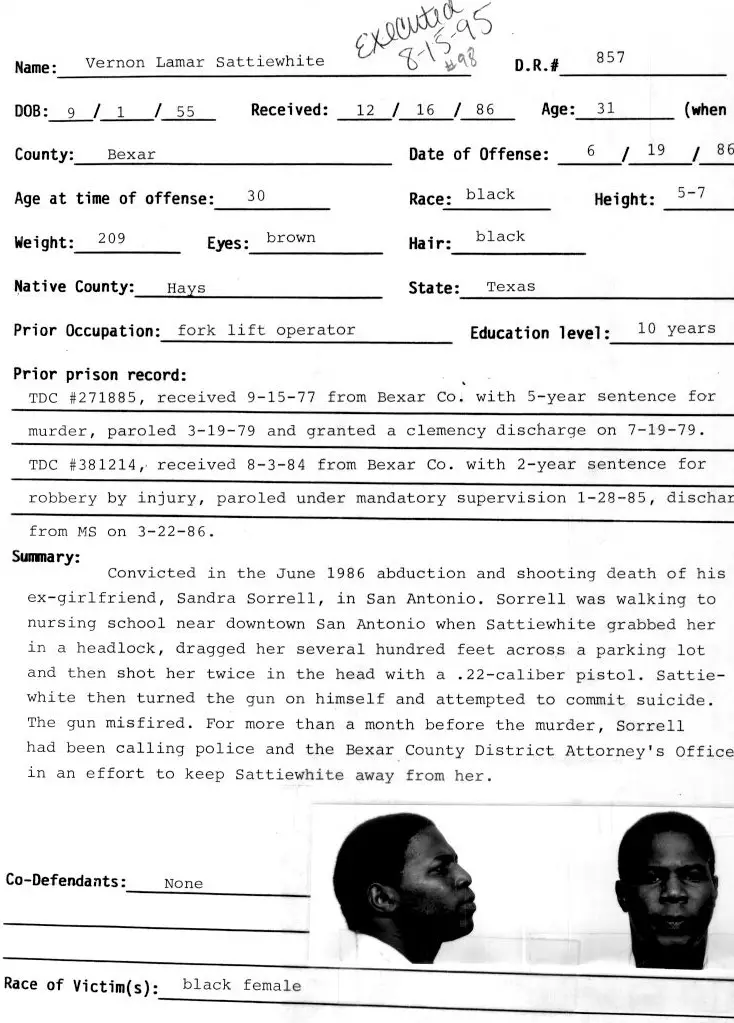





Forensic & Criminological Matrix
| Parameter | Forensic Detail |
|---|---|
| Forensic Heading / Aliases | N/A |
| Legal Identity | Vernon Lamar Sattiewhite |
| Confirmed Victims | 1 |
| Attributed / Indicted Victims | 1 |
| Active Timeline | 1986 |
| Jurisdiction / Area of Operations | Texas, United States |
| Criminological Classification | Domestic violence / Passionate homicide |
| Forensic Modus Operandi | Kidnapping, headlock immobilization, and firearm execution |
| Weapon / Mechanism of Death | .22 caliber pistol |
| Motive / Behavioral Dynamics | Pathological possessiveness and rejection of relationship termination |
| Judicial Outcome | Death penalty by lethal injection |
1. Background and Profile
Vernon Lamar Sattiewhite had a documented criminal history prior to his capital murder conviction. He was convicted of murder in 1976, serving a five-year term, and later convicted of burglary in 1984. Psychiatric evaluations during his capital trial indicated personality disorders, though experts concluded he was legally sane and competent to stand trial.
2. Crime Spree
On the morning of June 19, 1986, Sattiewhite confronted his former girlfriend, Sandra Sorrell, as she walked to school with her boyfriend, Willington Mingo. He forcibly abducted Sorrell, holding her in a headlock for two blocks before shooting her twice in the head with a .22 caliber pistol. He then attempted suicide, shouting that no one else would have her, but was apprehended shortly thereafter.
3. Investigation and Arrest
Law enforcement apprehended Sattiewhite one block from the crime scene. The investigation highlighted the victim's prior attempts to secure a protective order against the perpetrator, which had been denied by the District Attorney's office just one day before the murder.
4. Legal Proceedings and Outcome
Sattiewhite was found guilty of capital murder on December 11, 1986. His defense counsel, Nancy Barohn, unsuccessfully argued that he was mentally ill and floridly insane. After a lengthy appeals process involving both state and federal courts, his conviction and death sentence were upheld.
5. Psychiatric Evaluation and Final Disposition
Sattiewhite was executed by lethal injection on August 15, 1995. In his final statement, he thanked his attorney and addressed the victim's mother, stating, "I just hope Ms. Fielder is happy now."