Forensic & Criminological Matrix
| Parameter | Forensic Detail |
|---|---|
| Forensic Heading / Aliases | None |
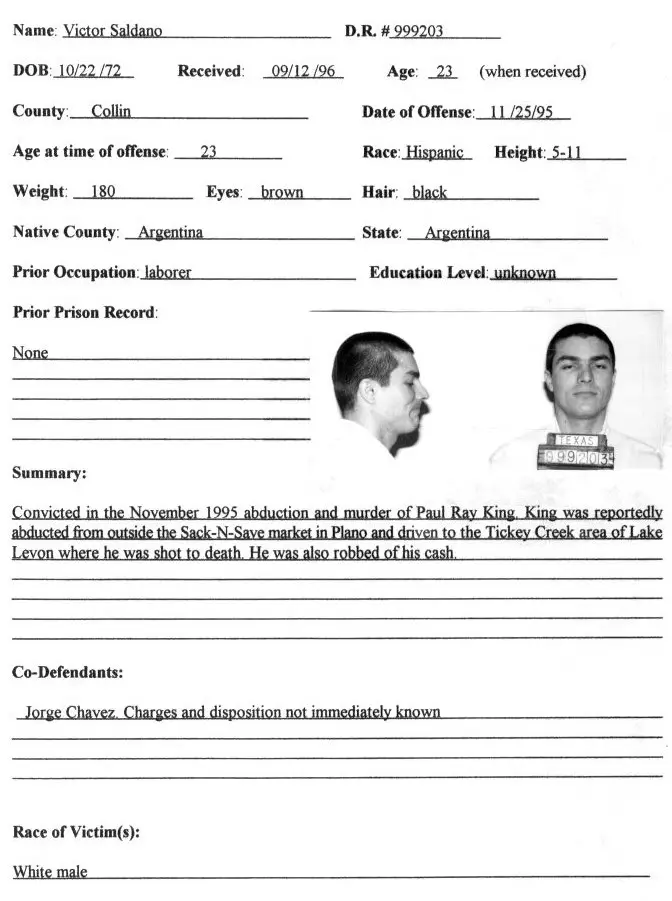
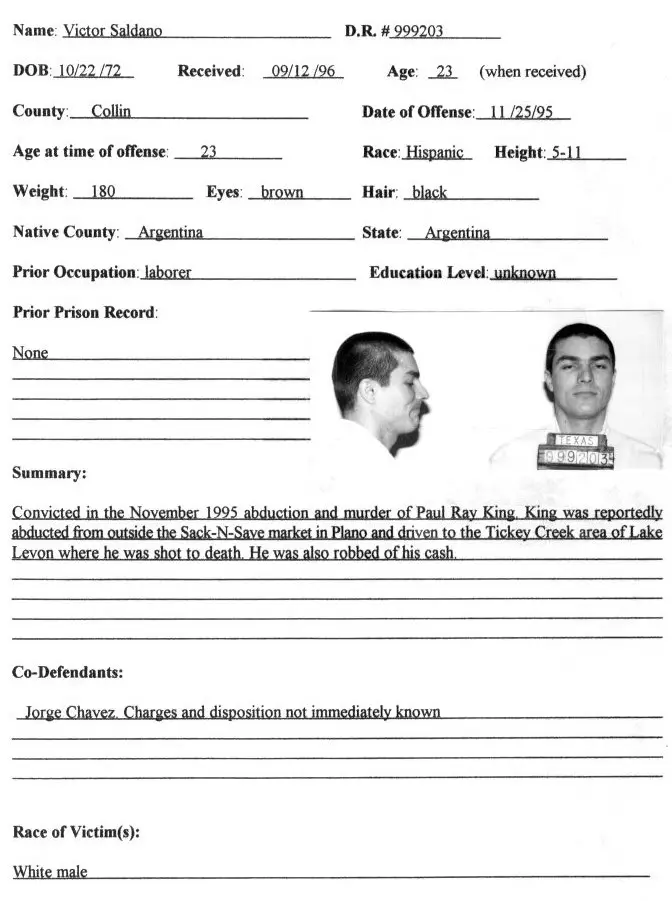
| Legal Identity | Victor Hugo Saldano |
| Confirmed Victims | 1 |
| Attributed / Indicted Victims | 1 |
| Active Timeline | 1995 |
| Jurisdiction / Area of Operations | Collin County, Texas, USA |
| Criminological Classification | Capital Murderer / Kidnapper |
| Forensic Modus Operandi | Interception, abduction, and execution via firearm |
| Weapon / Mechanism of Death | Firearm (handgun) |
| Motive / Behavioral Dynamics | Robbery and financial gain |
| Judicial Outcome | Death sentence (Texas) |
1. Background and Psychopathy
Victor Hugo Saldano (born October 22, 1972) is an Argentine citizen who remains the only Argentine national sentenced to death in the United States. His criminal history is marked by violent offenses leading to his incarceration in Texas.
2. Crime Spree
On November 25, 1995, Saldano and his accomplice, Jorge Chavez, abducted Paul Ray King from a grocery store parking lot in Collin County, Texas. They transported the victim to a remote wooded area where Saldano shot King five times, including a final contact shot to the head to ensure death.
3. Investigation and Arrest
Saldano was apprehended shortly after the crime. Law enforcement officers noted his lack of remorse during the booking process, reporting that he laughed and treated the situation as a joke, displaying a nonchalant demeanor.
4. Legal Proceedings and Outcome
Initially sentenced to death in 1996, the sentence was overturned due to prosecutorial misconduct regarding the use of race as a factor in determining future dangerousness. He was re-sentenced to death in 2004. The case has faced extensive litigation regarding his mental state and human rights concerns raised by international bodies.
5. Psychiatric Evaluation and Final Status
Defense experts have argued that long-term isolation on death row caused significant psychological deterioration. The case is currently in the clemency stage, with the Governor of Texas holding the sole authority to commute the sentence.