




Forensic & Criminological Matrix
| Parameter | Forensic Detail |
|---|---|
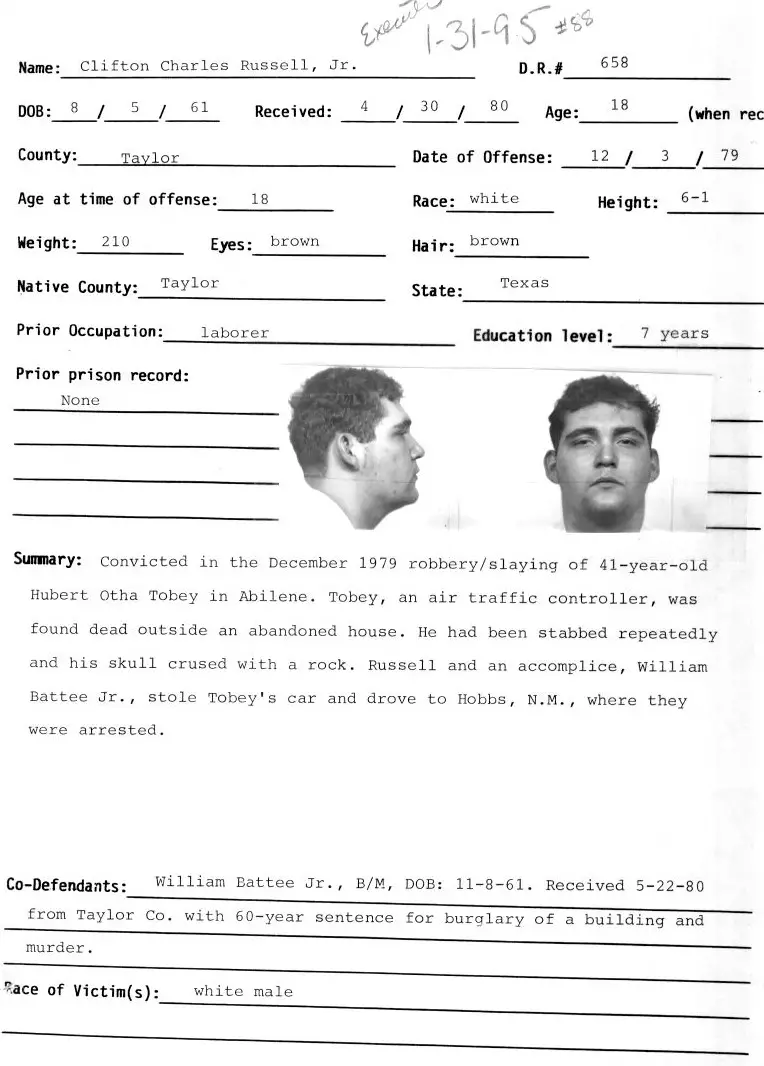
| Forensic Heading / Aliases | Charles Lacey |
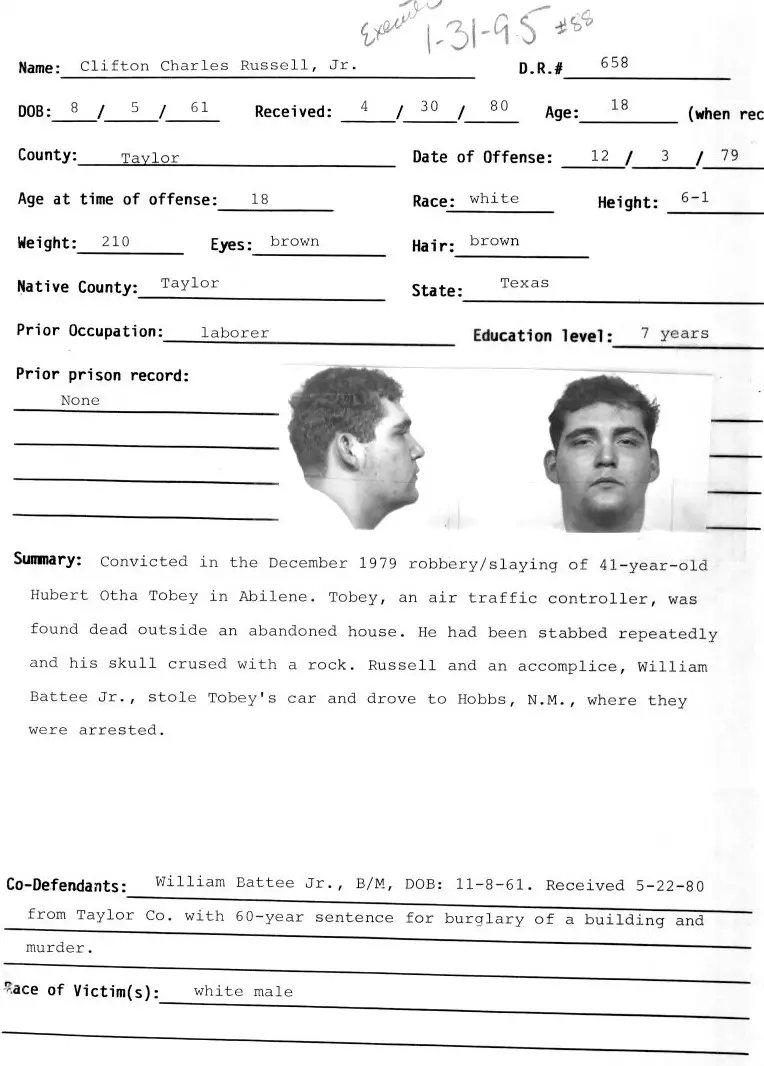
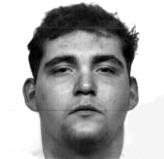
| Legal Identity | Clifton Charles Russell Jr. |
| Confirmed Victims | 1 |
| Attributed / Indicted Victims | 1 |
| Active Timeline | 1979 |
| Jurisdiction / Area of Operations | Abilene, Texas, USA |
| Criminological Classification | Robbery-Homicide |
| Forensic Modus Operandi | Gas station abduction, blunt force trauma, and stabbing |
| Weapon / Mechanism of Death | Knife and concrete block |
| Motive / Behavioral Dynamics | Financial gain / Extreme violence |
| Judicial Outcome | Death penalty via lethal injection |
1. Background and Profile
Born on August 5, 1961, Clifton Charles Russell Jr. grew up in a environment defined by poverty and violence. As a product of an interracial marriage, he faced significant social and domestic challenges. His childhood was marred by severe physical abuse, most notably a violent assault by his stepfather involving a baseball bat that resulted in facial fractures. By age 18, he had no formal employment or educational record.
2. Crime Spree
On December 2, 1979, Russell and his accomplice, William Battee Jr., abducted 41-year-old air traffic controller Hubert Otha Tobey from a self-service gas station in Abilene, Texas. After robbing the victim, the pair slit his throat and crushed his skull with a large piece of concrete. The body was dumped near an abandoned house in Southeast Abilene.
3. Investigation and Arrest
Days later, authorities in Hobbs, New Mexico, apprehended Russell and Battee while they were operating the victim's blood-spattered vehicle. Forensic analysis of Russell's clothing, which was heavily stained with the victim's blood, provided the primary evidence of his direct involvement in the fatal stabbing.
4. Legal Proceedings and Outcome
Russell was convicted of capital murder in 1980. During the penalty phase, the prosecution highlighted his propensity for violence, while the defense presented evidence of his troubled upbringing. The jury found him guilty and sentenced him to death. His appeals, including a federal habeas corpus petition challenging the sentencing instructions under Penry v. Lynaugh, were ultimately denied by the Fifth Circuit Court of Appeals.
5. Execution
After spending 15 years on death row, Clifton Charles Russell was executed by lethal injection on January 31, 1995, at the age of 33. His final statement reflected a religious reconciliation, thanking his family and God before the procedure was carried out.