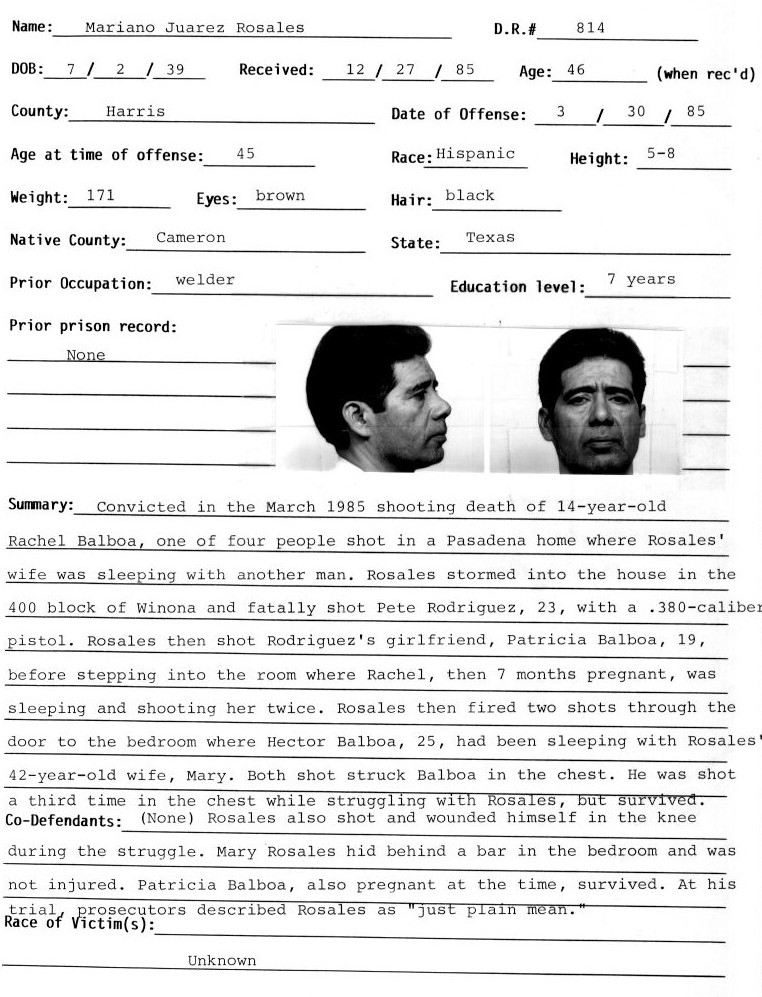
Forensic & Criminological Matrix
| Parameter | Forensic Detail |
|---|---|
| Forensic Heading / Aliases | N/A |
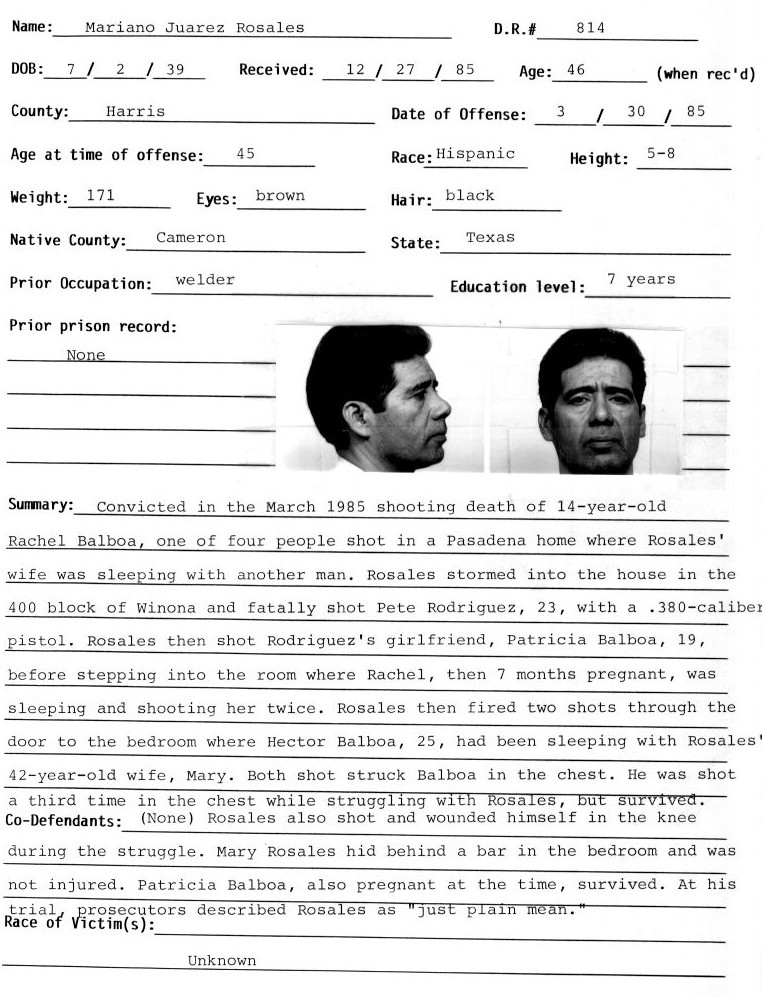
| Legal Identity | Mariano Juarez Rosales |
| Confirmed Victims | 2 |
| Attributed / Indicted Victims | 2 |
| Active Timeline | March 30, 1985 |
| Jurisdiction / Area of Operations | Houston, Texas, USA |
| Criminological Classification | Crime of passion / Jealousy-driven murderer |
| Forensic Modus Operandi | Armed intrusion and summary execution |
| Weapon / Mechanism of Death | Handgun |
| Motive / Behavioral Dynamics | Pathological jealousy and revenge |
| Judicial Outcome | Death sentence (1985) |
1. Background and Profile
Mariano Juarez Rosales was a 46-year-old businessman from Houston, Texas. He had been married to Mary Rosales for 27 years and they shared six children. By 1984, the marriage faced significant strain, and in January 1985, Mary began a relationship with 24-year-old Hector Balboa. Despite Mary filing for divorce in March 1985, Rosales refused to accept the separation, maintaining daily contact with her while harboring intense resentment.
2. Crime Spree
On the morning of March 30, 1985, after a night of heavy drinking, Rosales tracked down Hector Balboa's residence. Using deceptive phone calls to family members to obtain the address, he arrived at the house armed with a pistol. He immediately shot Pete Rodriguez, who was watching television. He then shot Patricia Balboa and proceeded to the bedroom to kill 15-year-old Rachel Balboa, who was seven months pregnant. He also shot Hector Balboa before fleeing the scene.
3. Investigation and Arrest
The investigation was straightforward due to the clear trail of phone calls and the survival of two witnesses, Patricia and Hector Balboa. Rosales was apprehended shortly after the shooting, and the forensic evidence, including the weapon and witness statements, solidified the case against him.
4. Legal Proceedings and Outcome
Rosales was convicted and sentenced to death on December 27, 1985. His case, Rosales v. State, 841 S.W.2d 368, remains a significant reference in Texas criminal law regarding the admissibility of evidence and the nature of capital murder cases involving domestic disputes.