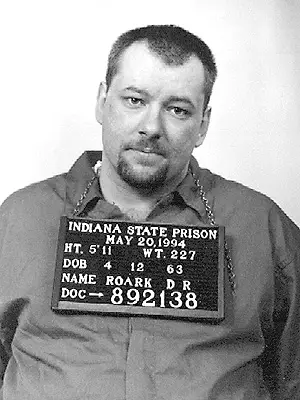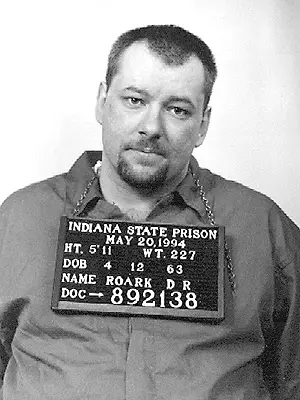





Forensic & Criminological Matrix
| Parameter | Forensic Detail |
|---|---|
| Forensic Heading / Aliases | null |
| Legal Identity | Dennis Ray Roark |
| Confirmed Victims | 4 |
| Attributed / Indicted Victims | 4 |
| Active Timeline | February 3, 1989 |
| Jurisdiction / Area of Operations | Lake County, Indiana, USA |
| Criminological Classification | Mass Murderer |
| Forensic Modus Operandi | Multiple stabbing and subsequent arson |
| Weapon / Mechanism of Death | Knife, smoke inhalation, and burns |
| Motive / Behavioral Dynamics | Domestic conflict, substance abuse, and impulse control disorder |
| Judicial Outcome | Sentenced to 200 years in prison after death penalty was vacated |
1. Background and Profile
Dennis Ray Roark was born on April 12, 1963. His background was marked by a traumatic upbringing, including an alcoholic father who abused his mother. Prior to the 1989 incident, Roark had no criminal record. Forensic evaluations during his trial indicated an IQ of 72 and significant deficits in impulse control, compounded by chronic alcohol and drug abuse.
2. Crime Spree
On February 3, 1989, after a night of heavy drinking, Roark returned to the home he shared with his girlfriend, Mary Waggoner, and her mother, Betty Waggoner. A domestic dispute escalated into extreme violence. Roark claimed that Betty Waggoner threatened him with a knife; he wrestled the weapon away and proceeded to stab Betty, Mary, and his two children, Dennis (20 months) and Elizabeth (4 months), to death. He then set the house on fire to conceal the crime.
3. Investigation and Arrest
Law enforcement officials in Lake County processed the scene, which revealed the horrific nature of the multiple homicides. Forensic evidence confirmed that all victims were stabbed, while the children also suffered from smoke inhalation and burns. The investigation led to his immediate arrest and indictment on multiple counts of murder.
4. Legal Proceedings and Outcome
Roark was tried in the Lake County Superior Court. He was initially sentenced to death on October 17, 1989. Following multiple appeals, the Indiana Supreme Court vacated his death sentence in December 1994, citing the trial court's failure to properly instruct the jury on voluntary manslaughter and the weight of mitigating factors, including his low IQ. He was subsequently resentenced to a 200-year term of imprisonment.
5. Psychiatric Evaluation and Conclusion
Psychiatric testimony highlighted Roark's severe emotional instability and poor impulse control. He remains incarcerated in the Indiana Department of Correction, having been removed from death row in 1994.