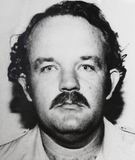
Forensic & Criminological Matrix
| Parameter | Forensic Detail |
|---|---|
| Forensic Heading / Aliases | N/A |
| Legal Identity | John Thomas Noland Jr. |
| Confirmed Victims | 2 |
| Attributed / Indicted Victims | 2 |
| Active Timeline | 1988 |
| Jurisdiction / Area of Operations | North Carolina, USA |
| Criminological Classification | Familial Homicide |
| Forensic Modus Operandi | Direct lethal violence |
| Weapon / Mechanism of Death | Not specified |
| Motive / Behavioral Dynamics | Familial conflict and resentment |
| Judicial Outcome | Death sentence, executed in 1998 |
1. Background and Psychopathy
John Thomas Noland Jr. (1948–1998) was an American offender whose criminal activity was rooted in severe familial dysfunction. His case became a significant subject of federal habeas corpus litigation regarding capital sentencing procedures.
2. Crime Spree
In 1988, Noland committed a double homicide. Following his arrest, he mounted a defense based on insanity and lack of mens rea, arguing that his mental state precluded him from forming the intent required for first-degree murder.
3. Investigation and Arrest
The investigation involved complex psychiatric evaluations and legal scrutiny of the trial proceedings. Noland's defense team argued that his trial counsel was ineffective and that the jury instructions were constitutionally flawed under McKoy v. North Carolina.
4. Legal Proceedings and Outcome
Noland's case reached the U.S. Court of Appeals for the Fourth Circuit. The court addressed multiple issues, including the retroactive application of the Antiterrorism and Effective Death Penalty Act (AEDPA) and the validity of the sentencing phase instructions. The court ultimately reversed the district court's decision to grant a writ of habeas corpus, upholding the original conviction and sentence.
5. Psychiatric Evaluation and Final Disposition
Despite claims of incompetence to stand trial and mental illness, Noland was found fit to proceed. He was executed by the state of North Carolina in 1998.