

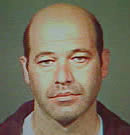
Forensic & Criminological Matrix
| Parameter | Forensic Detail |
|---|---|
| Full Name | Dale Merle Nelson |
| Alias | The Creston Mass Murderer |
| Date of Birth | c. 1939 (British Columbia, Canada) |
| Date of Death | February 14, 1999 (aged 60, cancer in federal prison) |
| Legal Status | Deceased while serving life imprisonment |
| Crime Location | Creston, Kootenay Region, British Columbia, Canada |
| Date of Crimes | September 4–5, 1970 |
| Criminological Typology | Spree mass killer / Substance-induced psychotic homicide |
| Confirmed Victims | 8 fatal victims (3 adults and 5 young children) |
| Weapons Utilized | 7mm bolt-action rifle, domestic fire extinguisher, bladed instrument |
Criminological Overview
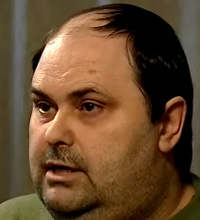
In the early morning hours of September 5, 1970, the rural settlement of Creston, British Columbia, witnessed one of the deadliest spree homicides in contemporary Canadian history. Dale Merle Nelson, a 31-year-old local logger with documented episodes of severe depressive episodes and chronic alcohol abuse, unleashed an armed rampage targeting two neighboring families, claiming the lives of eight individuals, including five children.
Crime Mechanics and Manhunt
On the evening of September 4, 1970, Nelson engaged in prolonged heavy drinking at taverns in Creston. After securing ammunition for a 7mm bolt-action rifle, he drove shortly after midnight to the residence of Shirley Wasyk, an extended relative whose husband was away. Nelson bludgeoned Shirley with a portable fire extinguisher, shot her 7-year-old daughter Tracey, and removed the body into the surrounding woodland.
Nelson then forced entry into the adjacent homestead of the Phipps family, fatally shooting parents Ray and Freda Phipps before executing their four young children (Paul, Kenneth, Brian, and Cathy). Nelson subjected the remains of two female victims to severe post-mortem trauma before retreating into dense mountain woodlands.
Apprehension and Judicial Outcome
The Royal Canadian Mounted Police (RCMP) launched a massive aerial and canine manhunt across the rugged Kootenay backcountry. Following a 30-hour intensive search, RCMP tactical officers cornered and subdued Nelson on September 6, 1970.
Forensic psychiatric evaluations conducted prior to trial rejected the defense assertion of legal insanity, establishing that Nelson retained criminal capacity despite severe intoxication. On April 1, 1971, the Supreme Court of British Columbia sentenced Nelson to mandatory life imprisonment. Nelson served his sentence at Prince Albert maximum-security institution until his death from cancer in February 1999.
Forensic dossier systematized and curated under CRIMETECA documentation standards.