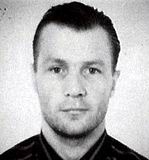
Forensic & Criminological Matrix
| Parameter | Forensic Detail |
|---|---|
| Forensic Heading / Aliases | None |
| Legal Identity | Oleg Naumov |
| Confirmed Victims | 7 |
| Attributed / Indicted Victims | 7 |
| Active Timeline | January 26, 1998 |
| Jurisdiction / Area of Operations | Pobedino, Sakhalin Island, Russia |
| Criminological Classification | Mass murderer |
| Forensic Modus Operandi | Blunt force attack followed by automatic rifle execution |
| Weapon / Mechanism of Death | Axe and AK assault rifle |
| Motive / Behavioral Dynamics | Acetone-induced psychosis and chronic substance abuse |
| Judicial Outcome | Life imprisonment (sentenced May 2001) |
1. Background and Profile
Oleg Naumov (born 1977) was a private in the Russian army stationed on Sakhalin Island. He had a history of drug abuse dating back to age 13, a fact that was unknown to his commanders at the time of his enlistment. His behavioral patterns were heavily influenced by the chronic inhalation of acetone vapors.
2. Crime Spree
On January 26, 1998, while on guard duty, Naumov went on a rampage after sniffing glue. He initially attacked a fellow soldier with an axe, who survived the encounter. Naumov then seized an army-issued AK assault rifle and systematically killed his commander and six other soldiers at various locations, including the guard post, the base canteen, and a restroom. He fled the scene with three spare magazines.
3. Investigation and Arrest
Following a five-hour manhunt, police units identified his location in a building on the outskirts of Pobedino. He was apprehended around midnight after a brief struggle that did not involve further gunfire.
4. Legal Proceedings and Outcome
Naumov was hospitalized under heavy sedation following his arrest. He confessed to inhaling acetone vapors while on duty but claimed to have no recollection of the killings. In May 2001, he was sentenced to life in prison by a military tribunal. The incident was widely cited as an example of the deteriorating state of the Russian military during the late 1990s.