Forensic & Criminological Matrix
| Parameter | Forensic Detail |
|---|---|
| Forensic Heading / Aliases | None |
| Legal Identity | George Henry Nassar |
| Confirmed Victims | 2 |
| Attributed / Indicted Victims | 2 |
| Active Timeline | 1948 - 1964 |
| Jurisdiction / Area of Operations | Massachusetts, USA |
| Criminological Classification | Multiple murderer / Violent offender |
| Forensic Modus Operandi | Armed robbery with cold-blooded execution |
| Weapon / Mechanism of Death | .38 and .32 caliber revolvers, .22 Astra pistol |
| Motive / Behavioral Dynamics | Psychopathy, antisocial personality disorder |
| Judicial Outcome | Life imprisonment (1948 and 1966 convictions) |
1. Background and Profile
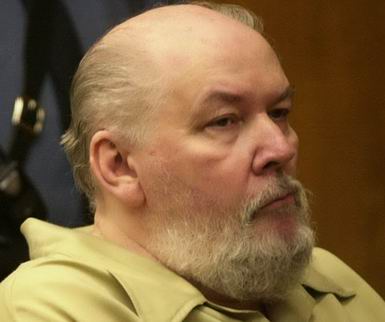
George Henry Nassar was born in June 1932 in Providence, Rhode Island. Raised in Lawrence, Massachusetts, he was the eldest of two children. Teachers described him as quiet and socially withdrawn. Despite his involvement in Boy Scouts, he developed a pattern of criminal behavior during his teenage years.
2. Crime Spree
Nassar's criminal career began in 1948 when he shot shopkeeper Dominic Kirmil during a robbery. After being paroled in 1961, he returned to violence in 1964 by murdering gas station owner Irvin Hilton. The Hilton murder was particularly brutal, involving multiple gunshots and stabbing, witnessed by a mother and her daughter.
3. Investigation and Arrest
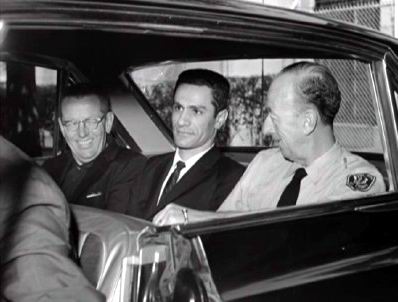
In the 1948 case, police found the murder weapon in Nassar's possession following a car crash. In 1964, a composite sketch drawn by officer William Tammany, based on witness descriptions, led to his identification and arrest in Mattapan, Boston. Forensic ballistics matched the shells found at the scene to weapons recovered from a stolen vehicle linked to Nassar.
4. Legal Proceedings and Outcome
Nassar was sentenced to death in 1965 for the Hilton murder, but the sentence was reduced to life imprisonment in 1966. He became a central figure in the Boston Strangler investigation after claiming Albert DeSalvo confessed to him in prison. Nassar remained incarcerated until his death in 2018, consistently filing appeals that were repeatedly denied.