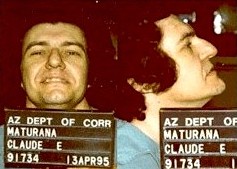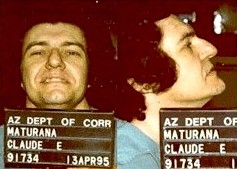





Forensic & Criminological Matrix
| Parameter | Forensic Detail |
|---|---|
| Forensic Heading / Aliases | N/A |
| Legal Identity | Claude Eric Maturana |
| Confirmed Victims | 1 |
| Attributed / Indicted Victims | 1 |
| Active Timeline | 1990 |
| Jurisdiction / Area of Operations | Tucson, Arizona, USA |
| Criminological Classification | Murderer |
| Forensic Modus Operandi | Luring to remote location, firearm execution, and post-mortem mutilation |
| Weapon / Mechanism of Death | Firearm (12 shots) and machete |
| Motive / Behavioral Dynamics | Revenge for minor dispute; chronic paranoid schizophrenia |
| Judicial Outcome | Death sentence (1992); died in prison (2002) |
1. Background and Psychopathy
Claude Eric Maturana was born in France on July 1, 1957. Little is known about his early life or his immigration to the United States. During his incarceration, he was diagnosed with chronic paranoid schizophrenia, which led to a significant deterioration in his mental state, characterized by delusions and an inability to communicate effectively.
2. Crime Spree
On July 5, 1990, Maturana and his accomplice, Stephen Ballard, targeted 16-year-old Glenn Estes over a dispute regarding a stolen car manifold. They lured the teenager to a remote desert location under the guise of attending a party. Once isolated, Maturana shot Estes 12 times, and Ballard attempted to decapitate the victim with a machete. The body was discarded in a water tank.
3. Investigation and Arrest
The investigation quickly identified Maturana and Ballard as the primary suspects. Forensic evidence, including ballistics and the nature of the wounds, provided a clear link to the perpetrators. Both were apprehended shortly after the discovery of the body.
4. Legal Proceedings and Outcome
Trial proceedings commenced on February 20, 1992, presided over by Judge Michael D. Alfred. Maturana was found guilty on February 26, 1992, and sentenced to death on April 13, 1992. His co-defendant, Stephen Ballard, was sentenced to life imprisonment.
5. Psychiatric Evaluation and Conclusion
Following his sentencing, Maturana's mental health declined, leading to a 1999 ruling that he was incompetent to be executed. This triggered a national debate regarding the ethics of medicating prisoners to restore their competency for the sole purpose of execution. Maturana remained in a special unit at the Arizona State Hospital until his death on December 26, 2002.