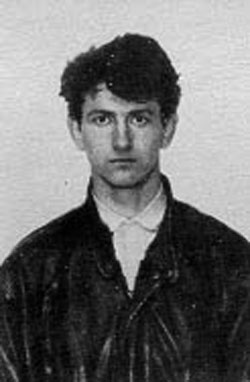
Forensic & Criminological Matrix
| Parameter | Forensic Detail |
|---|---|
| Full Name | Oleg Lokhmatov |
| Military Rank | Private (Russian Army conscript) |
| Location of Crimes | Ural Mountains military facility and Oboryno village, Russia |
| Date of Rampage | January 11, 1997 |
| Casualties | 4 killed (3 soldiers, 1 civilian) and 1 wounded |
| Criminological Classification | Military spree killer |
| Legal Disposition | Captured by special operations forces within two hours; final military court sentence undisclosed in open English records |
1. Institutional Context
In January 1997, Oleg Lokhmatov was serving as an army private at a military installation in Russia's Ural Mountains, roughly 1,200 kilometers east of Moscow. During the mid-to-late 1990s, Russian conscript units experienced acute institutional strain, isolation, and widespread barracks hazing (dedovshchina), coinciding with a series of fatal guard-duty shootings. Open records do not preserve Lokhmatov's exact birth date or prior psychological profile.
2. Guard Duty Homicides (January 11, 1997)
Around 2:00 a.m. on January 11, 1997, while assigned to night guard duty, Lokhmatov opened fire on three fellow soldiers stationed on the same watch, killing all three. He then collected additional ammunition from the post and fled the perimeter armed with his service weapon.
3. Village Assault in Oboryno
Moving rapidly from the military compound, Lokhmatov entered the nearby village of Oboryno and walked into a local shop. Inside, he shot and killed a civilian customer and wounded a store employee without articulating an apparent robbery demand or known personal grievance.
4. Rapid Containment and Arrest
Following emergency alerts from both the installation and the village, a special operations team deployed across the area. Tactical officers cornered and apprehended Lokhmatov roughly two hours after the initial killings, preventing further civilian casualties.
5. Evidentiary and Archival Status
While contemporary wire reports documented the timeline, the four fatalities, the wounded store clerk, and the rapid arrest, subsequent proceedings inside Russia's military court system were never publicly detailed in English-language legal archives.