


Forensic & Criminological Matrix
| Parameter | Forensic Detail |
|---|---|
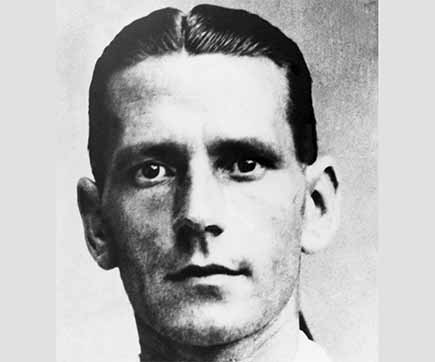
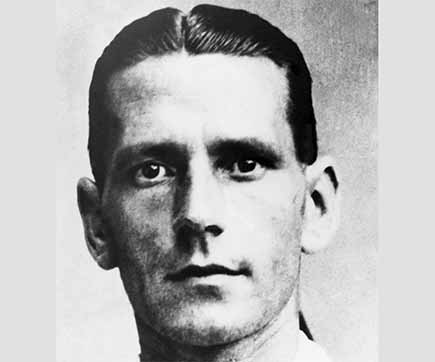
| Identity | John Edward Allen |
| Known Aliases | "The Mad Parson of Broadmoor" |
| Criminal Classification | Psychotic impulsive homicide perpetrator, insane offender, and prison escapee |
| Date of Birth | c. 1906 (England, United Kingdom) |
| Date of Death | c. 1982 (United Kingdom; natural causes under institutional psychiatric custody) |
| Criminal Indictment | Willful murder of nurse Norah O'Callaghan |
| Fatalities | 1 (Norah O'Callaghan, 23-year-old nurse) |
| Crime Scenes | London and Crowthorne (Berkshire), England |
| Date of Offense | 1937 |
| Weapons Used | Heavy steel carpenter's claw hammer and kitchen carving knife. |
| Motive | Psychotic religious delusions, persecutory erotomania, and acute paranoid schizophrenia. |
| Legal Status | Adjudicated "Guilty but insane" in 1937 under the M'Naghten Rules. Committed for life to Broadmoor Criminal Lunatic Asylum. Orchestrated a famous escape in 1947, remaining at large for nearly two years. |
Forensic Synopsis and Historical Significance
The case of John Edward Allen occupies a prominent chapter in British forensic psychiatry and institutional secure hospital administration. In 1937, Allen committed the frenzied killing of a young hospital nurse, Norah O'Callaghan, fracturing her cranium with a carpenter's hammer before severing her carotid arteries with a carving blade, driven by intense religious delusions.
Adjudicated criminally insane under the M'Naghten Rules and committed to Broadmoor Hospital, Allen attained international notoriety in 1947 by staging one of the most remarkable escapes in British penal history. Overcoming the asylum's perimeter walls, he evaded Scotland Yard for twenty-two months while living peaceably under an assumed identity, an incident that prompted comprehensive security overhauls across the United Kingdom's high-security psychiatric estate.
The Murder of Norah O'Callaghan (1937)
In the mid-1930s, Allen developed severe psychotic decompensation characterized by religious grandiosity and fanatical asceticism:
- The Obsessive Fixation: He focused his disordered thoughts on Norah O'Callaghan, a 23-year-old nurse, bombarding her with erratic correspondence demanding spiritual submission and warning of apocalyptic reckoning.
- The Ambush: In 1937, Allen confronted O'Callaghan at her domicile. When she rebuffed him, Allen produced a heavy carpenter's claw hammer, delivering repeated crushing blows to her skull that incapacitated her instantly.
- The Throat Slashing: To finalize the act, he drew a long carving knife, inflicting a catastrophic deep incision across her throat that severed the trachea and cervical vessels.
- Surrender: Following the homicide, Allen wandered through public streets in an ecstatic religious trance before surrendering to police constables, proclaiming himself an instrument of divine retribution.
Trial and Commitment to Broadmoor (1937)
Arraigned for murder at the Central Criminal Court:
- Psychiatric Findings: Home Office medical examiners unanimously testified that Allen suffered from chronic paranoid schizophrenia, with active auditory hallucinations and total moral-cognitive impairment rendering him incapable of understanding the criminality of his conduct.
- Verdict: The jury returned the statutory verdict of "Guilty but insane."
- Indefinite Confinement: The trial judge ordered him detained at His Majesty's Pleasure inside the secure perimeter of Broadmoor Criminal Lunatic Asylum in Berkshire.
The 1947 Broadmoor Escape
For a decade within Broadmoor, Allen behaved as a compliant, mild-mannered patient:
- The Escape: In 1947, taking advantage of a maintenance lapse in the asylum gardens, Allen scaled the exterior red-brick perimeter wall and melted into the Berkshire forest canopy.
- The Manhunt: The escape of an adjudicated hammer killer triggered widespread national panic, mobilizing flying squads from Scotland Yard, highway roadblocks, and international border alerts.
- Life Under Cover: Adopting the alias "John Evans," Allen secured employment as a peaceful warehouse clerk and groundskeeper in the English Midlands, living quietly for nearly two years without raising suspicion.
Recapture and Confinement
In 1949, following a twenty-two month nationwide search, an alert citizen recognized Allen’s features from newspaper broadsheets and notified police:
- The Apprehension: Arrested without incident, Allen calmly conceded his real identity, maintaining that his two years of quiet labor proved he harbored no generalized malice toward ordinary citizens.
- Return to Broadmoor: Re-committed under heightened security regimens, John Edward Allen spent the remainder of his life in institutional psychiatric detention, passing away from natural causes in the early 1980s.