





Forensic & Criminological Matrix
| Parameter | Forensic Detail |
|---|---|
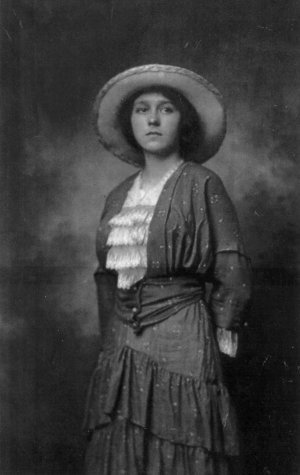
| Full Legal Name | Inez Palmer |
| Criminological Landmark | The Vinton County Well Murder, solved by Ohio's first female sheriff Maude Collins |
| Born | 1903, West Virginia, United States |
| Died | 1980s (released on parole following multi-decade penal confinement) |
| Criminological Classification | Instrumental conspiratorial homicide perpetrator, forger, and crime-scene stager |
| Crime Date | Early 1927 |
| Geographical Scope | Stout family homestead, rural hills of McArthur, Vinton County, Ohio, USA |
| Confirmed Murder Victims | 2 fatalities (65-year-old farmer William Stout, bludgeoned to death and deposited inside a disused well, and stepmother Sarah Stout, strangled and burned indoors) |
| Co-Conspirator | Arthur Stout (33, son of William Stout and paramour of Inez Palmer; sentenced to life imprisonment) |
| Modus Operandi | Blunt cranial trauma using heavy farm tools, concealing the corpse in an abandoned well, fabricating a holographic will inside a lunch pail, and wearing the victim's boots to stage shallow fraudulent escape tracks heading west |
| Forensic Investigation Breakthrough | Solved through the forensic deductive reasoning of Sheriff Maude Collins—the first female sheriff in Ohio history—who deduced that the indentation depth of the boot prints in the mud was too shallow for a heavy male farmer, matching instead the physical mass of a petite woman |
| Legal Sentence | Pleaded guilty to first-degree murder on April 21, 1927; sentenced to life imprisonment at the Ohio Reformatory for Women at Marysville; subsequently paroled in later years |
EXECUTIVE SUMMARY & HISTORICAL OVERVIEW
The 1927 Vinton County double murder case stands as a milestone in early American forensic crime scene analysis and women in policing history. Documented in national periodicals such as Master Detective, the case pitted a calculating young conspirator, Inez Palmer, against Maude Collins, Ohio’s newly appointed first female sheriff.
Facing the sudden disappearance of wealthy farmer William Stout shortly after the violent strangulation and burning of his wife, Sheriff Collins dismantled Palmer's staged crime scene—which featured planted footprints and a forged lunch-pail will—through meticulous weight-and-depth impression analysis.
THE APPALACHIAN HOMESTEAD CONSPIRACY
In early 1926, 24-year-old Inez Palmer arrived in rural Vinton County, Ohio, from West Virginia. She soon formed an illicit romantic liaison with Arthur Stout, 33, living together in an isolated cabin in the Appalachian foothills.
The union drew vehement condemnation from Arthur's father, William Stout, a prosperous 65-year-old agrarian landowner, and his second wife, Sarah Stout. Resentful of their interference and determined to seize the lucrative acreage of the family farm, Palmer and Arthur Stout orchestrated a calculated conspiracy to exterminate both elders.
THE KILLING OF SARAH STOUT AND WILLIAM'S "DISAPPEARANCE"
In late 1926, Sarah Stout was discovered dead inside the family residence, her body partially burned. The county coroner determined that she had been throttled to death prior to the fire. Arthur Stout was detained under suspicion.
Shortly thereafter, Inez Palmer notified authorities that William Stout had grown distraught over his wife's murder and had departed permanently for the American West. She claimed she had seen him mending fence lines before he set out on foot.
SHERIFF MAUDE COLLINS'S DEDUCTIVE RECONSTRUCTION
Sheriff Maude Collins, who had assumed the sheriff's office following the line-of-duty death of her lawman husband, arrived to inspect the perimeter. Beneath an oak tree by the repaired fence line, she located a metal lunch pail containing a handwritten will leaving William Stout’s entire estate solely to Arthur Stout, disinheriting other siblings.
Boot prints led away from the tree toward the western road. However, Sheriff Collins observed physical discrepancies:
- Soil Depth Impression Dynamics: Collins retrieved William Stout's boots from the farmhouse. The boots fit the contours of the tracks exactly. However, when Collins—a slender woman—donned the boots and walked across the muddy embankment, her impressions matched the exact depth of the existing evidence tracks. Had an 80-kilogram working man like William walked there, the tread would have sunken twice as deep into the soil.
- Forensic Handwriting Comparison: Collins obtained canceled financial checks from William's local bank. Handwriting experts confirmed that the lunch-pail will was an amateurish imitation traced by someone unfamiliar with commercial drafting.
- The Well Recovery: Directing a systematic sweep of the property, Sheriff Collins ordered the dragging of an abandoned farm well behind the house. At the bottom, searchers recovered the submerged body of William Stout, his cranium crushed by catastrophic blunt-force blows.
CONFESSION AND MARYSVILLE LIFE SENTENCE
Confronted with the soil physics evidence and the forged will, Inez Palmer collapsed under interrogation and confessed to the murder. She admitted striking William Stout with an iron tool, dumping his corpse into the well, and putting on his boots to deliberately walk the trail to mislead detectives.
Informed of Palmer’s confession, Arthur Stout acknowledged his complicity in both slayings. On April 21, 1927, Inez Palmer entered a formal guilty plea to first-degree capital murder before Judge Darby at McArthur Court. To spare her from the electric chair, the court handed down a sentence of life imprisonment without immediate pardon at the Marysville Reformatory for Women. She was paroled decades later.