



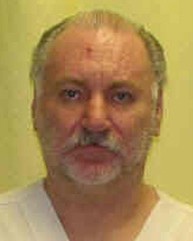
Forensic & Criminological Matrix
| Parameter | Forensic Detail |
|---|---|
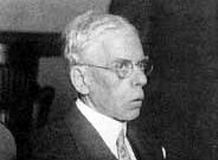
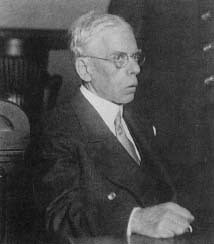
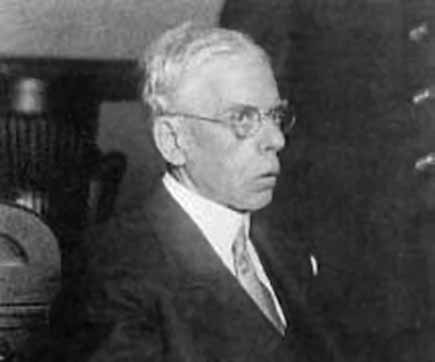
| Full Legal Name | Henry Colin Campbell |
| Criminal Monikers | The Human Bluebeard, The Cranford Road Slayer, Dr. Richard Campbell |
| Born | 1870, United States |
| Died | April 17, 1930 (aged 60), New Jersey State Prison, Trenton, USA |
| Manner of Death | Judicial execution by electrocution in the electric chair |
| Criminological Classification | Instrumental predatory bigamist, matrimonial swindler, and fire-concealment assassin |
| Primary Crime Date | February 1929 (remains discovered February 23, 1929) |
| Geographical Range | Cranford and Elizabeth, Union County, New Jersey, USA |
| Confirmed Murder Convictions | 1 count of first-degree capital murder (45-year-old widow Mildred Mowry) |
| Suspected Victims | Margaret Brown (New York governess swindled of $7,000, shot and incinerated identically 15 miles away in 1928) |
| Modus Operandi | Placing personal advertisements in commercial matrimonial agencies seeking "widows with independent assets and no dependents"; adopting fictitious medical credentials, executing fraudulent bigamous nuptials, liquidating victim life savings, and executing victims via .38 firearm discharges before incinerating bodies with gasoline beside highway embankments |
| Weapons Used | .38 caliber automatic pistol and gasoline accelerants |
| Judicial Disposition | Convicted at Elizabeth Assizes; electrocuted at Trenton State Prison on April 17, 1930 |
EXECUTIVE SUMMARY & CRIMINOLOGICAL SIGNIFICANCE
Henry Colin Campbell represents one of the most chilling archetypes of the predatory "Bluebeard" swindler operating in the pre-depression United States. Exploiting the burgeoning friendship and matchmaking agencies of the late 1920s, Campbell preyed systematically upon lonely, vulnerable widows to fleece their estates before disposing of their bodies through roadside gunfire and incendiary destruction.
His June 1929 trial in Elizabeth, New Jersey, achieved forensic notoriety as an early landmark testing the legal limits of drug-induced amnesia and psychiatric insanity defenses under American common law.
THE PROFESSIONAL BIGAMIST CON
Born in 1870, Campbell accumulated decades of convictions for grand larceny, forgery, and embezzlement across Illinois and Maryland. Polished, white-haired, and affecting the courteous bedside manner of a retired surgeon, he adopted aliases including "Dr. Richard Campbell" and "Dr. Richard Newman."
Behind the facade of domestic respectability with his legitimate wife Rosalie and three children in Elizabeth, New Jersey, Campbell trolled matrimonial correspondence clubs. On questionnaire applications, he specifically solicited: "Widows without children possessing independent private means."
THE SLAYING OF MILDRED MOWRY (1929)
In 1928, Campbell answered a notice from Mildred Mowry, a 45-year-old widow from Greenville, Pennsylvania. After a rapid courtship, he married her bigamously in August 1928. Within twenty-four hours, he coerced her into transferring her entire $1,000 savings into his account before absconding under the pretext of pressing medical work on the Pacific Coast.
Growing anxious as correspondence lapsed, Mowry traveled east in February 1929 to track down her missing husband. On February 21, she confronted him in New Jersey. Recognizing that exposure and felony bigamy charges were imminent, Campbell lured her into his vehicle and drove along a desolate road near Cranford.
Drawing a .38 automatic pistol, he shot her through the skull, dragged her body into the brush, soaked her corpse with gasoline, and set it ablaze to obliterate dental and physical markers.
FORENSIC TRACE AND ARREST
On February 23, 1929, motorists sighted the smoldering remains. Union County detectives worked for six weeks before a national bulletin identified the victim as Mildred Mowry.
Financial forensic tracing connected the cashed bank drafts directly to Campbell's address in Elizabeth. On April 11, 1929, detectives arrested him at his home, recovering the .38 murder weapon, fuel containers, and a trunk containing seventeen manipulative letters outlining his matrimonial ruse.
COURTROOM DEFEAT AND ELECTRIC CHAIR EXECUTION
The murder trial convened on June 9, 1929, before Judge Clarence E. Case. Prosecutor Abe J. David entered Campbell's signed post-arrest confession into evidence alongside the recovered firearm and forensic ballistic matches.
Defense attorney Francis A. Gordon sought to mount a diminished responsibility defense, alleging Campbell was an erratic morphine addict who suffered complete blackout amnesia: "I have no recollection of shooting Mrs. Mowry or burning her body."
Prosecutor David dismantled the plea on cross-examination by presenting Campbell's matrimonial application forms, written weeks before the crime, where he described his physical health as "excellent" and his character as "unimpeachable," exposing calculated cunning.
On June 13, 1929, the jury returned a verdict of first-degree murder with no recommendation for mercy. Strong circumstantial evidence also linked Campbell to the unsolved 1928 murder of Margaret Brown, a governess found shot and burned under identical circumstances.
On April 17, 1930, Henry Colin Campbell was executed in the electric chair at New Jersey State Prison in Trenton.