






Forensic & Criminological Matrix
| Parameter | Forensic Detail |
|---|---|
| Forensic Heading / Aliases | N/A |
| Legal Identity | James Lee Henderson |
| Confirmed Victims | 1 |
| Attributed / Indicted Victims | 1 |
| Active Timeline | October 28, 1993 |
| Jurisdiction / Area of Operations | Palestine, Texas, USA |
| Criminological Classification | Capital Murderer |
| Forensic Modus Operandi | Home invasion, armed robbery, and execution |
| Weapon / Mechanism of Death | Firearm (gunshot wounds to the head) |
| Motive / Behavioral Dynamics | Financial gain and robbery |
| Judicial Outcome | Death sentence (pending intellectual disability appeals) |
1. Background and Profile
James Lee Henderson (born 1973) has a documented history of social maladjustment and cognitive impairment. Throughout his youth, he was enrolled in special education programs and exhibited significant deficits in adaptive behavior. His intellectual capacity has become the central focus of his post-conviction legal challenges, specifically regarding the Atkins v. Virginia ruling.
2. Criminal Career and Modus Operandi
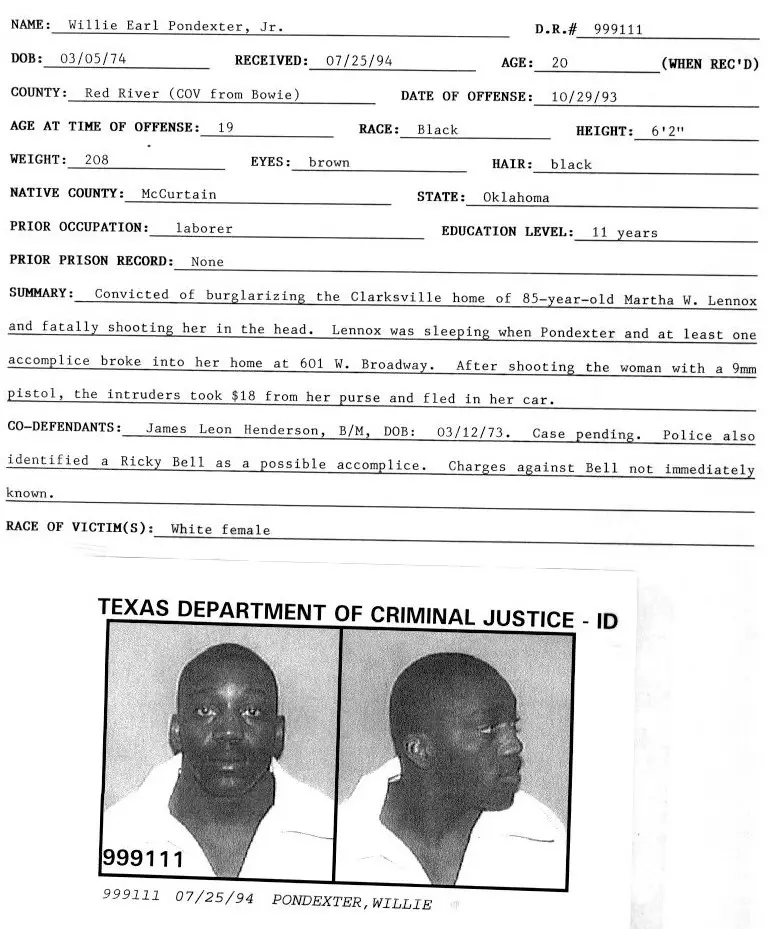
On October 28, 1993, Henderson and three accomplices (Willie Pondexter, Deon Williams, and Ricky Bell) targeted the home of 85-year-old Martha Lennox in Palestine, Texas. The group intended to steal her vehicle. After kicking in the door, Henderson fired through the bedroom door. Following a minor theft, Henderson shot Lennox in the head, followed by a second fatal shot by Pondexter. The medical examiner confirmed both wounds were independently fatal.
3. Investigation and Arrest
The group fled to Dallas in the victim's Cadillac. While Pondexter and Bell were apprehended in the vehicle, Henderson and Williams fled on foot. Henderson was arrested after foolishly calling 911 to report the stolen car he was currently in possession of. He was found with the murder weapon at the time of his arrest.
4. Legal Proceedings and Outcome
Convicted of capital murder in 1994, Henderson was sentenced to death. His case has undergone extensive appellate review. In 2006, the Fifth Circuit Court of Appeals granted him the right to file a successive habeas petition to challenge his sentence based on claims of mental retardation, a legal process that remains ongoing.
5. Psychiatric Evaluation and Status
Expert testimony from Dr. Susana Rosin suggested an IQ of 66, indicating mild mental retardation. However, the State has contested these findings, pointing to earlier assessments and Henderson's ability to navigate prison life and legal correspondence, leading to a protracted judicial struggle over his eligibility for execution.