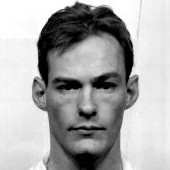
Forensic & Criminological Matrix
| Parameter | Forensic Detail |
|---|---|
| Forensic Heading / Aliases | Richard Gerry Drinkard |
| Legal Identity | Richard Gerry Drinkard |
| Confirmed Victims | 3 |
| Attributed / Indicted Victims | 3 |
| Active Timeline | November 15, 1985 |
| Jurisdiction / Area of Operations | Houston, Texas, USA |
| Criminological Classification | Mass Murderer |
| Forensic Modus Operandi | Blunt force trauma via claw hammer |
| Weapon / Mechanism of Death | Claw hammer |
| Motive / Behavioral Dynamics | Indeterminate / Intoxication defense |
| Judicial Outcome | Death penalty (executed via lethal injection) |
1. Background and Profile
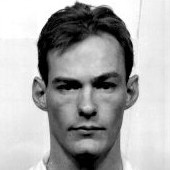
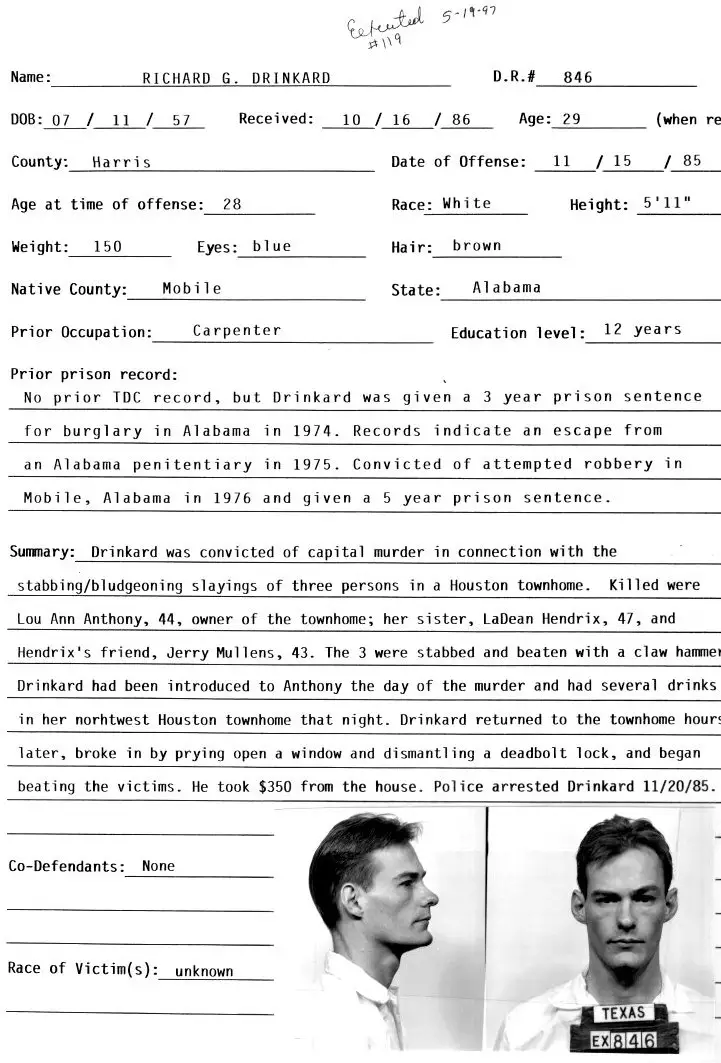
Richard Gerry Drinkard (1957–1997) was an American individual responsible for a triple homicide in Houston, Texas. His criminal profile is defined by the singular, high-intensity event of November 1985, which led to his eventual execution.
2. Crime Spree
On November 15, 1985, Drinkard entered an apartment in the Spring Branch area of Houston. He proceeded to murder Lou Ann Anthony, LaDean Hendrix, and Jerry Mullens using a claw hammer. The victims suffered severe blunt force trauma to the head, resulting in their deaths at the scene.
3. Investigation and Arrest
Law enforcement quickly identified Drinkard as the perpetrator. The case gained legal significance in Texas as it was one of the first to be prosecuted under new statutes regarding the execution of multiple-victim killers.
4. Legal Proceedings and Outcome
Drinkard was convicted of capital murder. His defense team attempted to argue that intoxication had rendered him temporarily insane, but this was rejected by the jury. Subsequent appeals, including federal habeas corpus petitions, were unsuccessful in overturning the death sentence.
5. Forensic Psychiatric and Final Outcome
Drinkard was executed by lethal injection in 1997. He provided no final statement before the execution was carried out by the Texas Department of Criminal Justice.