Forensic & Criminological Matrix
| Parameter | Forensic Detail |
|---|---|
| Forensic Heading / Aliases | Robert Nelson Drew |
| Legal Identity | Robert Nelson Drew Sr. |
| Confirmed Victims | 1 |
| Attributed / Indicted Victims | 1 |
| Active Timeline | 1983 |
| Jurisdiction / Area of Operations | Texas, United States |
| Criminological Classification | Homicide / Robbery-related murderer |
| Forensic Modus Operandi | Stabbing following verbal altercation |
| Weapon / Mechanism of Death | Buck knife |
| Motive / Behavioral Dynamics | Itinerary dispute and interpersonal violence |
| Judicial Outcome | Executed by lethal injection |
1. Background and Profile
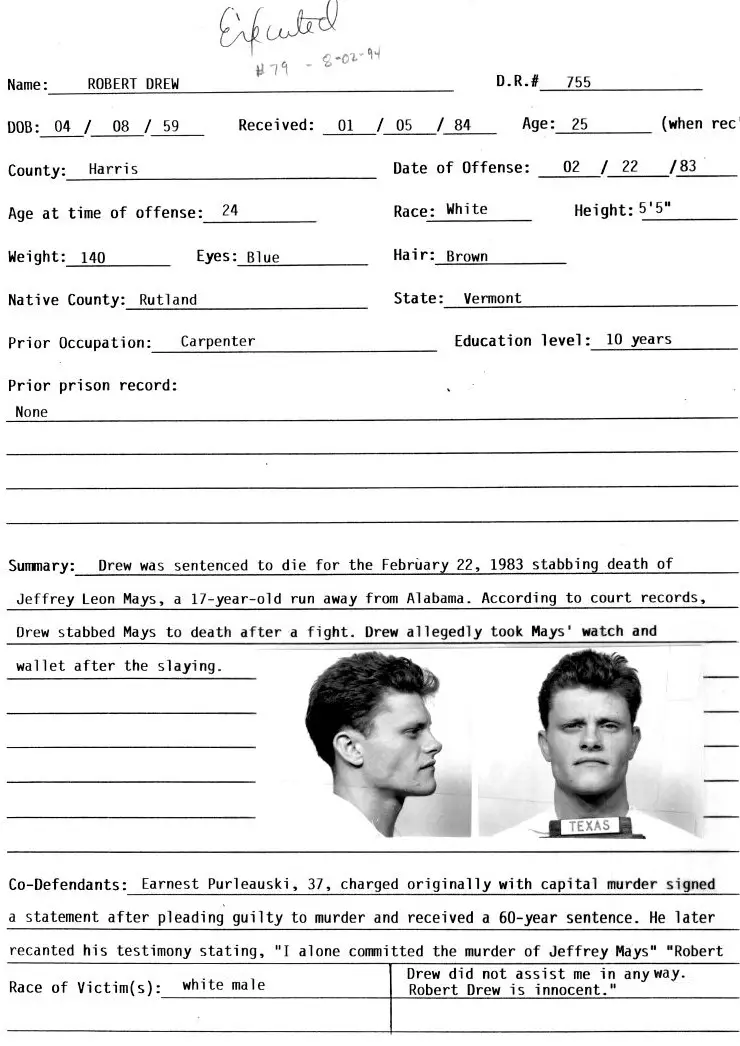
Robert Nelson Drew was an American citizen whose case became a focal point for debates regarding the death penalty and the rigidity of the Texas judicial system. He was a native of Vermont, making him a unique case in the Texas death row population at the time.
2. Crime Spree
On February 21, 1983, 17-year-old Jeffrey Leon Mays was stabbed to death. Mays and his friend Bee Landrum had picked up hitchhikers, including Drew and Ernest Puralewski. A dispute arose regarding the travel route, leading to a violent confrontation where Mays was killed and left in a ditch east of Houston.
3. Investigation and Arrest
The prosecution relied heavily on the testimony of Bee Landrum. Later, co-defendant Ernest Puralewski recanted his statement, claiming Drew did not kill the victim. However, Texas law required new evidence to be presented within 30 days of the trial, preventing the court from considering this exculpatory information.
4. Legal Proceedings and Outcome
Despite numerous appeals and international attention, including protests from Vermont legislators, all relief was denied. The case was marked by the controversial actions of District Judge Charles Hearn, who signed the execution order with a smiley face. Drew was executed on August 2, 1994.