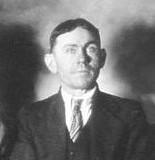





Daniel Vitaver: The Weston Family Annihilation, Financial Collapse, and the 1997 Florida Murder-Suicide
Executive Summary
Daniel Vitaver (born 1944 in Buenos Aires, Argentina; died December 4, 1997, in Weston, Florida), was an Argentine businessman and immigrant responsible for one of the most devastating family murder-suicides in the modern history of Broward County, Florida. Inside an upscale suburban residence in Weston, Vitaver shot and killed his wife and two teenage children in their kitchen before turning the firearm upon himself.
The criminological trigger of the massacre stemmed from severe reactive major depression precipitated by catastrophic financial ruin. Having emigrated from Argentina to the United States only six months earlier in search of new commercial ventures, Vitaver saw his capital evaporate and debts escalate. Overwhelmed by bankruptcy and social shame, the patriarch suffered an acute narcissistic crisis aligning with the forensic archetype of the «despondent family annihilator»—a distorted mindset wherein the father views exterminating his entire family as an act of mercy to shield them from economic humiliation.
The bodies of all four family members were discovered on Saturday, December 6, 1997, by Broward County Sheriff's Office (BSO) deputies after concerned friends reported their disappearance. Forensic autopsies established that the homicides had occurred two days earlier during morning breakfast. The judicial inquest concluded with the formal dismissal of criminal proceedings due to the perpetrator's immediate suicide at the crime scene.
Forensic Technical Matrix
| Parameter | Forensic Detail |
|---|---|
| Legal Identity | Daniel Vitaver |
| Public Name | Daniel Vitaver |
| Criminological Aliases | «The Weston Parricide», «The Cascade Falls Family Annihilator» |
| Date of Birth | 1944 (Buenos Aires, Republic of Argentina) |
| Date of Death | December 4, 1997 (Weston, Broward County, Florida, USA) |
| Vital & Legal Status | Deceased by gunshot wound (Suicide at scene) |
| Criminological Classification | Intrafamilial mass murderer / Family Annihilator (Despondent Murder-Suicide) |
| Confirmed Fatal Victims | 3 immediate family members (wife and two children) |
| Suspected Victims | 3 victims |
| Primary Modus Operandi | Point-blank gunshot wounds to the head with a handgun during morning breakfast |
| Primary Motive | Severe depressive collapse, bankruptcy, and pseudo-altruistic family annihilation |
| Geographic Scene | Single-family home at 648 Cascade Falls Drive, Weston, Broward County, Florida |
| Investigative Agency | Broward County Sheriff's Office (BSO Homicide Unit) |
| Judicial Disposition | Case closed without prosecution due to perpetrator's suicide on site |
| Forensic Examination | Broward County Medical Examiner's Office |
Background, Emigration to the United States, and Financial Ruin (1944–1997)
Daniel Vitaver lived the majority of his adult life in Buenos Aires, Argentina, active in commercial trade and imports:
- He was married to Magalí Regina Vitaver (age 49, an educated homemaker and tutor), and the couple had two teenage children: Cynthia Vitaver (19, a college student) and Eduardo Vitaver (16, a sophomore at Western High School in Davie).
- In mid-1997, seeking financial stability away from economic volatility in South America, the family relocated to Broward County, Florida, under commercial investment provisions.
- They rented an attractive residence at 648 Cascade Falls Drive in Weston, a peaceful master-planned suburban community known for low crime rates.
However, their commercial venture rapidly turned disastrous:
- Vitaver's import initiatives collapsed within months, depleting the family's cash reserves.
- Facing insurmountable debt, impending lease and credit defaults, and no prospective income, Vitaver fell into a debilitating psychological decline. Friends and neighbors later noted that he had grown withdrawn, haggard, and morbidly fixated on their impending financial ruin.
Execution of the Crime: Kitchen Massacre (December 4, 1997)
According to forensic bloodstain and ballistic analyses conducted by the Broward Sheriff's Office:
- Thursday Morning Breakfast: On the morning of December 4, 1997, the family gathered around the kitchen table for breakfast prior to the school day.
- First Shot - Eduardo Vitaver (Age 16): Armed with a handgun, Daniel Vitaver approached his youngest son without warning and discharged a single fatal bullet directly into Eduardo's skull; the boy collapsed forward into his cereal bowl and orange juice glass.
- Second Shot - Cynthia Vitaver (Age 19): Before Cynthia could escape her chair, Vitaver turned the weapon upon her and fired a point-blank round into her head, killing her instantly.
- Third Shot - Magalí Regina (Age 49): His wife attempted to shield herself from across the counter, but Vitaver fired into her head, causing immediate brain destruction.
- Suicide: Standing over the bodies of his entire household, Daniel Vitaver placed the barrel against his own temple and fired the fourth and final shot, collapsing dead on the kitchen floor.
Crime Scene Discovery and Forensic Investigation (December 6, 1997)
For nearly two days, the residence remained silent:
- On Saturday, December 6, Argentine expatriate acquaintances and Eduardo's classmates became alarmed after repeated unanswered phone calls and his absence from classes.
- Responding BSO deputies entered the home and found all four bodies slumped in the kitchen, surrounded by half-eaten breakfast food, in full postmortem rigor.
- Detectives found no signs of forced entry, struggle, or ransacking. Financial records, bank default notices, and handwritten notes documenting Vitaver's profound despair confirmed the motive.
Criminological Assessment: The Despondent Family Annihilator
Forensic profilers categorized the Vitaver case as a quintessential example of the «Despondent Family Annihilator»:
- The patriarch derives his entire identity and self-worth from his role as economic provider.
- In the face of undeniable bankruptcy and perceived social downfall, severe cognitive distortion leads the individual to believe that death is preferable to the perceived ignominy of impoverishment, misconstruing the homicide of his loved ones as a protective act.
- The immediate suicide on site confirms the absence of secondary criminal motives, finalizing the tragic eradication of the family unit.