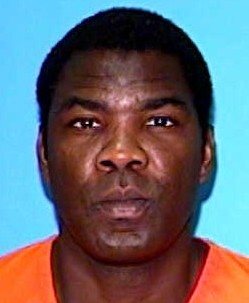







Forensic & Criminological Matrix
| Parameter | Forensic Detail |
|---|---|
| Forensic Heading / Aliases | John Earl Bush |
| Legal Identity | John Earl Bush |
| Confirmed Victims | 1 (Frances Julia Slater) |
| Active Timeline | April 27, 1982 |
| Jurisdiction / Area of Operations | Stuart, Florida, United States |
| Criminological Classification | Capital murderer, kidnapper, and armed robber |
| Forensic Modus Operandi | Late-night abduction of commercial establishment employee, cash register heist, transportation to a remote rural area, and witness elimination |
| Weapon / Mechanism of Death | Edged weapon (knife) and firearm (handgun) |
| Motive / Behavioral Dynamics | Financial gain through robbery and elimination of eyewitnesses |
| Judicial Outcome | Convicted of first-degree murder, armed robbery, and kidnapping; sentenced to death |
1. Background and Profile
John Earl Bush operated within the state of Florida alongside a circle of accomplices involved in property crimes and armed felonies. His criminological profile aligns with participants in opportunistic violent crimes that escalated into the capital homicide of a vulnerable commercial worker during early morning hours.
2. Crime Spree
In the early hours of April 27, 1982, at approximately 3:00 a.m., Bush and his co-perpetrators (Alfonso Cave, 'Pig' Parker, and Terry Johnson) targeted a convenience store in Stuart, Florida. They abducted eighteen-year-old store clerk Frances Julia Slater—granddaughter of industrialist Ralph Evinrude—and looted approximately $134 from the cash register and floor safe. The hostage was driven thirteen miles away to a secluded location where, driven by fear of identification, the perpetrators executed her via knife wounds and a close-range gunshot to the back of the head.
3. Investigation and Forensic Pursuit
The investigation commenced immediately upon the discovery of the victim's body and witness accounts regarding a suspicious vehicle at the crime scene. Law enforcement focused on the suspects, and on May 4, 1982, Bush voluntarily visited the Martin County Sheriff's Department regarding his impounded vehicle. Following the administration of Miranda warnings, Bush eventually waived his rights and provided incriminating statements detailing his involvement in the events.
4. Legal Proceedings and Outcome
Bush was arrested, indicted, and tried before Florida courts on charges of first-degree murder, armed robbery with a firearm, and kidnapping. Prosecutors presented audiotaped confessions, witness testimony, and forensic medical evidence. The jury found Bush guilty on all counts and recommended the imposition of the death penalty. The trial judge formally sentenced Bush to death, a ruling subsequently upheld through exhaustive state and federal appellate reviews, including decisions by the Supreme Court of Florida and the United States Court of Appeals for the Eleventh Circuit.
5. Psychological Evaluation and Resolution
Throughout post-conviction appeals, defense counsel challenged the admissibility of Bush's confessions, alleging coercion and inadequate Miranda protections, alongside objections to inflammatory photographic evidence. Appellate courts rejected these arguments, establishing that Bush's statements were given freely following an intelligent waiver of rights and that the morgue photographs were legally relevant to assist the medical examiner in explaining the nature of the fatal wounds. The judicial outcome reaffirmed the death sentence.