



Forensic & Criminological Matrix
| Parameter | Forensic Detail |
|---|---|
| Forensic Heading / Aliases | Paul Anthony Brown |
| Legal Identity | Paul Anthony Brown |
| Confirmed Victims | 1 |
| Attributed / Indicted Victims | 1 |
| Active Timeline | 1992 |
| Jurisdiction / Area of Operations | Florida, United States |
| Criminological Classification | Instrumental / Acquisitive Murderer |
| Forensic Modus Operandi | Lethal assault using a bladed weapon during the execution of an armed robbery to subdue the victim |
| Weapon / Mechanism of Death | Knife / Stabbing |
| Motive / Behavioral Dynamics | Financial gain / Instrumental crime |
| Judicial Outcome | Sentenced to death in 1996, followed by extensive state and federal appellate reviews |
1. Background and Profile
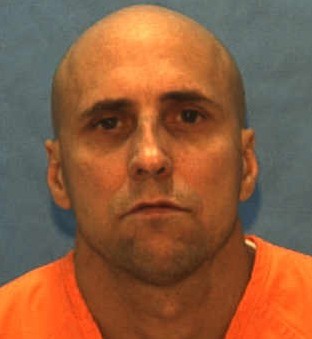
Paul Anthony Brown was born in 1967 in the United States. Prior to his capital murder conviction, he engaged in property crimes and armed offenses, eventually coming to the attention of federal law enforcement agencies for unrelated criminal activity.
2. Crime Spree
In 1992, Brown committed the murder of Roger Hensley during an armed robbery. His modus operandi involved the use of extreme physical violence and a bladed weapon to overcome the victim, reflecting an escalating pattern of dangerous property crimes.
3. Investigation and Arrest
The breakthrough in the investigation occurred on November 8, 1992, when Brown was arrested by the Federal Bureau of Investigation (FBI) in Tennessee on unrelated charges. During subsequent interrogations, Brown voluntarily implicated himself in the murder of Roger Hensley, allowing investigators to tie him directly to the crime scene evidence.
4. Legal Proceedings and Outcome
On April 6, 1993, Brown was formally indicted on one count of first-degree murder. Following trial proceedings, the jury found him guilty on October 18, 1996, and recommended the death penalty by a unanimous 12-to-0 vote on October 23, 1996. On November 7, 1996, he was formally sentenced to death for first-degree murder, alongside a concurrent 17-year sentence for armed robbery.
5. Psychiatric Evaluation and Aftermath
Brown's legal defense team subsequently filed multiple direct appeals and post-conviction motions in the Florida Supreme Court and federal courts, challenging the application of death penalty aggravating factors—such as heinous, atrocious, and cruel (HAC) and cold, calculated, and premeditated (CCP)—as well as sentence proportionality. Despite these challenges, his convictions and death sentence were repeatedly affirmed by judicial review.