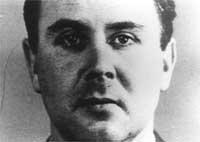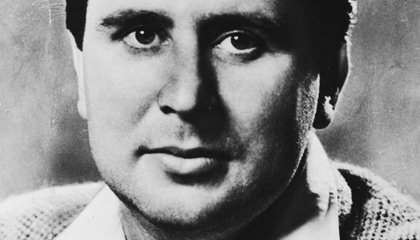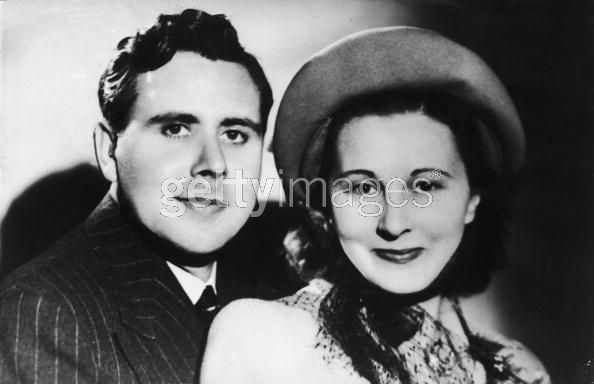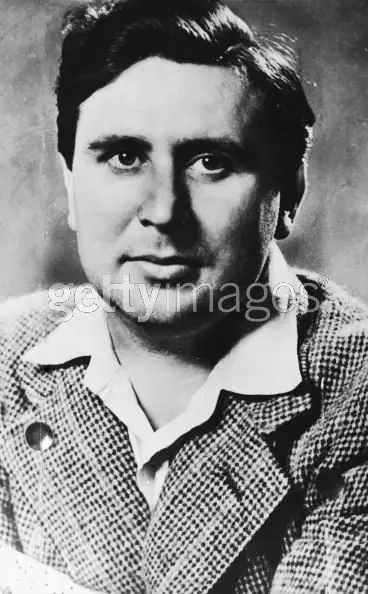



Forensic & Criminological Matrix
| Parameter | Forensic Detail |
|---|---|
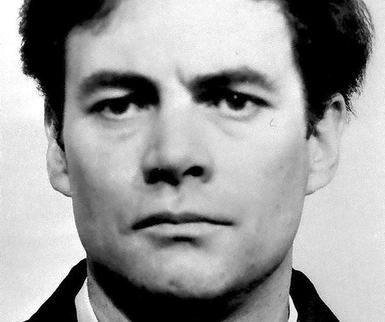
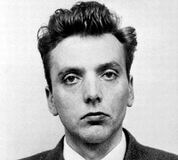
| Full Legal Name | Brian Donald Hume |
| Criminological Moniker | The Double Jeopardy Killer |
| Nationality | British |
| Date of Birth | January 13, 1919, Worcester, England |
| Date of Death | 1998 (aged c. 79), Gloucestershire, England |
| Confirmed Murder Victims | 2 (Stanley Setty in London, 1949; Arthur Taxter in Zurich, 1959) |
| Crime Geography | Bayswater, London (UK) and Zurich (Switzerland) |
| Cause of Death & Weapons | Multi-stab chest perforation followed by anatomical bone-saw dismemberment and aerial disposal (Setty); point-blank semi-automatic pistol gunshots during armed bank robbery (Taxter) |
| Landmark Legal Notoriety | Prime historical exhibition of the Anglo-Saxon Double Jeopardy doctrine: legally sold his signed murder confession to the national press following his court acquittal, immune from retrial |
| Final Penal Disposition | Sentenced to life imprisonment with hard labor in Switzerland (1959); repatriated to Britain in 1976 and held indefinitely at Broadmoor High Security Hospital |
The Disappearance of Stanley Setty and the Estuary Package
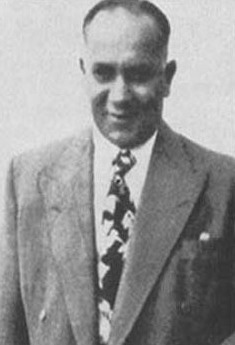
In October 1949, Stanley Setty (born Sulman Seti), an affluent London black-market used-car broker, vanished while carrying over £1,000 in cash.
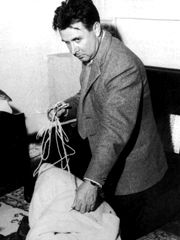
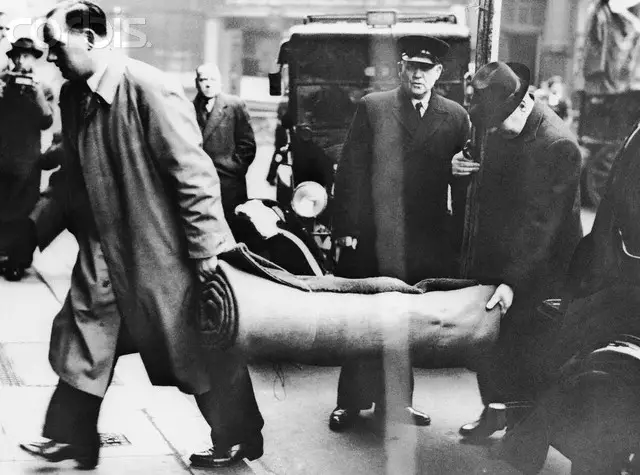
On October 21, 1949, an oyster fisherman working the marshes of Tillingham in the Thames Estuary (Essex) spotted a bundle caught in tidal mud. Carefully wrapped in felt and bound with hemp cord, the parcel contained the headless, legless torso of a human male.
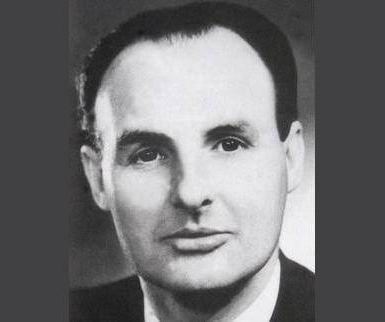
Home Office forensic pathologist Dr. Francis Camps analyzed the remains:
- Five penetrating stab wounds traversed the pulmonary lobes and cardiac muscle.
- Surgical manual bone saws had been used to sever the neck and femoral joints.
- Latent friction ridge skin recovered from a remaining hand confirmed the victim as Stanley Setty.
Scotland Yard detectives audited regional flying clubs. Flight logs at Elstree Aerodrome revealed that amateur pilot Brian Donald Hume had rented an Auster light aircraft on October 5 and 6, 1949, hauling heavy parcels of "aircraft parts" out over the Thames Estuary.
A forensic search of Hume's Finchley Road apartment uncovered dried blood that had seeped between the floorboards into the ceiling plaster of the flat below, matching Setty's rare blood group, along with carving knives and hemp cord identical to the estuary parcel bindings.
The 1950 Old Bailey Trial and Procedural Impasse
In January 1950, Hume stood trial for capital murder at the Old Bailey.
Hume offered an elaborate narrative: admitting he dumped the packages from the aircraft, he claimed three underworld figures nicknamed "Mac", "The Boy", and "Greenie" paid him £150 to discard the parcels over the sea without opening them.
The jury failed to reach a unanimous verdict on the murder indictment. By judicial direction, Hume was formally acquitted of murder; however, he pleaded guilty to the secondary offense of being an accessory after the fact to murder, receiving a twelve-year prison sentence.
The 1958 Sunday Pictorial Confession
In February 1958, following eight years at Dartmoor Prison, Hume was discharged on standard remission.
Hume fully understood the common law protection of Double Jeopardy: having been acquitted of Setty's murder, he could never be prosecuted for that crime again under English law, regardless of subsequent evidence or confessions.
Hume approached the Sunday Pictorial tabloid, negotiating the sale of his confession for £2,000.
On June 1, 1958, the paper ran the headline across Britain:
«I Killed Setty and Got Away with It».
Hume disclosed how he personally knifed Setty during an argument in his flat, slept with the corpse in the room, severed the head and legs with a bone saw on kitchen linoleum, and fabricated "Mac, The Boy, and Greenie" to hoodwink the Old Bailey jury.
The confession caused parliamentary and judicial outrage. However, Crown prosecutors affirmed that the common law bar on double jeopardy rendered Hume untouchable for the Setty homicide.
The Zurich Bank Robbery and Slaying (1959)
Flush with cash from his press confession, Hume assumed the alias "Donald Brown" and relocated to Switzerland in late 1958.
On January 30, 1959, Hume held up the Gewerbebank in Zurich armed with a pistol. When a cashier resisted, Hume shot him through the abdomen. Fleeing into the street with stolen cash, a taxi driver named Arthur Taxter attempted to block his flight; Hume shot Taxter point-blank through the chest, killing him instantly.
Swiss citizens and patrol officers wrestled Hume to the pavement, securing his arrest.
Swiss Trial, Broadmoor, and Death
Tried by the Zurich Cantonal Court in September 1959, Swiss magistrates rejected his diminished responsibility claims, sentencing Hume to life imprisonment with hard labor (lebenslängliches Zuchthaus).
In 1976, after seventeen years at Regensdorf Penitentiary, Swiss authorities repatriated an increasingly psychotic Hume to the United Kingdom under psychiatric escort.
Hume was committed directly to Broadmoor High Security Hospital, where he remained under closed psychiatric confinement until his death in 1998, concluding one of the most remarkable legal and criminological sagas of the twentieth century.