


Forensic & Criminological Matrix
| Parameter | Forensic Detail |
|---|---|
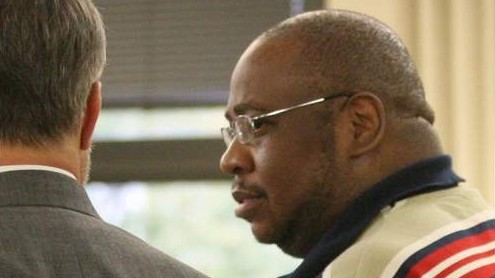
| Forensic Heading / Aliases | Roger Hoan Brady |
| Legal Identity | Roger Hoan Brady |
| Confirmed Victims | 2 |
| Attributed / Indicted Victims | 2 |
| Active Timeline | December 1993 - August 1994 |
| Jurisdiction / Area of Operations | California and Oregon, United States |
| Criminological Classification | Armed robber and opportunistic murderer |
| Forensic Modus Operandi | Committing armed robberies at commercial establishments and lethally eliminating witnesses or law enforcement officers during escape |
| Weapon / Mechanism of Death | Firearms / Close-range gunshot wounds |
| Motive / Behavioral Dynamics | Financial gain and elimination of obstacles to escape |
| Judicial Outcome | Life imprisonment in Oregon; death penalty in California (currently pending appeals) |
1. Background and Profile
Roger Hoan Brady operated as an itinerant criminal specialized in armed robberies of banks and supermarkets along the West Coast of the United States. His criminological profile demonstrated extreme hostility and a total willingness to employ lethal force to guarantee his escape from law enforcement or civilian interference.
2. Crime Spree
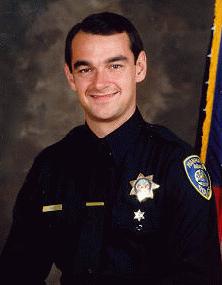
On December 27, 1993, in Manhattan Beach, California, Brady was pulled over by 29-year-old police officer Martin Ganz. Brady immediately opened fire, wounded the officer, and executed him at close range while the officer's 12-year-old nephew watched from the patrol car. Months later, in August 1994, after robbing a supermarket in Oregon, Brady shot and killed Catalina Correa, a 55-year-old customer who witnessed the crime and attempted to follow his getaway car.
3. Investigation and Arrest
The investigation into Officer Ganz's murder mobilized local and federal law enforcement. Following the Oregon murder in 1994, vigilant witnesses provided key descriptions of Brady and his vehicle, leading to his swift arrest in Vancouver, Washington. Ballistics and eyewitness testimony successfully linked him to both homicides.
4. Legal Proceedings and Outcome
Brady was initially tried in Oregon for the murder of Catalina Correa, receiving a sentence of life imprisonment without parole. In August 1996, he was extradited to California to stand trial for the murder of Officer Martin Ganz. In November 1998, a Torrance jury convicted him of first-degree murder with special circumstances, and on March 16, 1999, he was sentenced to death.
5. Psychiatric Evaluation and Final Disposition
Psychiatric evaluations characterized Brady as cold, calculating, and devoid of remorse. Following his death sentence, he was transferred to San Quentin State Prison, where he remains incarcerated while awaiting the resolution of his automatic death penalty appeals.