


Forensic & Criminological Matrix
| Parameter | Forensic Detail |
|---|---|
| Forensic Heading / Aliases | Lady-Killer, Lucifer |
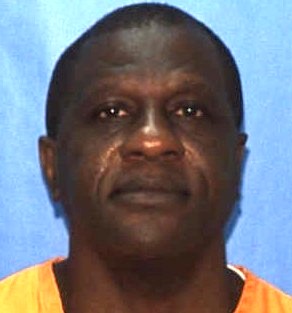
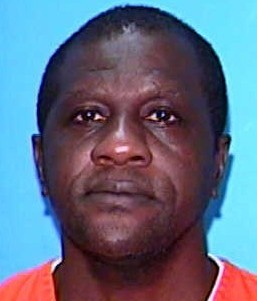
| Legal Identity | Lucious Boyd |
| Confirmed Victims | 1 (Dawnia Dacosta) |
| Attributed / Indicted Victims | 11 (Including unsolved disappearances and homicides in South Florida) |
| Active Timeline | 1993 - 1998 |
| Jurisdiction / Area of Operations | Fort Lauderdale, Broward and Palm Beach Counties, Florida, USA |
| Criminological Classification | Serial killer / Predatory rapist |
| Forensic Modus Operandi | Intercepting vulnerable women near roadways following vehicular breakdowns, inflicting severe blunt force trauma, sexual assault, and discarding remains in remote areas. |
| Weapon / Mechanism of Death | Blunt force trauma (severe cranial fractures) and asphyxia |
| Motive / Behavioral Dynamics | Sexual predation, psychopathic sadism, and crack cocaine abuse |
| Judicial Outcome | Sentenced to death in 2002 for first-degree murder, sexual battery, and armed kidnapping; convictions affirmed by the Florida Supreme Court in 2005. |
1. Background and Profile
Lucious Boyd was born in 1959 and raised in a prominent Fort Lauderdale family that operated a local funeral home. Despite his respectable background, Boyd developed a chronic pattern of antisocial behavior, substance abuse (crack cocaine), and domestic volatility. Known locally for his erratic demeanor and intimidating presence when under the influence, he earned monikers such as "Lady-Killer" and "Lucifer" among neighborhood acquaintances and police.
2. Criminal Career and Modus Operandi
Boyd's criminal trajectory centered on preying upon young women in vulnerable transit or late-night situations across South Florida. His defining offense occurred on December 4, 1998, when he intercepted 21-year-old nursing student Dawnia Dacosta after her car ran out of gas on Interstate 95. Posing as the driver of a church van, he abducted her, sexually assaulted her, inflicted severe blunt force trauma to her skull, and dumped her naked body in an alley wrapped in sheets and plastic.
3. Investigation and Arrest
The investigation broke open when detectives traced the "Hope" van used in the abduction to a religious organization where Boyd worked as a handyman. Definitive forensic validation came in March 1999 when DNA profiles matched semen recovered from Dacosta's body to Boyd. Confronted at his family's funeral home, Boyd made a chilling admission to detectives: "What took you so long to catch me?" before demanding legal representation.
4. Legal Proceedings and Outcome
Arrested on March 26, 1999, Boyd was indicted for first-degree murder, sexual battery, and armed kidnapping. During the 2002 trial, prosecutors presented overwhelming forensic evidence, including DNA matches and eyewitness testimonies placing Dacosta in his vehicle. In January 2002, a jury found him guilty on all counts, and following a unanimous 12-0 recommendation, he was sentenced to death on June 21, 2002. The Florida Supreme Court affirmed the convictions and sentence in February 2005.
5. Psychological Evaluation and Aftermath
Forensic evaluations underscored severe psychopathic traits, lack of empathy, and impulse control deficits driven by chronic substance abuse. Law enforcement agencies in Broward and Palm Beach counties subsequently investigated Boyd regarding at least ten additional unsolved murders and disappearances of young women in the region, including Patrece Alston and Melissa Floyd. Boyd remains incarcerated on Florida's death row.