




Forensic & Criminological Matrix
| Parameter | Forensic Detail |
|---|---|
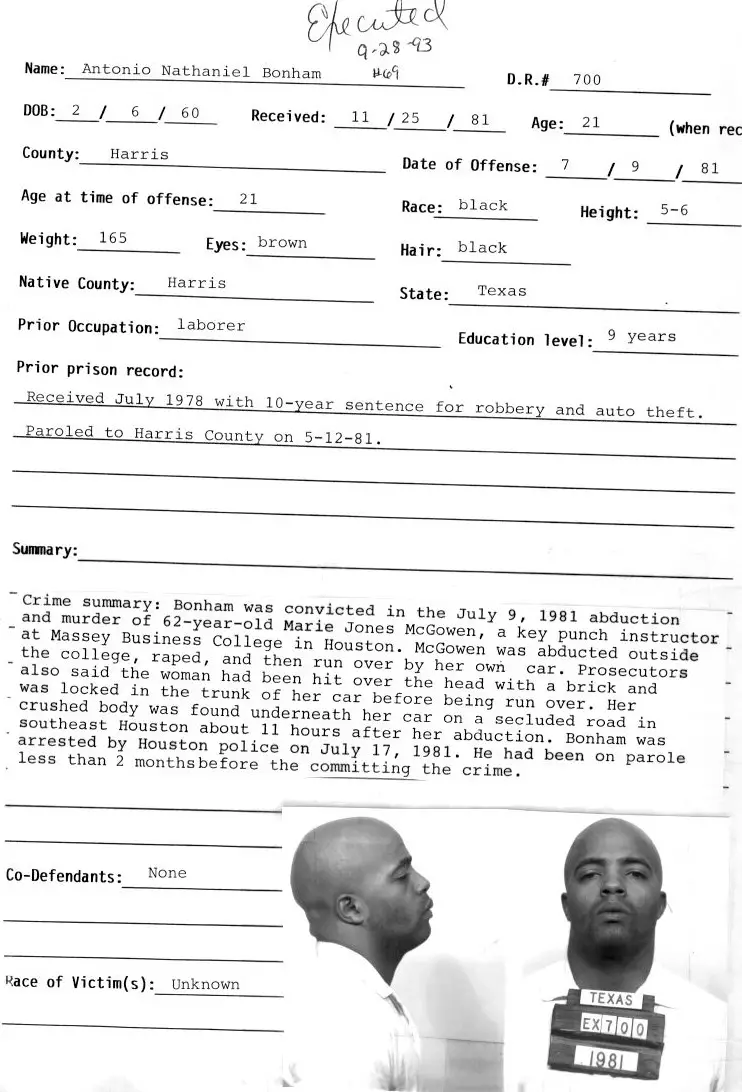
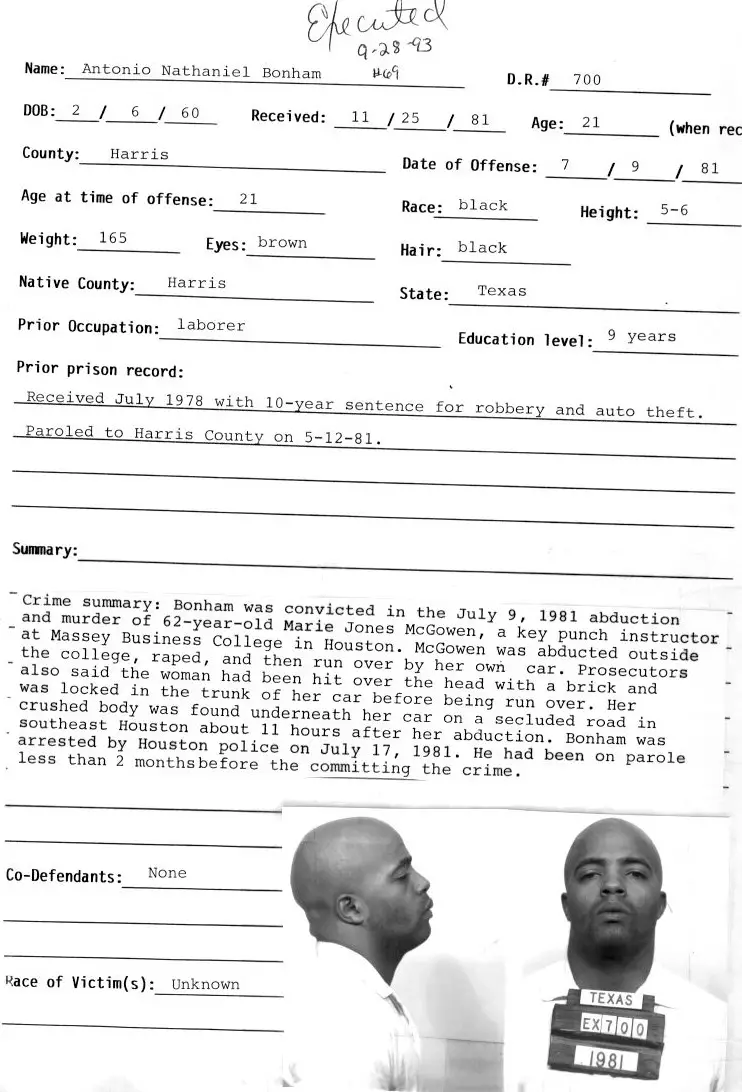
| Forensic Heading / Aliases | Anthony Nathaniel Bonham ("Tony") |
| Legal Identity | Antonio Nathaniel Bonham |
| Confirmed Victims | 1 (Marie Jones McGowen) |
| Active Timeline | July 9, 1981 |
| Jurisdiction / Area of Operations | Houston, Texas, United States |
| Criminological Classification | Recidivist offender, sexual murderer, and violent predator |
| Forensic Modus Operandi | Morning ambush, blunt-force trauma with a brick, trunk confinement, sexual assault, and vehicular homicide via multiple run-overs |
| Weapon / Mechanism of Death | Brick and motor vehicle (blunt force trauma and crush injuries) |
| Motive / Behavioral Dynamics | Vehicle theft escalating to sexual assault, witness elimination, and heavy alcohol intoxication |
| Judicial Outcome | Sentenced to death; executed by lethal lethal injection on September 28, 1993, at the Huntsville Unit |
1. Background and Psychopathy
Anthony Nathaniel Bonham, known as Tony, possessed a criminal record that included a prior conviction for aggravated robbery. He had been paroled from a ten-year sentence just five weeks before committing the murder. At twenty-one years of age, Bonham displayed a pattern of social maladjustment and chronic alcohol abuse that significantly impaired his behavioral control, a central dynamic in his escalation toward lethal violence.
2. Crime Spree and Modus Operandi
On the morning of July 9, 1981, Marie Jones McGowen, a 62-year-old keypunch instructor at Massey Business College, arrived at her workplace in Houston before 7:00 a.m. Bonham, whose original intent was merely to steal a vehicle, struck her over the head with a brick and forced her into the trunk of her own car. After driving aimlessly around Houston for approximately four hours, he parked on a desolate stretch of Schurmier Road in southeast Houston, where he raped McGowen. Realizing the gravity of his actions, he subsequently ran her over three times with the sedan until she was killed, abandoning the scene when the vehicle became stuck in a ditch.
3. Investigation and Forensics
Houston police recovered the abandoned vehicle eleven hours after the abduction. Upon notifying the victim's husband, John McGowen, to bring spare keys, he discovered his wife's mangled body pinned underneath the automobile. Forensic evidence was decisive: a set of house keys belonging to Bonham's mother, father, and sister was discovered near the crime scene, and fingerprints lifted from the car matched Bonham's records, leading to his swift arrest and subsequent written confession.
4. Legal Proceedings and Outcome
During the trial and subsequent appeals, defense counsel challenged the admissibility of Bonham's written confession, claiming psychological coercion and false promises of a life sentence made by detectives. The appellate courts rejected these claims, ruling the confession voluntary. Defense attorney Mike Charlton argued that jurors failed to adequately weigh Bonham's young age of 21 and his severe state of voluntary intoxication at the time of the crime. Despite protracted legal challenges, all appeals were denied.
5. Psychiatric Evaluation and Execution
Forensic evaluations addressed Bonham's cognitive state under alcohol influence, establishing legal sanity and criminal responsibility. With minimal public activism surrounding his case due to lower media visibility compared to contemporary executions, all clemency bids failed. On September 28, 1993, at age 33, Anthony Nathaniel Bonham was put to death by lethal injection at the Huntsville Penitentiary in Texas, declining to make a final statement.