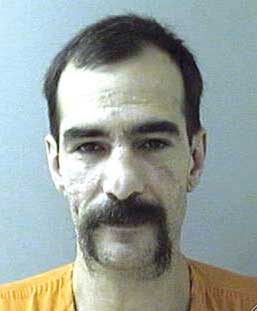




Forensic & Criminological Matrix
| Parameter | Forensic Detail |
|---|---|
| Forensic Heading / Aliases | Phillip Bocharski |
| Legal Identity | Phillip Alan Bocharski |
| Confirmed Victims | 1 (Freeda Brown, 84) |
| Attributed / Indicted Victims | 1 |
| Active Timeline | May 1994 |
| Jurisdiction / Area of Operations | Congress, Arizona, United States |
| Criminological Classification | Financially Motivated Homicidal Offender |
| Forensic Modus Operandi | Surprise physical assault using a bladed weapon targeting vital areas (head and neck) inside the victim's residence, preceded by surveillance and exploitation of the elderly victim's vulnerability |
| Weapon / Mechanism of Death | Bladed weapon (multiple stab wounds) |
| Motive / Behavioral Dynamics | Financial gain (robbery), compounded by a history of severe childhood trauma and chronic alcoholism |
| Judicial Outcome | Initially sentenced to death in 1996; sentence commuted to life imprisonment without parole by the Arizona Supreme Court in 2008 |
1. Background and Profile
Phillip Alan Bocharski was born in 1962 into a highly dysfunctional family environment. Subsequent forensic and judicial evaluations documented that Bocharski endured a childhood defined by severe neglect, alongside extreme physical, psychological, emotional, and sexual abuse. In adulthood, he developed a severe alcohol dependency and lived a marginalized existence, residing in a tent in remote areas of Congress, Arizona. His background reflected social maladjustment and minor criminality before escalating into lethal violence.
2. Crime Spree and Modus Operandi
Tracing the sequence of events, the murder occurred in May 1994 (with the victim's body discovered on May 13, 1995). The victim, 84-year-old Freeda Brown, lived in a trailer near Bocharski's campsite. Bocharski was acquainted with Brown because he had previously performed odd jobs for her, such as driving her to banks and stores in Wickenburg to cash checks.
After expressing his intent to kill her due to her age and arthritis complaints, Bocharski targeted her at her property. The autopsy revealed multiple stab wounds to the head and neck, as well as a defensive wound on her right hand. Following the murder, Bocharski—who had previously been entirely destitute—suddenly displayed hundreds of dollars in cash and boasted about acquiring money from the crime.
3. Investigation and Arrest
Law enforcement launched an investigation after discovering Brown's partially decomposed body in her trailer. Statements from acquaintances, notably Frank Sukis, were pivotal in linking Bocharski to the homicide. Sukis testified that Bocharski had previously mentioned killing the elderly woman for money and later confessed to the murder, displaying unusual amounts of cash that he claimed came from the crime.
4. Legal Proceedings and Outcome
In August and September 1996, Bocharski was tried before Yavapai County Superior Court Judge William T. Kiger. On September 13, 1996, a jury convicted him of first-degree burglary and first-degree felony murder. On July 29, 1997, he was sentenced to death based on statutory aggravating factors, including pecuniary gain and the heinous nature of the crime.
The case underwent prolonged appellate reviews. The Arizona Supreme Court initially reversed the sentence because defense counsel lacked adequate funding to gather mitigating evidence. Following subsequent rulings regarding capital sentencing procedures, the case was re-examined. On August 8, 2008, the Arizona Supreme Court unanimously commuted Bocharski's death sentence to life imprisonment without the possibility of parole, weighing the substantial mitigation evidence regarding his abusive upbringing and chronic alcoholism.