




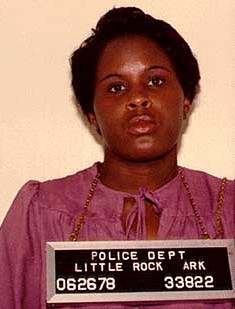
Forensic & Criminological Matrix
| Parameter | Forensic Detail |
|---|---|
| Forensic Heading / Aliases | Kenisha Berry |
| Legal Identity | Kenisha Eronda Berry |
| Confirmed Victims | 1 (Malachi, 4-day-old son; attempted murder/abandonment of a second infant) |
| Active Timeline | November 29, 1998 (primary homicide); June 2003 (infant abandonment) |
| Jurisdiction / Area of Operations | Jefferson County, Beaumont, Texas, USA |
| Criminological Classification | Selective Filicide / Infanticidal Offender |
| Forensic Modus Operandi | Systematic concealment of pregnancies, solitary childbirth, immobilization with duct tape, mechanical asphyxiation by smothering, and disposal of neonates in dumpsters or remote rural ditches. |
| Weapon / Mechanism of Death | Duct tape, plastic garbage bags, and manual smothering |
| Motive / Behavioral Dynamics | Selective rejection of offspring based on paternity, social concealment, absence of severe psychotic disorders but severe behavioral patterns aimed at elapsing parental stressors. |
| Judicial Outcome | Sentenced to death on February 19, 2004, for capital murder. Sentence commuted to life imprisonment without parole eligibility for 40 years following an appeals ruling on May 23, 2007. |
1. Background and Psychopathy
Kenisha Eronda Berry was born on December 26, 1977. Raised in Texas, she was described by family members as a timid and withdrawn child. She dropped out of traditional high school, later obtaining her General Educational Development (GED) certificate. She held various short-term jobs in food service, worked briefly as a corrections officer at a prison in Dayton (from which she was terminated for unexcused absences), and was employed as a daycare worker caring for toddlers at the time of her arrest. She had no prior criminal record and maintained a façade of conventional social adaptation while systematically concealing multiple pregnancies from relatives and romantic partners.
2. Crime Spree
Berry's criminal modus operandi involved secret gestations and solitary home births, followed by the calculated elimination or abandonment of her newborns. On November 29, 1998, in Beaumont, Jefferson County, Texas, she gave birth to a four-day-old boy forensically identified as Malachi. Berry bound the infant's body and mouth with duct tape, placed him inside a black plastic garbage bag, and discarded him in an apartment complex dumpster, resulting in his death by asphyxiation and exposure. Nearly five years later, in June 2003, she replicated a similar behavior pattern with her newborn daughter, Parris, wrapping her in a pillowcase and abandoning her in a roadside ditch where she suffered severe fire ant bites before being rescued and surviving after intensive medical care.
3. Crime Spree and Forensic Hunt
For over four years, the 1998 neonate homicide remained an unsolved cold case, locally dubbed "Baby Hope" after being discovered by aluminum-can scavengers. The investigation broke open in June 2003 when a passerby found infant Parris abandoned on Hillebrandt Road. Anonymous tips directed Jefferson County Sheriff's investigators toward Berry. On June 12, 2003, Berry voluntarily approached law enforcement and confessed that the surviving baby was hers, subsequently leading deputies to the exact dumpster where Baby Hope had been discarded years earlier. DNA profiling and fingerprint evidence recovered from the duct tape irrefutably linked Berry to both crimes.
4. Arrest and Judicial Proceedings
Kenisha Berry was arrested and charged with the capital murder of the 1998 infant. Her trial took place in the 252nd District Court of Texas. On February 19, 2004, a jury convicted her of capital murder, and the trial judge sentenced her to death. The defense appealed the verdict to the Texas Court of Criminal Appeals. On May 23, 2007, in a narrow 5-4 ruling, the state's highest criminal court determined that the prosecution failed to adequately establish future dangerousness within a prison environment, thus vacating the death sentence and reforming it to life imprisonment with a mandatory 40-year minimum parole eligibility period. She subsequently faced additional felony charges for the abandonment of her second infant.
5. Psychiatric Assessment and Outcome
Psychiatric evaluations and court testimonies revealed a behavioral profile marked by severe emotional compartmentalization regarding unwanted pregnancies and a selective disposal pattern based on paternal lineage—preserving children sired by favored partners while eliminating others with chilling detachment. Despite dissenting opinions from judges emphasizing the extreme brutality and cold calculation of her actions, the legal modification of her sentence spared her from lethal injection. She remains incarcerated within the Texas Department of Criminal Justice serving a life sentence.