




Forensic & Criminological Matrix
| Parameter | Forensic Detail |
|---|---|
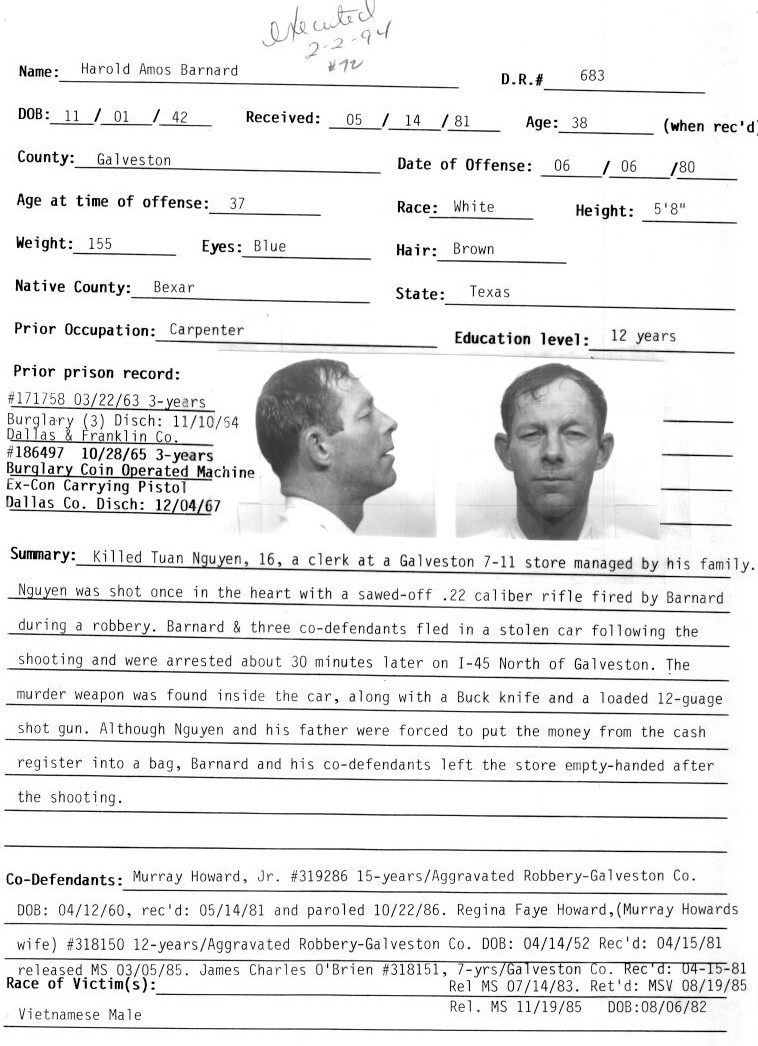
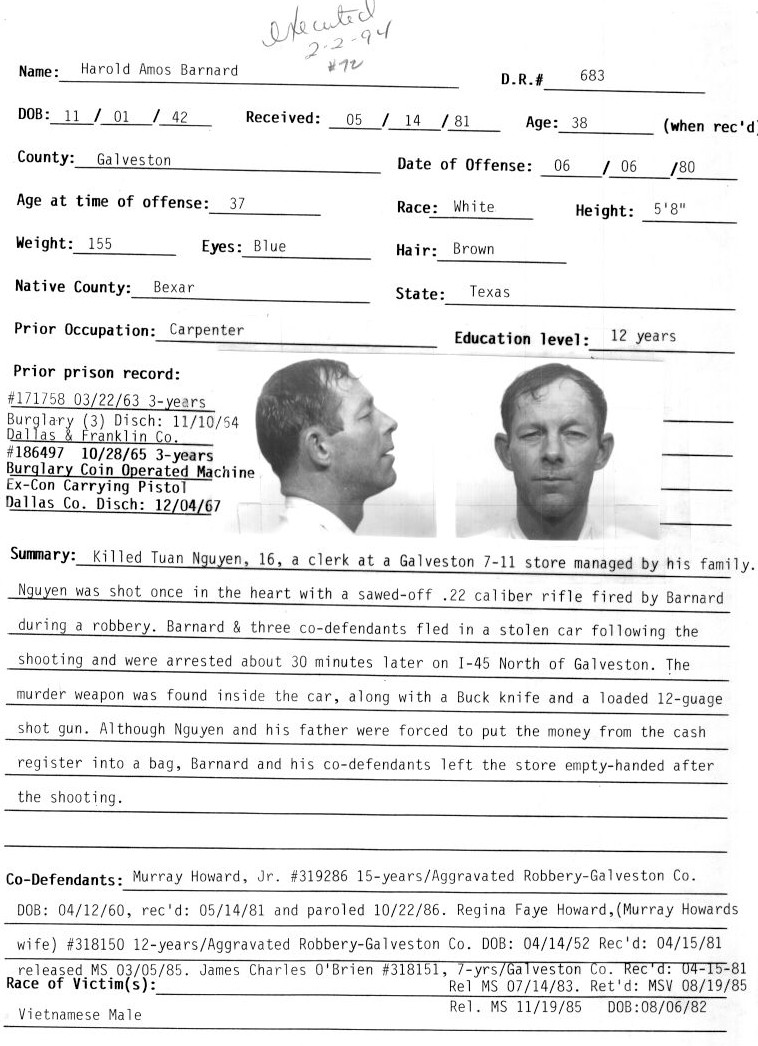
| Forensic Heading / Aliases | Harold Amos Barnard |
| Legal Identity | Harold Amos Barnard Jr. |
| Confirmed Victims | 1 (Tuan Nguyen) |
| Active Timeline | June 6, 1980 |
| Jurisdiction / Area of Operations | Galveston, Texas, United States |
| Criminological Classification | Felony Murderer / Capital Offender |
| Forensic Modus Operandi | Armed entry into retail establishments, intimidation, and lethal force execution during robberies |
| Weapon / Mechanism of Death | Firearms (Handgun) |
| Motive / Behavioral Dynamics | Financial gain / Armed robbery; compounded by alleged head trauma and substance abuse issues |
| Judicial Outcome | Sentenced to death on April 6, 1981; executed in Texas in 1994 following exhaustive federal habeas corpus reviews |
1. Background and Psychopathy
Harold Amos Barnard Jr. entered the criminal justice system with a background marked by adverse psychosocial factors, including reported head injuries, a troubled childhood, and persistent substance abuse involving alcohol and drugs. Prior to the capital offense, Barnard maintained an intermittent work history primarily centered around carpentry and manual trades.
2. Crime Spree
On June 6, 1980, Barnard executed an armed robbery at a convenience store located in Galveston, Texas. During the commission of the crime, he shot and killed sixteen-year-old store employee Tuan Nguyen. The behavioral pattern reflected standard armed robbery dynamics characterized by opportunistic targeting of retail stores and the readiness to employ lethal force against witnesses or resistance.
3. Investigation and Arrest
Galveston law enforcement agencies swiftly secured the crime scene, recovering crucial ballistic and physical evidence that directly implicated Barnard. Eyewitness accounts and forensic analysis facilitated his identification, apprehension, and formal indictment for capital murder.
4. Legal Proceedings and Outcome
Barnard stood trial and was convicted of capital murder by a Texas jury on April 1, 1981. Following a separate punishment hearing where the jury answered affirmative findings on the statutory special issues, the trial court formally imposed a sentence of death on April 6, 1981.
5. Psychiatric Evaluation and Final Disposition
Throughout the appellate phase, Barnard's legal counsel pursued numerous state and federal habeas corpus petitions. The defense contended that the Texas capital sentencing statute unconstitutionally restricted the jury's consideration of mitigating evidence—specifically neurological impairment, cognitive deficits, and substance addiction—pursuant to Penry v. Lynaugh standards. Ultimately, the United States Court of Appeals for the Fifth Circuit rejected these claims in January 1994, upholding the district court's denial of relief and vacating all stays of execution. Barnard was executed in Texas in 1994.