Forensic & Criminological Matrix
| Parameter | Forensic Detail |
|---|---|
| Forensic Heading / Aliases | Thomas Andy Barefoot |
| Legal Identity | Thomas Andy Barefoot |
| Confirmed Victims | 1 |
| Active Timeline | 1978 |
| Jurisdiction / Area of Operations | Texas, United States |
| Criminological Classification | Law enforcement killer |
| Forensic Modus Operandi | Use of firearm to evade arrest |
| Weapon / Mechanism of Death | Firearm (handgun) |
| Motive / Behavioral Dynamics | Avoidance of police apprehension |
| Judicial Outcome | Death penalty via lethal injection |
1. Background and Profile
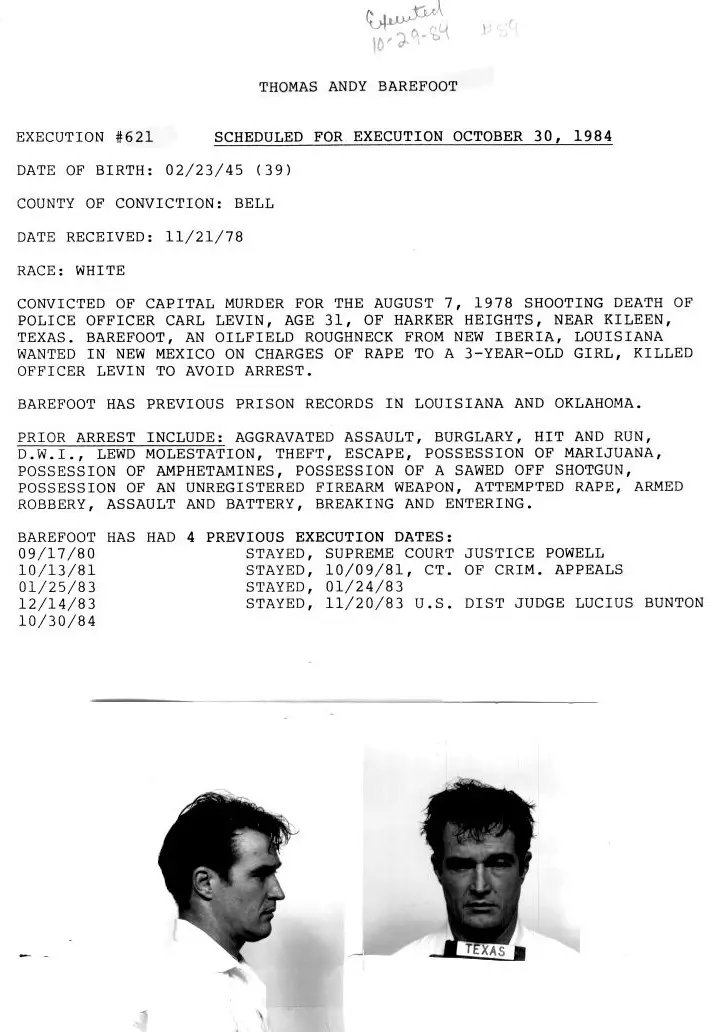
Thomas Andy Barefoot was an American criminal whose actions led to a significant legal precedent regarding the use of psychiatric testimony in capital sentencing. His case remains a staple in American legal studies.
2. Criminal Career and Modus Operandi
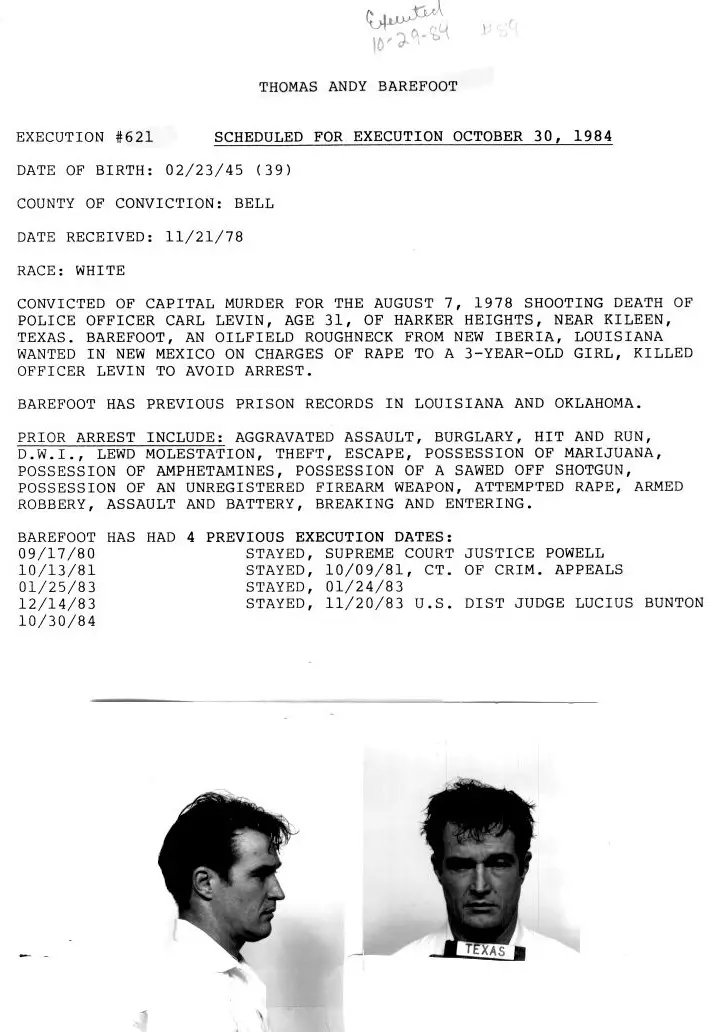
In 1978, while attempting to evade police, Barefoot shot and killed officer Carl LeVin. The crime was characterized by a desperate attempt to avoid arrest, resulting in the fatal shooting of a law enforcement officer.
3. Investigation and Arrest
Law enforcement quickly identified Barefoot as the perpetrator. Forensic evidence, including ballistics, confirmed his involvement, leading to his arrest and subsequent prosecution.
4. Legal Proceedings and Outcome
Barefoot's trial resulted in a death sentence. The case reached the U.S. Supreme Court (Barefoot v. Estelle), which addressed whether psychiatric testimony predicting future dangerousness was admissible in capital sentencing hearings.
5. Psychiatric Evaluation and Final Disposition
The Supreme Court upheld the death sentence. Barefoot was executed by lethal injection on October 30, 1984, in Texas, after delivering a final statement expressing forgiveness.