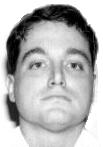




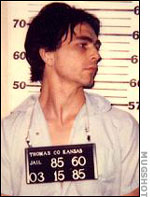
Forensic & Criminological Matrix
| Parameter | Forensic Detail |
|---|---|
| Forensic Heading / Aliases | Stanley Allison Baker Jr. |
| Legal Identity | Stanley Allison Baker Jr. |
| Confirmed Victims | 1 (Wayne John Walters) |
| Attributed / Indicted Victims | 1 (with thwarted plans for a broader mass casualty spree) |
| Active Timeline | September 28, 1994 |
| Jurisdiction / Area of Operations | College Station, Brazos County, Texas, United States |
| Criminological Classification | Homicidal Offender / Frustrated Mass Murderer Ideation |
| Forensic Modus Operandi | Armed robbery in military fatigues, execution-style shooting of compliant victims using a 12-gauge shotgun |
| Weapon / Mechanism of Death | 12-gauge shotgun (close-range ballistic trauma) |
| Motive / Behavioral Dynamics | Financial gain, severe psychiatric instability, and grandiose homicidal ideation |
| Judicial Outcome | Sentenced to death in July 1995; executed by lethal injection on May 30, 2002 |
1. Background and Profile
Stanley Allison Baker Jr. was born in Paris, France, where his father was stationed with the United States Army. He grew up in San Antonio, Texas, served four years in the Army, joined the National Guard, and attended Blinn College with aspirations of becoming a history teacher. Prior to the offense, he had no reported criminal record, but his personal life was characterized by severe isolation, chronic depression, and mounting social resentment.
2. Crime Spree and Modus Operandi
On September 28, 1994, Baker entered an adult video store in College Station, Texas, wearing green military fatigues and carrying a 12-gauge shotgun. The sole clerk, 44-year-old Wayne John Walters, surrendered the keys to his pickup truck without resistance. Despite this complete compliance, Baker opened fire, delivering three shots, the final one to the back of the head as the victim lay face down. During the shooting, the shotgun recoiled violently, striking Baker in the face, breaking a tooth, and leaving critical biological evidence at the scene. Baker stole a small amount of cash and fled in the victim's truck.
3. Investigation and Forensic Hunt
Baker's evasion was short-lived. Approximately two hours after the shooting, a Texas Department of Public Safety trooper intercepted the stolen vehicle about 70 miles away. Upon arrest, Baker had a cut lip, a bloody shirt, and was driving the victim's truck. Inside the vehicle, police recovered the murder weapon, ammunition, a brass-knuckled stiletto, a bulletproof vest, a garrote, and survival gear. A recovered notebook detailed his chilling annual goals, which included executing over 30 victims and conducting multiple armed robberies. Investigators concluded that a chipped tooth and facial injury likely thwarted his subsequent plan to attack a local grocery store where he had recently worked.
4. Legal Proceedings and Outcome
Following his confession, Baker was tried in Brazos County. In July 1995, a jury convicted him of capital murder and sentenced him to death. The Texas Court of Criminal Appeals upheld the conviction in May 1997, and subsequent state and federal appeals were denied.
5. Psychiatric Evaluation and Execution
Forensic evaluations highlighted severe psychological distress and grandiose violent fantasies modeled after historical mass murderers. Having abandoned further legal appeals, Baker was executed via lethal injection at the Huntsville Unit in Texas on May 30, 2002.