



Forensic & Criminological Matrix
| Parameter | Forensic Detail |
|---|---|
| Forensic Heading / Aliases | The Angel of Death, Crazy Dave |
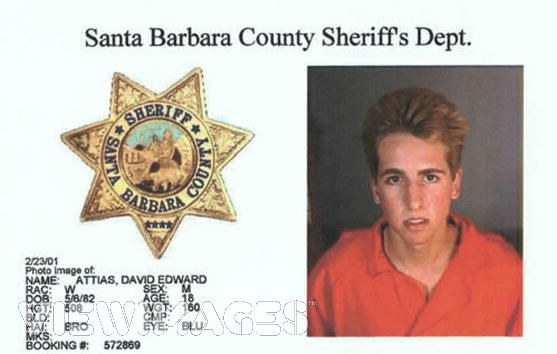
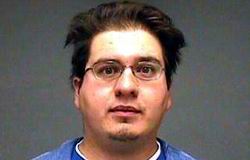
| Legal Identity | David Edward Attias |
| Confirmed Victims | 4 immediate fatalities (1 critical survivor passed away in 2016) |
| Active Timeline | February 23, 2001 |
| Jurisdiction / Area of Operations | Isla Vista, Santa Barbara County, California (USA) |
| Criminological Classification | Vehicular Homicide / Psychotic Episode / Legally Insane (NGRI) |
| Forensic Modus Operandi | High-speed vehicular assault (60+ mph) in a dense pedestrian corridor |
| Weapon / Mechanism of Death | Motor vehicle (1991 Saab 9000) |
| Motive / Behavioral Dynamics | Acute psychotic episode, severe manic/schizotypal break, drug intoxication |
| Judicial Outcome | Convicted of 2nd-degree murder; ruled legally insane (2002); committed to Patton State Hospital; released to outpatient facility (2012) |
1. Background and Profile
David Edward Attias was born in 1982 in Southern California, the son of prominent Hollywood television director Daniel Attias. Despite growing up in an affluent environment, David exhibited severe emotional disturbances and behavioral instability throughout his adolescence.
In the fall of 2000, Attias enrolled as a freshman at the University of California, Santa Barbara (UCSB). Residing in Isla Vista, he quickly gained the nickname "Crazy Dave" among peers due to erratic and boundary-crossing behavior, such as entering dorm rooms uninvited, following strangers into elevators, and exhibiting intense psychomotor agitation. Forensic evaluations later revealed a history of psychiatric intervention and substance use.
2. Criminal Incident and Modus Operandi
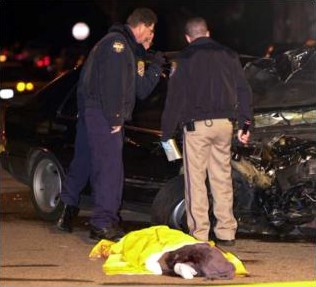
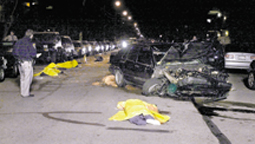
On the night of Friday, February 23, 2001, at approximately 11:00 p.m., Sabado Tarde Road in Isla Vista was filled with college students walking between weekend gatherings. Attias sped down the street in his 1991 Saab 9000, accelerating past 60 mph in a designated 25 mph pedestrian-heavy zone.
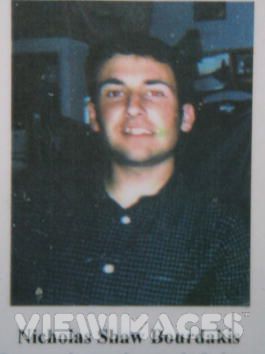
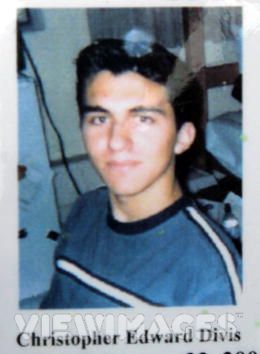
After sideswiping several parked cars, Attias plowed directly into a group of young pedestrians. The violent collision instantly killed four people: Nicholas Shaw Bourdakis (20), Christopher Edward Divis (20), Ruth Dasha Golda Levy (20), and Elie Israel (27). Ruth Levy's brother, Albert Arthur Levy (27), suffered catastrophic head and spinal injuries.
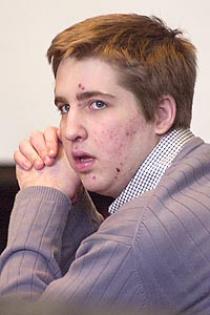
Immediately after the crash, Attias exited his disabled vehicle in a state of extreme mania. As dozens of shocked onlookers gathered, he began striking poses, fighting with bystanders, and screaming: "I am the Angel of Death!"
3. Police Investigation and Forensic Evidence
A chaotic scene ensued as several students attempted to subdue Attias while others rendered first aid to the victims. Local residents captured the immediate aftermath on video, showing Attias kicking and fighting until Santa Barbara County Sheriff's deputies arrived and used a baton to bring him to the ground.
Attias refused field sobriety tests and was subjected to mandatory blood draws. Forensic drug-recognition experts noted physiological markers of extreme intoxication and active psychosis, including severe pupil dilation and elevated heart rate.
4. Legal Proceedings and Sanity Phase
Attias was indicted on 13 felony charges, including four counts of second-degree murder and multiple DUI-related counts.
The trial in Santa Barbara Superior Court was bifurcated:
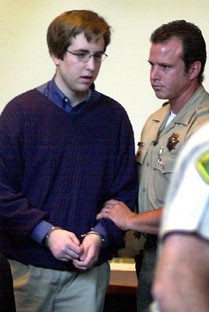
- Guilt Phase (May 2002): The jury found Attias guilty on four counts of second-degree murder.
- Sanity Phase (June 2002): On June 6, 2002, after reviewing extensive psychiatric testimony, the same jury determined that Attias was legally insane at the time of the offense under the M'Naghten rule, finding him incapable of distinguishing right from wrong due to severe mental illness.
5. Psychiatric Evaluation and Release
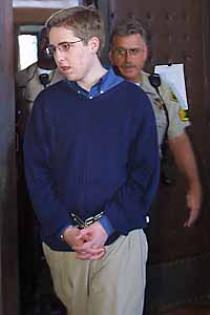
Following the Not Guilty by Reason of Insanity (NGRI) verdict, Superior Court Judge Thomas Adams committed Attias to Patton State Hospital for a maximum term of up to 60 years.
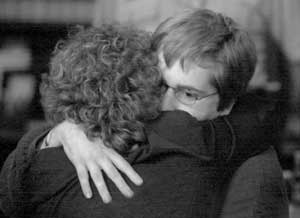
In September 2012, after serving 10 years in the state mental facility, a court evaluated clinical reports certifying that Attias no longer posed an acute danger under medication and treatment. The judge approved his conditional release to a supervised community outpatient mental health facility, a decision met with intense public debate and grief from the victims' families.