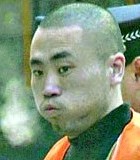
Forensic & Criminological Matrix
| Parameter | Forensic Detail |
|---|---|
| Forensic Heading / Aliases | The Nerima Family Killer, The Real Estate Assessor Killer |
| Legal Identity | Kojiro Asakura (朝倉 幸次郎) |
| Confirmed Victims | 5 (Akira Shirai, his wife, two young daughters, and 1-year-old son) |
| Active Timeline | June 1983 |
| Jurisdiction / Area of Operations | Nerima Ward, Tokyo, Japan |
| Criminological Classification | Mass murderer / Real estate dispute mass homicide |
| Forensic Modus Operandi | Residential home invasion, mass bludgeoning/stabbing, and post-mortem dismemberment of three victims |
| Weapon / Mechanism of Death | Edged and bludgeoning weapons, saws / cutting implements |
| Motive / Behavioral Dynamics | Financial gain / Eviction dispute pressure |
| Judicial Outcome | Sentenced to death; executed by hanging on December 27, 2001 |
1. Background and Profile
Kojiro Asakura worked as a property assessor and independent real estate broker in Tokyo during the expansion of Japan's bubble economy in the early 1980s. Specialized in bidding on foreclosed properties auctioned by judicial authorities, Asakura maintained a cold, transaction-driven professional persona focused exclusively on financial profit and rapid asset turnovers.
In early 1983, Asakura successfully placed the winning bid at a Tokyo District Court auction for a residential lot and home in Nerima Ward occupied by 45-year-old Akira Shirai and his family. Asakura had entered into a binding contract to resell the property to a larger real estate agency for a significant profit, a deal strictly contingent upon the Shirai family vacating the premises before an imminent deadline. As the family resisted eviction, Asakura's frustration escalated into homicidal intent.
2. Crime Spree and Forensic Analysis
In June 1983, with the deadline for transferring the vacant property fast approaching, Asakura entered the Shirai home in Nerima Ward armed with lethal bludgeoning and sharp-edged weapons. He launched a systematic attack against all five family members present: Akira Shirai (45), his wife, their two primary school-aged daughters, and their 1-year-old infant son.
None of the occupants survived the assault. Following the mass murder, Asakura engaged in extensive forensic concealment efforts. Using saws and cutting tools, he dismembered the corpses of three of the victims into smaller fragments to facilitate their transportation and disposal away from the crime scene, demonstrating calculated post-crime planning.
3. Police Investigation and Capture
he abrupt disappearance of the Shirai family raised immediate concern among neighbors and relatives, prompting an entry and search by the Tokyo Metropolitan Police Department. Forensic technicians discovered cleaned bloodstains, structural tampering, and human tissue remnants inside the home, confirming a mass violent crime.
Investigators quickly reviewed court auction records for the property, identifying Asakura as the sole buyer with an urgent financial motive to clear the residence. A targeted forensic search of Asakura's properties and vehicle yielded physical evidence, including cutting instruments stained with biological material matching the victims' genetic profiles, leading to his formal arrest.
4. Legal Proceedings and Defense Claims
During court proceedings, defense attorneys argued that Asakura suffered from temporary insanity or diminished capacity caused by severe psychological stress and financial pressure over the property deal, requesting acquittal or sentence mitigation. Medical-legal evaluations, however, concluded that Asakura possessed full cognitive and volitional capacity during the commission of the murders.
Judges emphasized that the post-mortem dismemberment and systematic cleanup demonstrated logical, goal-oriented behavior aimed at avoiding detection rather than psychotic disorganization. The courts ruled him fully criminally responsible.
5. Psychiatric Assessment and Execution
The Supreme Court of Japan rejected Asakura's final appeal in November 1996, finalizing his death sentence. The court characterized the crime as an exceptionally atrocious mass murder driven by commercial greed that claimed the lives of an entire family, including young children and an infant.
On December 27, 2001, at the age of 66, Kojiro Asakura was executed by hanging at the Tokyo Detention House. His execution marked the first death sentence carried out under the administration of Prime Minister Junichiro Koizumi following a 13-month moratorium on executions in Japan.