


Forensic & Criminological Matrix
| Parameter | Forensic Detail |
|---|---|
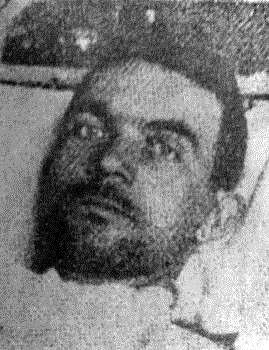
| Forensic Heading / Aliases | The Haiger Mass Murderer |
| Legal Identity | Fritz Heinrich Angerstein |
| Confirmed Victims | 8 (wife, mother-in-law, sister-in-law, maid, two office clerks, a laborer, and the gardener's son) |
| Active Timeline | December 1, 1924 |
| Jurisdiction / Area of Operations | Haiger, Hesse Province, Germany |
| Criminological Classification | Mass Murderer / Financial and psychological crisis-driven killer |
| Forensic Modus Operandi | Systematic chain elimination of witnesses and residents using a hunting dagger, axe, and blunt force, followed by staged bandit attack and arson |
| Weapon / Mechanism of Death | Hunting dagger, axe, firearm, and fire |
| Motive / Behavioral Dynamics | Imminent financial embezzlement exposure, hysteria, paranoia, and chronic domestic strain |
| Judicial Outcome | Sentenced to death in July 1925; executed by axe decapitation on November 17, 1925, at Freiendiez Prison |
1. Background and Profile
Fritz Heinrich Angerstein was born on January 3, 1891, in Dillenburg, Germany, the seventh of ten children. His father worked as a carpenter, steelworker, and local community mayor. From an early age, Angerstein suffered from severe pulmonary tuberculosis, requiring the surgical removal of a rib—a debilitating condition that plagued him throughout his life. After working in surveying and mining bureaus, he became a procurator at a limestone mine in Haiger in 1917.
In 1911, he married Käthe Barth, a union initially regarded as loving but severely strained by Käthe's chronic intestinal illness and debilitating hysteria, as well as friction with her mother. The couple remained childless following six miscarriages. By late 1924, Angerstein faced financial ruin after embezzling approximately 14,892 Reichsmark from his employer to cover mounting debts. When colleagues discovered the fraud in November 1924, Angerstein's imminent social and legal destruction triggered an acute psychological crisis.
2. Crime Spree and Modus Operandi
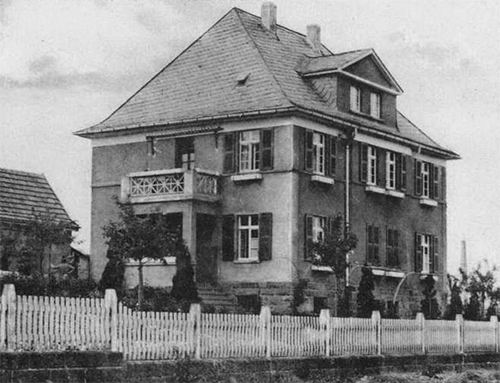
During the night of December 1, 1924, overwhelmed by the impending exposure of his embezzlement and perceived marital despair, Angerstein embarked on a calculated massacre at his residential villa in Haiger. After an altercation with his ailing wife, during which she fainted, Angerstein retrieved a hunting dagger and fatally stabbed her 18 times.
Confronted by his mother-in-law and the household maid, Minna Stoll, Angerstein methodically eliminated them using an axe to prevent any outcry. As morning approached, he continued his rampage to eradicate every potential witness to the initial murders, successively killing his sister-in-law Ella Barth, two office clerks (Ditthart and Kiel) arriving for work, a laborer (Darr), and the gardener's son (Geist). Even the family's German shepherd was bludgeoned to death. Eight individuals perished in the carnage.
3. Investigation and Forensic Capture
Following the killings, Angerstein staged a complex ruse to suggest a brutal robbery by roaming bandits. He poured gasoline across the rooms, inflicted superficial wounds upon himself, went on short errands in town to establish a false timeline, and finally ignited the property while calling for emergency assistance.
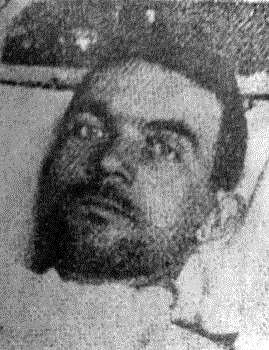
Firefighters and local authorities responded, but forensic investigators, notably expert criminologist Georg Popp, immediately detected fatal flaws in Angerstein's narrative. Rigor mortis in the corpses directly contradicted his timeline of events. Fingerprints on the dagger, the lack of actual theft, and contradictory statements led to his prompt arrest at the hospital where he was treated for self-inflicted wounds. Confronted with overwhelming forensic evidence, Angerstein confessed to his brother.
4. Legal Proceedings and Outcome
Angerstein's trial opened on July 6, 1925, before the court in Limburg an der Lahn. It became a media sensation and a major public spectacle during the Weimar Republic, comparable in notoriety to the trials of Fritz Haarmann and Peter Kürten. Over 150 witnesses and numerous psychiatric experts were summoned as the defense attempted to argue temporary insanity and emotional paroxysm.
The court rejected the insanity plea, concluding that Angerstein acted with cold calculation and full cognitive awareness to conceal his financial crimes. On July 13, 1925, he was convicted on eight counts of murder, alongside charges of embezzlement, document forgery, and perjury.
5. Psychiatric Evaluation and Execution
Forensic psychiatrists diagnosed Angerstein with underlying paranoid traits, hysteria, and fragile narcissism exacerbated by chronic illness and financial ruin. It was determined that he was fully sane at the time of the murders, operating out of desperate self-preservation and violent panic.
Due to intense public outrage and fear of civil unrest, Angerstein was transferred to the central prison in Freiendiez. On November 17, 1925, his death sentence was carried out via execution by axe decapitation in the prison courtyard, concluding one of the most chilling mass murder investigations in German history.