





Forensic & Criminological Matrix
| Parameter | Forensic Detail |
|---|---|
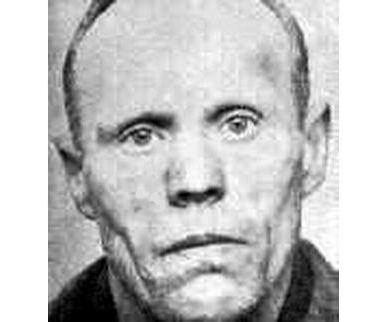
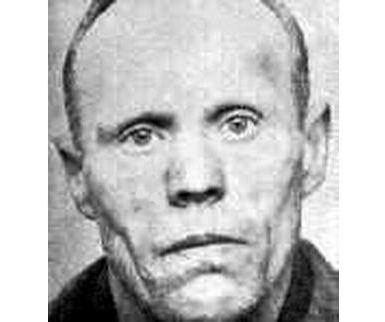
| Full Legal Name | Albert Edward Matheson |
| Jurisprudential Moniker | The Newcastle Diminished Responsibility Precedent |
| Nationality | British |
| Estimated Birth Window | c. 1905, Newcastle upon Tyne, England |
| Homicide Victim | Hugh Bowman (aged 15), Newcastle youth |
| Date of the Crime | December 1957 |
| Crime Scene | Disused quarry grounds outside Newcastle upon Tyne, Tyne and Wear |
| Cause of Death & Mechanism | Catastrophic blunt force craniocerebral destruction inflicted with heavy stones |
| Binding Legal Precedent | English Court of Criminal Appeal ruling (R v Matheson [1958] 1 WLR 474; 2 All ER 87), delivered by Lord Chief Justice Goddard |
| Criminological Landmark | Foundational Commonwealth precedent establishing the legal limits and jury obligations under Section 2 of the Homicide Act 1957 (Diminished Responsibility defense) |
| Final Judicial Disposition | Capital murder conviction quashed; substituted with manslaughter by reason of diminished responsibility; committed indefinitely to Broadmoor High Security Hospital |
Psychiatric Profile and Clinical Etiology
Fifty-two-year-old Albert Edward Matheson had accumulated an extensive history of institutional confinement across mental asylums and county gaols since youth. Forensic testing confirmed profound cognitive impairment, scoring an intellectual quotient (IQ) of 52 on the Stanford-Binet intelligence scale—equating his functional mental development to an eight-year-old child.
Clinical records documented chronic sadistic outbursts, severe moral insensitivity, self-mutilation, and volatile emotional dysregulation typical of severe psychopathic personality disorder superimposed upon congenital feeblemindedness.
The Murder of Hugh Bowman (December 1957)
In late 1957, Matheson lured 15-year-old Hugh Bowman to an isolated muddy clearing in an abandoned stone quarry on the periphery of Newcastle.
Without rational motive or financial pretext, Matheson launched an attack using jagged quarry stones, pulverizing Bowman’s facial bones and cranial vault. Following death, he partially mutilated the corpse before concealing it beneath quarry rubble.
Newcastle city detectives arrested Matheson days later due to his recorded local history of violent deviance. Under interrogation, he offered a childish, fragmented confession, manifesting total incapacity to formulate logical motives beyond an overwhelming explosion of murderous impulse.
The Newcastle Assizes and the Death Sentence
Matheson stood trial in early 1958 at the Newcastle Assizes before a jury.
His trial coincided with the passage of the landmark Homicide Act of 1957, which had introduced under Section 2 the Scottish legal doctrine of Diminished Responsibility:
"Where a person kills or is a party to the killing of another, he shall not be convicted of murder if he was suffering from such abnormality of mind (whether arising from a condition of arrested or retarded development of mind or any inherent causes or induced by disease or injury) as substantially impaired his mental responsibility for his acts and omissions in doing or being a party to the killing."
At trial, Matheson’s defense counsel did not enter an insanity defense under the rigid 1843 M'Naghten Rules, but pleaded diminished responsibility under the new 1957 Act. Three distinguished prison medical officers and forensic psychiatrists testified unanimously:
- Matheson was diagnosed as a certified mentally defective psychopath possessing an IQ of 52.
- His cognitive capacity for behavioral restraint was substantially and permanently impaired.
- The Crown prosecution called no medical evidence whatsoever to challenge this psychiatric consensus.
Despite this uncontradicted forensic consensus, the jury, repulsed by the horrific nature of the child murder, dismissed the statutory defense of diminished responsibility and convicted Matheson of capital murder, automatically sentencing him to be hanged.
The Court of Criminal Appeal Ruling: R v Matheson
The defense appealed to the Court of Criminal Appeal, presided over by Lord Chief Justice Lord Goddard.
In a historic ruling that established permanent binding jurisprudence throughout England and the Commonwealth (R v Matheson, May 1958), Lord Goddard quashed the death penalty:
- The court ruled that while a jury retains final responsibility for weighing evidence, it cannot arbitrarily disregard an uncontradicted, unanimous, and unchallenged body of expert psychiatric testimony establishing substantial mental abnormality.
- Section 2 of the Homicide Act 1957 was specifically drafted by Parliament to address cases like Matheson’s—an individual whose severe intellectual disability and psychopathy negated the full moral culpability required for capital murder.
- The court quashed the capital murder verdict and substituted a conviction of manslaughter on the grounds of diminished responsibility.
Matheson was sentenced to life imprisonment and committed to Broadmoor High Security Hospital, establishing a permanent milestone in criminal jurisprudence regarding psychiatric testimony and the defense of diminished mental capacity.