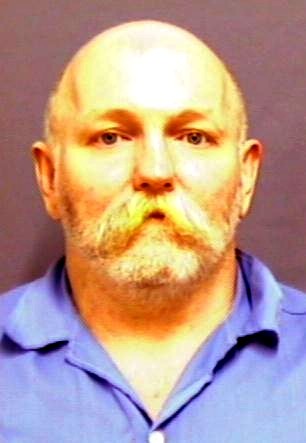




Forensic & Criminological Matrix
| Parameter | Forensic Detail |
|---|---|
| Forensic Heading / Aliases | Glen Burton Ake (Johnny Vandenover) |
| Legal Identity | Glen Burton Ake |
| Confirmed Victims | 2 (Rev. Richard B. Douglass and Marilyn Douglass; plus two surviving injured children) |
| Active Timeline | October 1979 |
| Jurisdiction / Area of Operations | Canadian County, Oklahoma, USA |
| Criminological Classification | Spree killer / Murderer with severe psychiatric pathology |
| Forensic Modus Operandi | Pretextual ruse of being lost to gain entry, home invasion, hostage-taking, attempted sexual assault, and close-range execution |
| Weapon / Mechanism of Death | .357 magnum handgun and ligature strangulation |
| Motive / Behavioral Dynamics | Financial gain coupled with paranoid-schizophrenic delusions |
| Judicial Outcome | Originally sentenced to death in 1980, conviction overturned by the U.S. Supreme Court (Ake v. Oklahoma), re-tried and sentenced to life imprisonment in 1986 |
1. Background and Psychopathy
Glen Burton Ake was born in 1955. Prior to the October 1979 murders, Ake had a documented history of erratic behavior and minor criminality. Later diagnosed as a paranoid schizophrenic, Ake suffered from chronic auditory hallucinations dating back to 1973 and harbored grandiose religious delusions, believing himself to be the "sword of vengeance of the Lord." His deteriorating mental stability coincided with an itinerant criminal spree across several western U.S. states.
2. Crime Spree
On October 15, 1979, Glen Burton Ake and his accomplice, Steven Keith Hatch, traveled to a rural area northwest of Oklahoma City looking for a house to burglarize. Ake gained entry into the home of Reverend Richard B. Douglass by falsely claiming he was lost and needed to make a phone call. After an initial exchange with sixteen-year-old Brooks Douglass, Ake returned to his vehicle, retrieved a firearm, and re-entered the residence accompanied by Hatch.
The family was held at gunpoint, bound, gagged, and forced onto the living room floor. The perpetrators attempted to sexually assault twelve-year-old Leslie Douglass. After covering the victims' heads with clothing, Ake executed them systematically using a .357 magnum pistol, killing Marilyn Douglass instantly and fatally wounding Reverend Douglass through gunshot wounds and ligature strangulation. The two children survived by freeing themselves and seeking medical help.
3. Investigation and Arrest
Following the shootings, Ake and Hatch embarked on a month-long crime spree across Arkansas, Louisiana, Texas, and western states. The manhunt ended when both were apprehended in Colorado. Extradited to Oklahoma, Leslie Douglass positively identified Ake in a police lineup, and Ake provided a full confession to Canadian County authorities.
4. Legal Proceedings and Outcome
Glen Burton Ake's case became a cornerstone of American constitutional jurisprudence. In his initial 1980 trial, he was sentenced to death after the trial court refused his request for a court-appointed psychiatrist to help prepare an insanity defense. The case reached the U.S. Supreme Court, which ruled in 1985 (Ake v. Oklahoma) that indigent defendants are constitutionally entitled to psychiatric assistance when sanity is a significant factor at trial.
Following the reversal of his conviction, Ake was retried in February 1986. Despite expert testimony from psychiatrist Dr. Hans von Brauchitsch regarding Ake's paranoid schizophrenia, the jury found him guilty and sentenced him to life imprisonment.
5. Psychiatric Evaluation and Outcome
Forensic evaluations confirmed that Ake suffered from severe paranoid schizophrenia characterized by religious and persecutory delusions. Ake died in prison in 2011, having permanently shaped criminal procedure regarding mental health rights within the U.S. justice system.