



Ahmad Suradji: The Sorcerer of the Sumatra Sugar Cane Plantations
Executive Summary
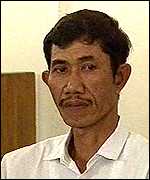
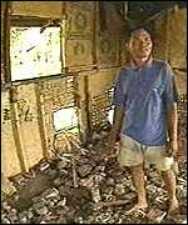
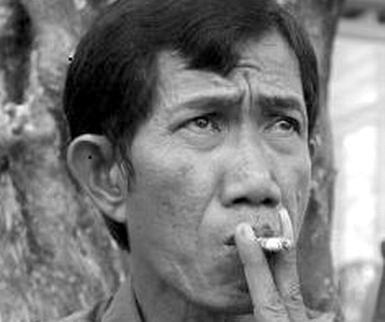
Ahmad Suradji (widely known as Datuk Maringgi or Nasib Kelewang) was an Indonesian serial killer, cattle breeder, and traditional shaman (dukun), responsible for the ritual murders of at least 42 women and girls between 1986 and 1997 in Deli Serdang Regency, near the city of Medan, North Sumatra. He stands as the deadliest documented serial killer in modern Indonesian history.
Exploiting his revered status as a mystical healer and local faith in animist spiritualism, Suradji lured female clients into dense sugarcane plantations adjacent to his homestead. Under the guise of a ritual cleansing for fertility, beauty, and romantic fortune, he buried them up to their waists in the soil to completely immobilize them. He then strangled them with electrical wire, drank their saliva as they died to ingest their life energy, and buried their corpses facing his home to augment his supernatural powers. Suradji was sentenced to death in 1998 and executed by firing squad on July 10, 2008.
Forensic & Criminological Matrix
| Parameter | Forensic Detail |
|---|---|
| Legal Identity | Ahmad Suradji (born Nasib Kelewang) |
| Aliases | Datuk Maringgi, The Sorcerer of Medan, The Sugarcane Shaman |
| Date of Birth | January 10, 1949 / 1951 (Medan, North Sumatra, Indonesia) |
| Date of Death | July 10, 2008 (Aged 57; executed by firing squad in Deli Serdang) |
| Criminological Classification | Ritualistic Serial Killer / Occult Shaman (Dukun) motivated by supernatural megalomania and material greed |
| Confirmed Victims | 42 women and adolescent girls (exhumed and forensically identified); over 80 missing-person reports linked to his practice |
| Victim Demographics | Young women aged 11 to 30 (village laborers, housewives, sex workers) |
| Span of Crimes | 1986 – April 1997 (11 years of continuous predatory activity) |
| Primary Crime Scene | Sugarcane plantation in Lubuk Pakam, Deli Serdang Regency, North Sumatra |
| Execution Mechanics | Waist-deep soil immobilization; ligature strangulation via electrical cable or cord; ritualistic saliva ingestion |
| Accomplices | His three biological sister-wives; his eldest wife, Tumini, was convicted of capital murder as an active co-conspirator |
| Stated Motive | Dream apparition: the ghost of his deceased father instructed him to harvest the vital essence of 70 females to attain invulnerable shamanic supremacy |
| Judicial Disposition | Sentenced to death in April 1998; executed by military firing squad on July 10, 2008 |
The Shamanic Tradition in Rural Indonesian Society
Across Southeast Asia, and particularly within rural North Sumatra, the figure of the dukun (traditional healer, mystic, and spirit medium) occupies an exalted position. Villagers routinely consult dukuns to cure chronic physical ailments, secure auspicious harvests, cast romantic binding spells (pelet), or ward off dark magic curses (santet).
Ahmad Suradji, an outwardly humble cattle farmer in Lubuk Pakam, established his healing practice in the mid-1980s. Soft-spoken, calm, and charismatic, he cultivated an unassailable reputation for esoteric wisdom. He shared a household with his three wives, who were biological sisters: Tumini (the eldest), Minah, and Tarini.
His clientele consisted predominantly of women aged 11 to 30 who visited alone under conditions of strict secrecy, seeking love spells to ensure their husbands' fidelity, charms to attract wealthy suitors, or spiritual protection for commercial sex work. Suradji insisted upon absolute confidentiality: informing family members of the visit would instantly break the spell. This enforced discretion ensured that his eleven-year murder spree went entirely undetected by local authorities.
The Visionary Mandate and Ritual Slaughter
During police interrogations following his arrest, Suradji confessed that in 1988, his deceased father appeared in a dream. According to Suradji, the apparition revealed the path to supreme healing powers and physical immortality: he was instructed to slay 70 females and drink their dying saliva.
Modus Operandi
- Financial Extortion: Suradji charged between $200 and $400 USD per session—a fortune in rural Sumatra. Furthermore, he mandated that clients arrive wearing their finest gold jewelry, silks, and watches to be "spiritually consecrated."
- The Waist-Deep Burial: In the dead of night, Suradji escorted the client into the dense sugarcane fields behind his home, where he had pre-dug a deep pit. He instructed the woman to disrobe and enter the pit, burying her up to her waist to "absorb the earth's telluric energies and purge evil spirits." Immobilized in the packed dirt, the victim was rendered utterly helpless.
- Strangulation and Saliva Consumption: Stepping behind the trapped woman, Suradji looped an electrical wire or cord around her neck, pulling until she lost consciousness. As she convulsed and suffocated, he placed his mouth over hers, swallowing her saliva to capture her vital life essence (roh).
- Geographical Orientation: After stripping the body of jewelry and cash, he buried the corpse completely, meticulously aligning the deceased woman's head toward his home. He believed this geometric orientation continuously channeled psychic power into his residence.
The Downfall (April 1997)
The eleven-year chain of murders unravelled in late April 1997 following the disappearance of 21-year-old Sri Kemala Dewi.
- Dewi hired a rickshaw driver to transport her discreetly to the "Datuk's" residence, instructing the driver to keep her destination secret.
- When she failed to return home after three days, her family filed a missing-person report. The rickshaw driver informed detectives that he had dropped Dewi off at Suradji's house.
- On April 27, 1997, a local farmer walking through the sugarcane plantation discovered Dewi's partially exposed, decaying corpse.
- Police raided Suradji's home on April 30, uncovering an overwhelming cache of incriminating evidence: dozens of women's handbags, ID cards, clothing, gold bracelets, and watches belonging to missing women from across North Sumatra.
Exhumations in the Sugarcane Fields
Arrested on May 2, 1997, Suradji initially confessed to killing 16 women over five years. However, as heavy excavation equipment began unearthing mass burial trenches across the fields, dozens of decomposed corpses and skeletal remains came to light.
Confronted with forensic reality, Suradji confessed to murdering 42 women since 1986. Expressing no remorse, he told investigators his only regret was failing to complete his supernatural quota: "My father's ghost commanded seventy souls; I was twenty-eight short of the sacred number."
Following the recovery of 42 bodies, North Sumatra police established a missing-persons registry. Over 80 families came forward with photographs of missing daughters and wives who had vanished after visiting a dukun, leading criminologists to suspect his true victim count exceeded 50.
Trial, Condemnation, and Execution
The capital trial commenced in late 1997 at the Lubuk Pakam District Court under heavy security as thousands of outraged citizens gathered outside demanding summary execution.
- Family Complicity: All three wives were detained. Investigators proved that the eldest wife, Tumini, was an active accomplice who helped dig burial pits, held struggling victims, and pawned stolen jewelry. The two younger sisters were cleared of direct involvement.
- The Sentence: On April 27, 1998, the court found Ahmad Suradji guilty of 42 counts of premeditated murder, sentencing him to death. Tumini was convicted as an accomplice and sentenced to death, later commuted to life imprisonment.
- Clemency Denial: During his years on death row at Medan's Tanjung Gusta Prison, Suradji remained stoic. In 2007, Indonesian President Susilo Bambang Yudhoyono formally rejected his final clemency petition.
- Firing Squad (July 10, 2008): At 22:00 local time on July 10, 2008, a 12-man police firing squad transported Suradji to a secluded clearing in Deli Serdang. Blindfolded and tied to a stake, Ahmad Suradji was executed, concluding the file of Indonesia's most prolific serial killer.